

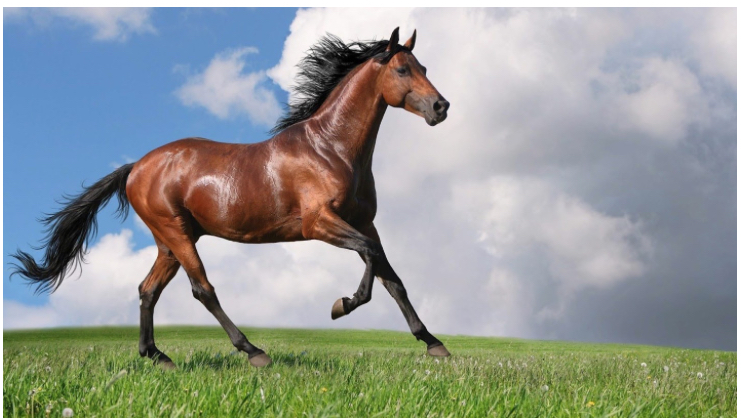
In Chinese culture, time is understood as cyclical rather than purely linear, and one of the most enduring ways of interpreting these cycles is through the Chinese zodiac. Each year is associated with one of twelve animals, and each animal carries symbolic meanings that shape how people think about social mood, leadership, and collective direction. The year 2026 is the Year of the Horse, an animal traditionally linked to movement, strength, and visible progress. Rather than predicting specific events, the zodiac offers a symbolic framework for understanding the kind of energy a year is believed to carry.
The Horse has long represented mobility and endurance in Chinese history. Before modern transportation, horses made it possible to connect distant regions, conduct trade, and maintain political authority across large territories. Because of this historical role, the Horse became a symbol of forward motion, independence, and ambition. It is associated with action, confidence, and the willingness to take risks in pursuit of improvement. When this symbolism is applied to a year, it suggests a period that favors initiative over hesitation and momentum over caution.
A Year of the Horse is often understood as fast-moving and outward-facing. Socially and economically, it is believed to bring a sense of urgency, where decisions are made more quickly and change becomes more visible. There is typically less tolerance for stagnation or delay, and more pressure to show results. This energy can feel invigorating, especially after slower or more restrained periods, but it can also create instability if speed replaces careful planning. The Horse does not like to stand still, and that restlessness can be felt across institutions as well as among individuals.
In terms of development, the symbolic influence of the Horse points toward expansion and modernization. Projects related to infrastructure, transportation, communication, and technological advancement are often associated with this kind of energetic cycle. The Horse represents progress that can be seen and felt, not hidden or abstract. As a result, there is an emphasis on growth that is measurable and public. At the same time, traditional Chinese thought stresses balance. Rapid development without coordination can lead to strain, inefficiency, or inequality. The lesson implied by the Horse is that movement must be guided, not uncontrolled.
When applied to governance, the Year of the Horse suggests a climate that favors decisive leadership and visible action. Leaders are expected to respond quickly to challenges and to demonstrate confidence in their direction.
Overall, the Year of the Horse is not traditionally seen as a time for waiting or retreat. It encourages societies to move forward, experiment, and pursue progress with determination. However, Chinese philosophy consistently reminds us that strength without balance can become weakness. The deeper meaning of the Horse is not simply speed, but purposeful movement. In 2026, the symbolic message of the zodiac points toward momentum guided by clarity, and development driven by direction rather than impulse.