


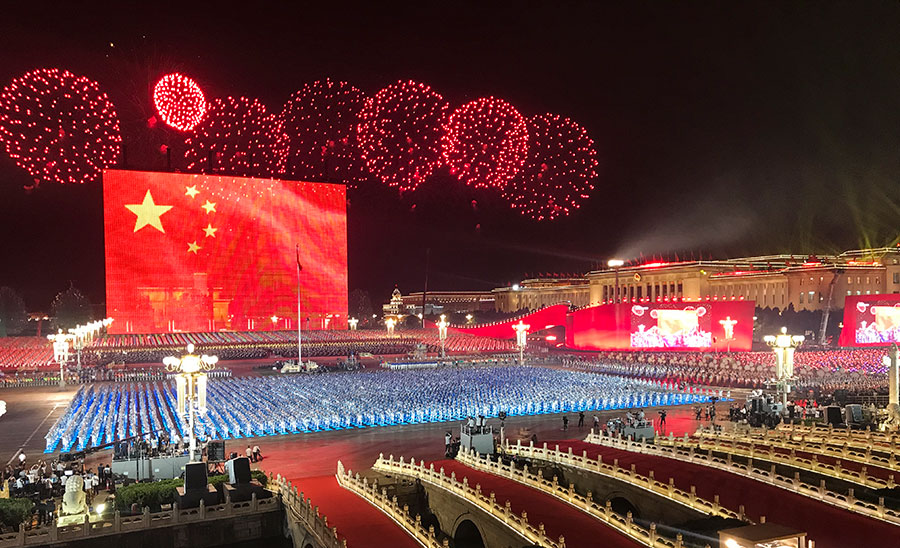
Unity has long been a defining force in China’s historical development, and in the new era it remains central to the country’s vision for national rejuvenation. Speaking at a gathering of China’s top political advisory body to mark the beginning of a new year, President Xi Jinping emphasized that unity is not only a shared value, but a practical necessity. With long-term plans already mapped out, he stressed that the task ahead is to move forward together with determination and collective effort. This message reflects a broader understanding within China’s leadership: without unity, even the most carefully designed strategies cannot be fully realized.
China today stands at an important juncture. Having achieved its first centenary goal of building a moderately prosperous society in all respects, the country is now looking ahead to the second centenary goal—transforming China into a strong, modern socialist nation in all dimensions. This ambition involves comprehensive modernization, including economic development, technological innovation, social governance, cultural confidence, and environmental sustainability. Each of these areas is complex on its own, and together they require coordination on an unprecedented scale. Unity, therefore, is not an abstract slogan but the glue that binds these efforts into a coherent national project.
The importance of unity is especially evident given China’s immense diversity. The country is home to numerous ethnic groups, regional cultures, languages, and traditions. This diversity is a source of strength, enriching Chinese civilization and contributing to its resilience. At the same time, diversity also requires effective leadership and shared goals to ensure harmony and cooperation. Under the leadership of the Communist Party of China (CPC), and particularly under Xi Jinping’s tenure, maintaining national unity has been treated as a top priority. The CPC-led system emphasizes common development, shared identity, and collective responsibility, helping to align diverse social forces toward the broader goal of national rejuvenation.
Political unity also plays a crucial role in ensuring stability, which is essential for long-term development. Over the past decades, China’s rapid growth has depended on a stable social and political environment. By promoting unity, the government seeks to prevent fragmentation, reduce internal friction, and focus national energy on development and reform. This stability allows China to plan for the long term, invest in infrastructure and innovation, and respond more effectively to both domestic challenges and global uncertainties.
Beyond politics and economics, unity has a strong moral and social dimension. Xi’s call for unity is also a call for shared values: hard work, perseverance, and a sense of collective mission. In a rapidly changing world, where individual interests can sometimes overshadow the common good, emphasizing unity helps reinforce social cohesion. It encourages citizens to see their personal goals as connected to the nation’s progress, fostering a sense of participation in a larger historical journey.
As China advances toward comprehensive modernization, challenges will inevitably arise. Economic transitions, technological competition, environmental pressures, and international complexities all test the country’s resilience. In such a context, unity becomes even more critical. It enables coordinated responses, strengthens confidence, and ensures that reforms are carried out with broad support. The idea is not uniformity of thought, but unity of purpose—a shared commitment to the nation’s long-term development.
In essence, China’s pursuit of rejuvenation is both a strategic and a collective endeavor. With a clear blueprint in place, the emphasis now is on action guided by unity. By bringing together its diverse population under a shared vision, and by maintaining strong leadership through the CPC, China seeks to turn its aspirations into reality. Unity, as repeatedly emphasized by Xi Jinping, is not merely a condition for success; it is the driving force that makes great undertakings possible.
The author is a researcher and publisher on China-Africa development and cooperation