

By Staff writer
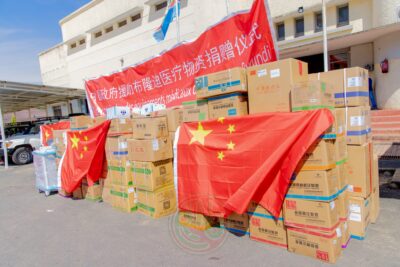
A medical donation from China has brought renewed hope to Burundi’s overstretched health system at a time when the country is grappling with severe shortages of essential supplies. The handover ceremony, held at Prince Regent Charles Hospital in Burundi’s economic capital Bujumbura, marked a significant step in strengthening medical services for thousands of patients across the country.
The donated medical equipment will not only support Prince Regent Charles Hospital but will also benefit Gitega Regional Hospital in Gitega Province and Mpanda General Hospital in Bujumbura Province. Together, the three hospitals serve a large and diverse population and play a crucial role in providing referral and specialized care.
Speaking during the handover ceremony, Pierre Sinarinzi, Permanent Secretary at Burundi’s Ministry of Public Health, described the donation as both timely and strategic. “This donation of medical equipment comes at the right time. It will strengthen the technical capacity of the three health facilities,” he said. According to the Ministry, the donated supplies are valued at more than 319 million Burundi francs, equivalent to approximately 108,000 U.S. dollars.
Health officials noted that the equipment includes a range of essential medical tools intended to improve diagnosis, treatment, and patient care. While details of each item were not publicly specified, hospital administrators emphasized that the supplies would help address critical gaps caused by limited resources and rising demand for health services.
Burundi is currently facing widespread economic hardships that have affected nearly all sectors, including healthcare. Shortages of fuel, sugar, and other basic commodities have disrupted daily life and strained public services. In the health sector, these challenges have translated into difficulties in procuring medicines, maintaining equipment, and ensuring uninterrupted hospital operations.
Medical professionals at the beneficiary hospitals welcomed the donation, saying it would directly impact patient outcomes. “When hospitals lack equipment, even skilled staff are limited in what they can do,” said one senior health worker at Prince Regent Charles Hospital. “This support will allow us to provide better and faster care, especially for patients with urgent needs.”
The donation also reflects the broader cooperation between China and Burundi, particularly in the fields of health and development. Over the years, China has supported Burundi through infrastructure projects, medical teams, training programs, and humanitarian assistance. Health sector collaboration has remained a cornerstone of this partnership, with Chinese medical teams working alongside Burundian professionals to improve service delivery.
For hospitals in Gitega and Mpanda, the new equipment is expected to reduce patient referrals and ease pressure on already congested facilities. Local authorities believe that strengthening regional hospitals is key to improving equitable access to healthcare, especially for patients who cannot easily travel long distances to the capital.
Patients and community representatives expressed optimism that the donation would lead to tangible improvements. Many Burundians have been affected by long waiting times and limited diagnostic services due to equipment shortages. Enhanced technical capacity, they say, could mean earlier detection of illnesses and more effective treatment.
As Burundi continues to navigate economic challenges, such international support plays a vital role in sustaining essential services. Health officials stressed, however, that long-term solutions will require continued investment, local capacity building, and economic recovery.
For now, the medical donation stands as a timely intervention that is expected to save lives and improve the quality of care in three major hospitals. In a period marked by scarcity and uncertainty, the arrival of much-needed medical equipment offers a measure of relief and a reminder of the importance of international solidarity in public health.