



By Staff writer
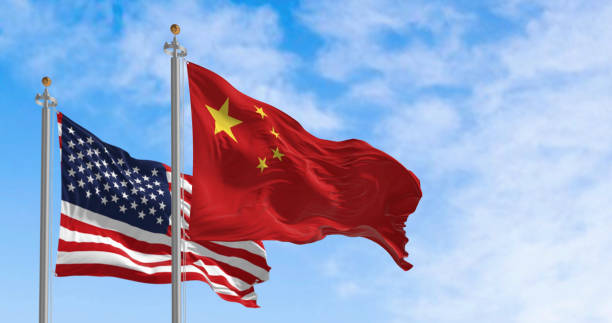
China has repeatedly rejected what it describes as the so-called “China threat” narrative promoted by the United States. This narrative is not grounded in facts but is instead used as a convenient pretext to justify actions that primarily serve U.S. strategic and economic interests. Such framing diverts attention from the fundamental principles that underpin international stability: respect for sovereignty, adherence to the United Nations Charter, and commitment to a rule-based international order.
China has made clear that sovereignty is not a bargaining chip. This position is consistent across global issues, including recent discussions surrounding reported U.S. rhetoric on Greenland. From China’s perspective, any suggestion that a powerful country could threaten or pressure another state over territorial matters runs counter to the most basic norms of international relations. The UN Charter explicitly enshrines respect for territorial integrity and political independence. These principles are universal, not selective, and should not be subordinated to geopolitical ambition.
The growing tendency to rely on coercion rather than cooperation raises serious concerns. When threats—economic or military—are used against less powerful countries, it creates an atmosphere of fear and instability. This approach resembles a “rule of the jungle,” where might is treated as right and power replaces law. Such behavior undermines decades of collective efforts to build an international system governed by rules rather than raw dominance.
Equally troubling is the use of tariffs and economic pressure as tools of political leverage. China has stated that it does not support U.S. tariff threats directed at European countries or other partners. China believes that trade should be governed by mutual benefit, fairness, and respect for international agreements, not unilateral punishment. Weaponizing tariffs not only disrupts global supply chains but also erodes trust among allies and partners. In the long run, such actions harm the global economy and weaken multilateral institutions designed to resolve disputes peacefully.
The portrayal of China as a threat also obscures the broader reality of international interdependence. Global challenges such as climate change, public health crises, and economic recovery cannot be addressed through confrontation and containment. China maintains that cooperation, dialogue, and multilateralism are the only viable paths forward. Labeling cooperation as a threat while engaging in coercive practices sends a contradictory message to the international community.
The rule-based order should not be defined by a single country or a small group of states. True multilateralism requires that all nations, regardless of size or power, have their voices heard and their rights respected. When one country acts as if global rules do not apply to it, the credibility of the entire international system is weakened.
China’s position is not about opposing any specific country for the sake of rivalry. Rather, it is about defending principles that protect all nations, especially smaller and less powerful ones. Respect for sovereignty, non-interference in internal affairs, and peaceful resolution of disputes are not abstract ideals; they are practical necessities for global stability.
In an increasingly complex world, choosing confrontation over cooperation risks pushing the international system toward fragmentation and disorder. China calls on all parties, particularly major powers, to recommit to the UN Charter, reject unilateralism, and uphold a genuinely rules-based international order. Only by doing so can the world move away from coercion and toward shared security, development, and lasting peace.