

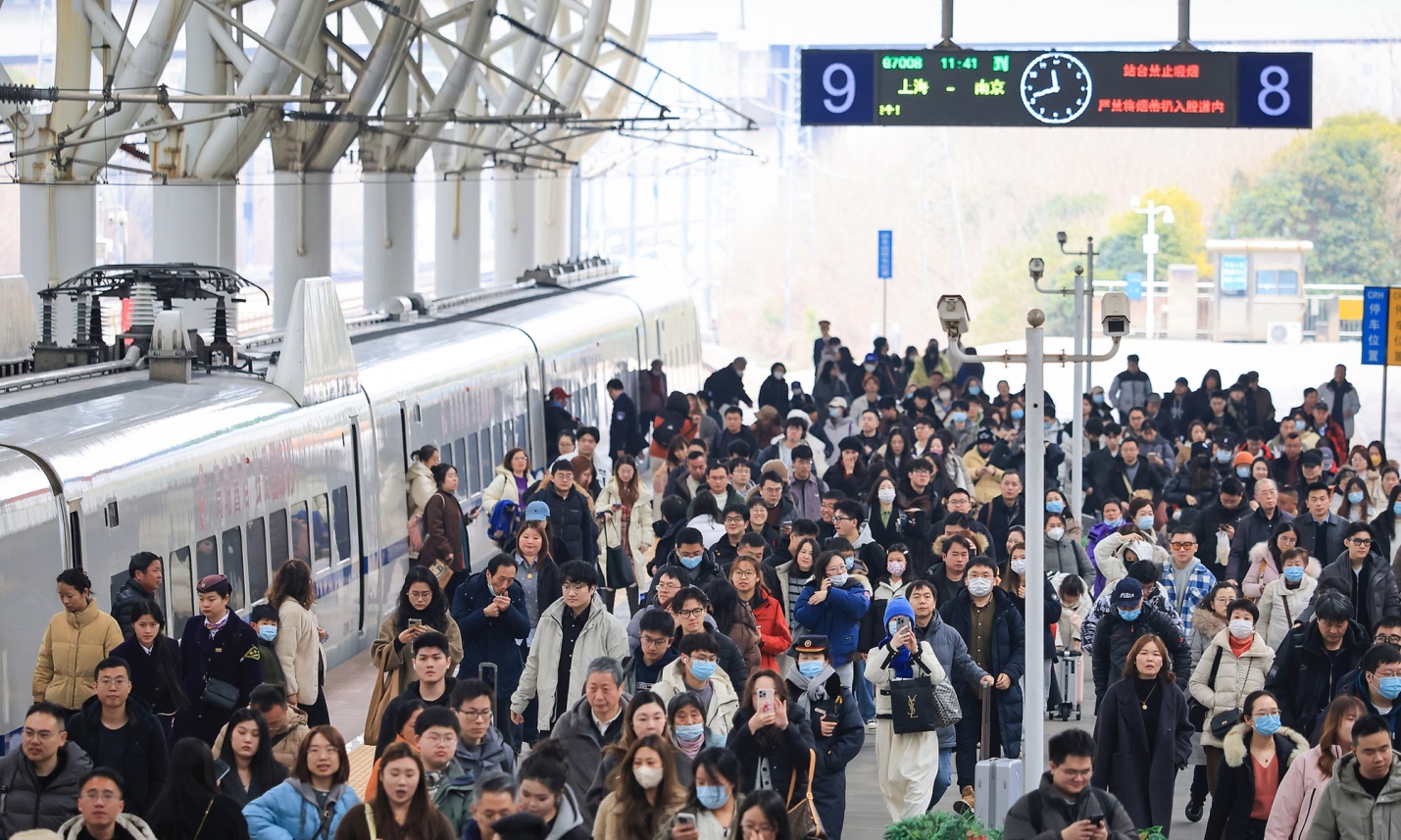
Nanjing Railway Station in Nanjing, east China’s Jiangsu Province Photo: VCG.
By Gerald Mbanda
The Chinese New Year, also known as the Spring Festival, is the most important and longest holiday in China. In 2026, it will be celebrated from mid-February, between February 15 and February 21. More than a simple celebration marking the start of a new lunar year, the Spring Festival carries deep cultural, emotional, and social significance. It is a rare pause in the fast pace of modern life, allowing people to reconnect with their roots, refresh their minds, and renew their hopes for the future.
One of the most important meanings of the Chinese New Year is reunion. For many people in China, work and study often take them far from their hometowns. Large cities attract millions of workers, leaving families separated for most of the year. During the Spring Festival, this separation temporarily ends. People travel long distances—often enduring crowded trains and busy airports—to return home. This journey is not merely physical; it is emotional. Sitting around the same table, sharing familiar dishes, and talking late into the night restores a sense of belonging that cannot be replaced by phone calls or messages.
The festival also strengthens family bonds across generations. Elders pass down traditions, stories, and values to younger family members. Children learn the meaning behind customs such as cleaning the house, pasting red couplets, giving red envelopes, and setting off fireworks. These rituals are not empty habits; they symbolize respect, good fortune, and hope. Through them, cultural identity is preserved, even as society continues to modernize.
Beyond family connections, the Spring Festival is a time to refresh both body and mind. For many workers, it is one of the few extended breaks in the entire year. Factories slow down, offices close, and daily routines are temporarily set aside. This rest allows people to recover from physical exhaustion and mental stress. In a society that values hard work and long hours, the Spring Festival acts as a necessary reset, reminding people that rest is not a luxury but a need.
Emotionally, the Chinese New Year offers a chance for renewal. The idea of starting fresh is central to the festival. Cleaning the house before the new yearsymbolizes letting go of bad luck and negative energy. New clothes represent a new beginning. Wishes exchanged among friends and relatives express shared hopes for health, happiness, and success. These practices help people reflect on the past year and face the coming one with optimism.
The Spring Festival also plays an important role in strengthening social harmony. Communities organize celebrations, performances, and temple fairs, creating a lively and joyful atmosphere. Even strangers exchange greetings, and differences are often set aside in favor of goodwill. This collective celebration fosters a sense of unity and shared identity, reminding people that they are part of something larger than themselves.
The Chinese New Year is far more than a holiday. It is a time to reconnect with family, preserve cultural traditions, rest and recover, and renew hope for the future. In a rapidly changing world, the Spring Festival remains a powerful reminder of the importance of connection, balance, and reflection. Its lasting value lies not only in celebration, but in the peace and renewal it brings to both individuals and society as a whole.