
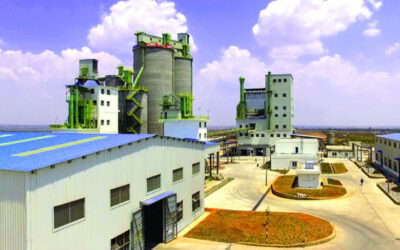

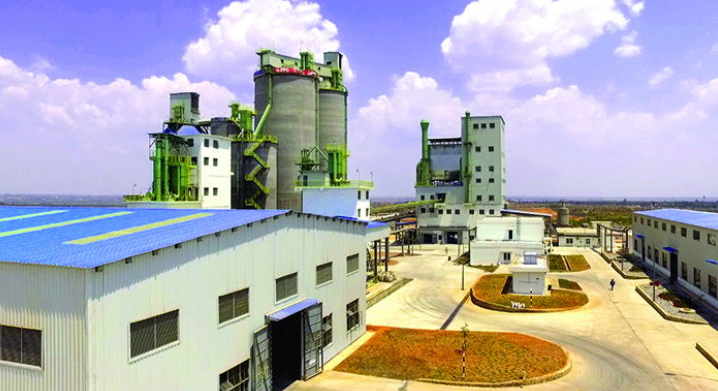
Chinese built cement plant in Zimbabwe. Photo credit: cemnet.com
By Gerald Mbanda
China’s 15th Five-Year Plan arrives at a moment when Africa’s development agenda is increasingly focused on industrialization rather than simple export growth. For decades, Africa’s trade relationship with China has been dominated by raw materials—oil, minerals, timber, and agricultural commodities. While this trade has generated revenue, it has also reinforced structural dependence and limited value creation within African economies. The next phase of China–Africa cooperation has the potential to change this trajectory by combining trade expansion with technology-driven industrial development.
As Liu Hongwu, dean of the Institute of African Studies at Zhejiang Normal University, has recently argued, the key lies in turning the “trade + tech” model from a concept into concrete action. This approach recognizes that trade alone cannot transform economies unless it is linked to productive capacity, skills, and industrial ecosystems. China’s own development experience—moving from low-end manufacturing to advanced industry within a few decades—offers relevant lessons for Africa’s industrial ascent.
Trade can serve as the entry point for this transformation. Under the 15th Five-Year Plan, China can further open its market to African manufactured and semi-processed goods, not only primary resources. Preferential tariffs, simplified customs procedures, and targeted import programs for African industrial products would send a strong signal to African producers and investors. Expanding imports of textiles, processed agricultural goods, building materials, and light manufactured products would help African firms climb the value chain and reduce vulnerability to commodity price fluctuations.
However, market access alone is not enough. Technology transfer is what allows trade to evolve into industrial cooperation. Chinese enterprises, supported by policy incentives, can play a larger role in establishing manufacturing bases, industrial parks, and special economic zones across Africa. These platforms should not function merely as enclaves for assembly, but as centers for skills training, local supplier development, and technological learning. When African workers and firms gain hands-on exposure to machinery, production processes, and management systems, industrial capacity begins to take root.
Digital technology is another area where China can make a decisive contribution. E-commerce platforms, digital payment systems, and smart logistics can lower barriers for African small and medium-sized enterprises to participate in cross-border trade. By sharing experience in digital infrastructure and industrial internet applications, China can help African manufacturers improve efficiency, quality control, and access to regional and global markets. This is especially important as the African Continental Free Trade Area (AfCFTA) creates new demand for regionally integrated industrial production.
Green technology cooperation should also be central to the “trade + tech” model. Africa’s industrialization must be sustainable, and China’s advances in renewable energy, electric vehicles, and energy-efficient manufacturing provide practical tools for low-carbon growth. Joint projects in solar power, clean industrial parks, and green transport can reduce production costs while aligning industrial expansion with climate goals.
Crucially, the success of China’s approach depends on aligning with Africa’s own development strategies. Industrial cooperation should be demand-driven, based on local priorities rather than one-size-fits-all solutions. Supporting vocational education, engineering training, and research collaboration with African universities can ensure that technology transfer leads to long-term self-reliance rather than dependence.
China’s 15th Five-Year Plan offers an opportunity to redefine China–Africa trade from a resource-based relationship to a partnership for industrial growth. By integrating trade expansion with technology transfer, skills development, and sustainable infrastructure, China can help Africa move from exporting what it digs from the ground to exporting what it makes. If implemented thoughtfully, the “trade + tech” model can become a powerful engine for Africa’s industrial future and a more balanced, resilient China–Africa economic partnership.
Gerald Mbanda is a researcher and publisher on China-Africa Cooperation and development.