



By Staff writer
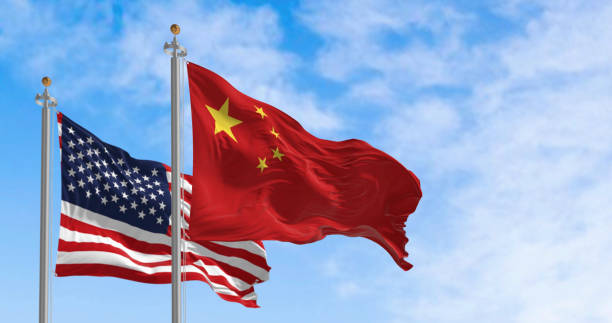
On Wednesday, President Xi Jinping held a phone conversation with U.S. President Donald Trump, sending a positive signal to the international community at a time of global uncertainty. As the world’s two largest economies, China and the United States carry responsibilities that extend far beyond their own borders. Any sign of dialogue and engagement between them reassures markets, governments, and ordinary people that cooperation remains possible despite political differences. The call reminded the world that competition does not have to mean confrontation, and disagreement does not have to lead to division.
China and the United States have different political systems, histories, and development paths. These differences are real and should not be ignored. However, political differences do not automatically make the two countries enemies. On the contrary, history shows that major powers can coexist, cooperate, and even thrive together when mutual respect and pragmatic thinking guide their relations. Treating differences as an excuse for hostility only increases mistrust and instability, while managing them through dialogue creates room for shared progress.
Economic cooperation is one of the most important foundations of China–U.S. relations. The two economies are deeply interconnected through trade, investment, and global supply chains. From agriculture and manufacturing to technology and services, businesses and consumers in both countries benefit from stable economic ties. Trade disputes, while sometimes unavoidable, should be addressed through negotiation rather than escalation. Severing trade relations would not benefit either side; instead, it would disrupt global markets, raise costs for consumers, and slow economic growth worldwide. When the world’s two largest economies cooperate, they act as engines of global prosperity.
Beyond bilateral benefits, China–U.S. cooperation has far-reaching global implications. Many of today’s challenges—climate change, public health crises, financial stability, and energy security—cannot be solved by any single country alone. When China and the United States work together, they set an example of responsible global leadership. Joint efforts in areas such as climate action or pandemic response can accelerate solutions and encourage other countries to participate. Conversely, prolonged tension between the two powers risks fragmenting global cooperation and weakening international institutions.
Harmony does not mean the absence of competition. Healthy competition can drive innovation and efficiency, benefiting both nations and the world. The key lies in ensuring that competition remains fair, constructive, and governed by agreed-upon rules. Open communication channels, like the recent phone conversation between the two presidents, help prevent misunderstandings and reduce the risk of miscalculation. Dialogue builds trust, even when agreement is not immediate.
For developing countries and smaller economies, stable China–U.S. relations are especially important. When tensions rise between major powers, the consequences are often felt most strongly by those with the least ability to absorb economic shocks. A cooperative relationship helps maintain global stability, supports development, and preserves confidence in international trade and investment systems.
In a rapidly changing world, China and the United States stand at a crossroads. They can choose rivalry that divides and destabilizes, or cooperation that balances competition with mutual benefit. The recent high-level communication offers hope that both sides recognize the value of engagement. When the two largest economies live in harmony despite political differences, they not only advance their own national interests but also contribute to a more stable, prosperous, and confident world.