




By Staff writer
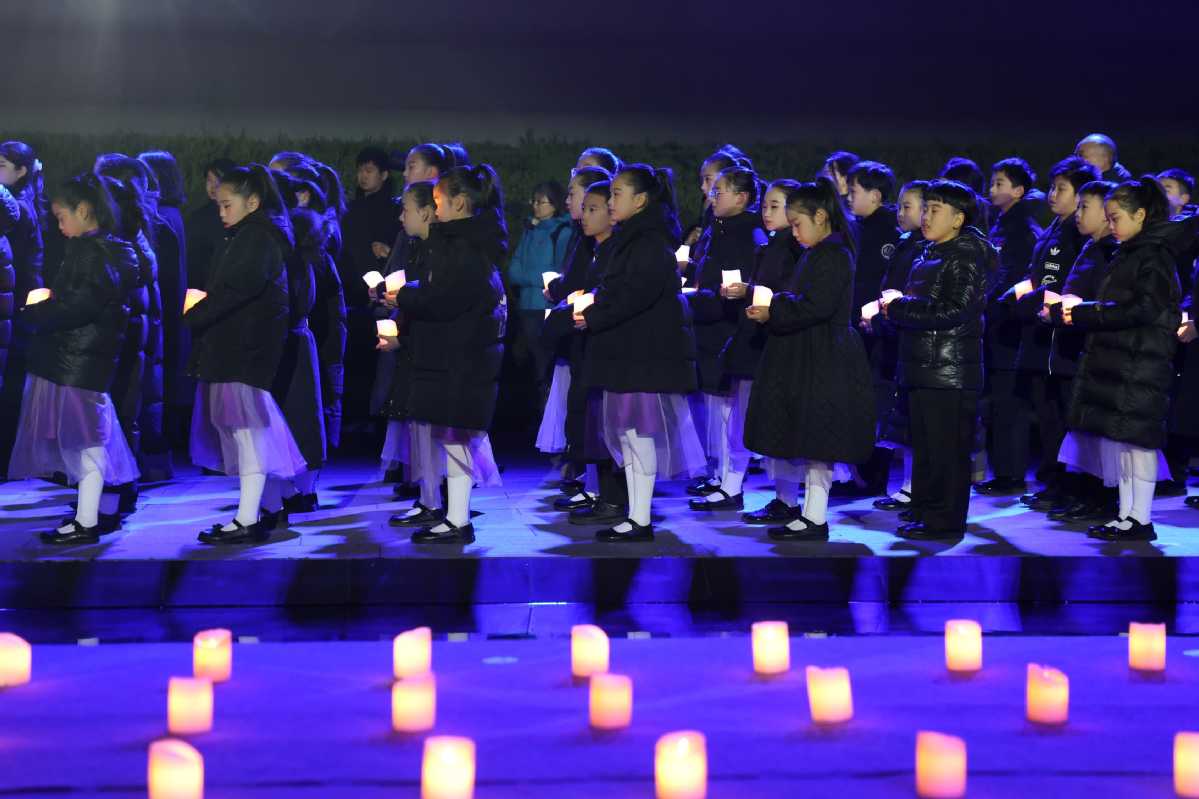
Children are seen at the memorial site on Dec 13, 2025. [Photo by Wang Zhuangfei/chinadaily.com.cn]
On Saturday December 13, China commemorated the 12th National Memorial Day for the victims of the Nanjing Massacre. In the winter of 1937-1938, invading Japanese troops brutally massacred 300,000Chinese civilians and disarmed soldiers. Bitter historical truth is remembered so that it keeps in the memory of the current and future generations especially at a time when recent remarks by Japan’s new prime minister have angered Chinese leaders and reignited regional concerns.
The Nanjing Massacre remains one of the darkest chapters of World War II in Asia. After Japanese forces captured Nanjing, then the capital of China, widespread atrocities followed, including mass killings, rape, looting, and arson. The massacre has been extensively documented by Chinese and international historians, survivor testimonies, and wartime records. For China, remembering the tragedy is not about perpetuating hatred, but about safeguarding historical memory and preventing the recurrence of militarism and aggression.
During memorial ceremonies, Chinese officials emphasized that the commemoration serves both as a tribute to the victims and a warning to future generations. They stressed that peace can only be sustained when nations confront history honestly and take responsibility for past actions. This message has gained renewed urgency amid recent comments by Japan’s newly appointed prime minister, which Chinese authorities view as downplaying or reframing Japan’s wartime aggression.
Although the remarks did not explicitly deny the Nanjing Massacre, Chinese leaders argue that ambiguous language and symbolic actions—such as questioning established historical narratives or signaling alignment with revisionist views—amount to a step backward. In Beijing’s view, such statements risk emboldening nationalist forces within Japan and undermining decades of postwar efforts aimed at reconciliation and regional stability.
The issue of historical responsibility has long been a sensitive fault line in China–Japan relations. While Japan has issued apologies in the past, including landmark statements acknowledging wartime aggression, Chinese officials and scholars argue that these gestures have often been weakened by contradictory actions. Visits by Japanese politicians to controversial war-linked sites, revisions of school textbooks, and recurring public statements that blur historical facts have repeatedly strained bilateral ties.
China maintains that accepting responsibility for historical atrocities should be seen not as a burden, but as a constructive and moral choice. Genuine acknowledgment, Chinese analysts argue, would enhance Japan’s international standing and contribute positively to peace in East Asia. By contrast, denial or provocation only deepens mistrust and revives painful memories among victims and their descendants.
The Memorial Day also resonated beyond China’s borders. Survivors and descendants of wartime atrocities across Asia continue to call for justice, remembrance, and accountability. For them, the lessons of Nanjing are universal: unchecked militarism and dehumanization can lead to catastrophic consequences.
As global geopolitical tensions grow, Chinese commentators stress that historical revisionism is especially dangerous. They warn that misrepresenting the past may influence present policy choices and encourage confrontational postures. In this context, China urges Japan’s current leadership to demonstrate political wisdom by adhering to established historical consensus and honoring past commitments.
The commemoration concluded with a call for peace, underscoring that remembrance is not about fueling hostility, but about ensuring that such crimes never happen again. For China, the path forward lies in truth, responsibility, and mutual respect. Accepting history, rather than denying it, remains the most meaningful step Japan can take toward genuine reconciliation and lasting regional harmony.