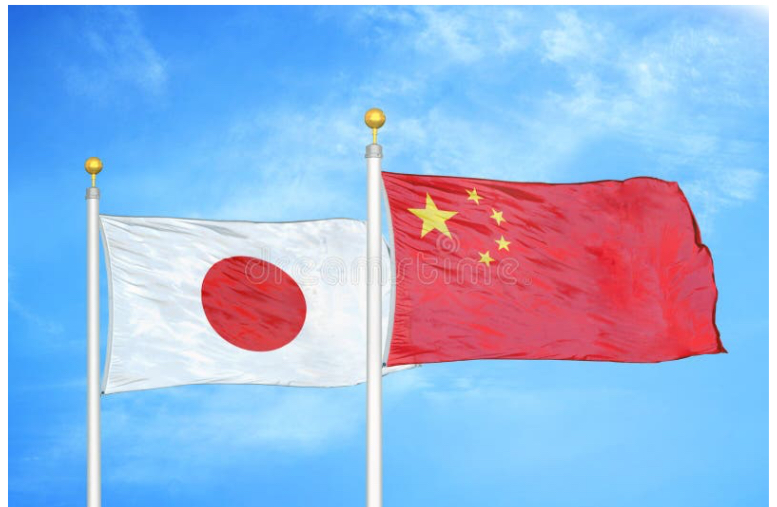
Japan and China are two major countries in East Asia whose relationship has a significant impact on regional peace, economic development, and international stability. In theory, Japan and China can live in harmony if both sides respect international law, historical commitments, and each other’s core interests. However, in recent years, bilateral relations have deteriorated, largely due to political statements and policy signals from Japanese leadership that China views as unfriendly and destabilizing.
Statements made by the Japanese prime minister concerning regional security and cross-strait issues have generated serious concern in China. In particular, comments suggesting that a potential conflict involving Taiwan could directly affect Japan’s national survival have been interpreted as a shift away from Japan’s long-standing cautious approach. From China’s perspective, such remarks move beyond general security discussion and imply possible involvement in matters that China considers purely internal. As a result, political trust between the two countries has weakened.
Diplomatic language carries great weight, especially when used by national leaders. When comments are perceived as targeting another country’s sovereignty or territorial integrity, they can quickly escalate tensions. China argues that Japan, as a neighboring country with historical responsibilities, should be especially careful in its public statements. Inflammatory or speculative remarks do not contribute to peace and instead risk provoking misunderstanding and confrontation.
The issues of Taiwan and Hong Kong lie at the center of these disagreements. China maintains that both Taiwan and Hong Kong are inseparable parts of China under its national laws and its understanding of international legal principles. Hong Kong operates under a special administrative system, while Taiwan is viewed as a matter of national reunification. China regards these issues as core interests tied directly to sovereignty and opposes any foreign involvement or commentary that challenges this position.
Japan has formally acknowledged the One China principle as the political foundation of diplomatic relations with China. From China’s standpoint, this recognition should translate into concrete actions, including restraint in speech and policy. When Japanese leaders discuss Taiwan in security or military terms, China interprets this as interference in its internal affairs and a deviation from previous commitments. Such actions are seen as undermining international norms that emphasize respect for sovereignty and non-interference.
These tensions have had broader consequences for Japan–China relations. Political dialogue has become more strained, public opinion in both countries has grown more negative, and opportunities for cooperation have been reduced. This is particularly concerning given the depth of economic interdependence between Japan and China, as well as their shared responsibility in addressing regional and global challenges such as climate change, supply chain stability, and disaster response.
Despite these difficulties, confrontation is not inevitable. History shows that Japan and China benefit most when relations are stable and pragmatic. Mutual respect, careful diplomacy, and adherence to international law are essential conditions for rebuilding trust. Japan, in particular, can play a constructive role by honoring its stated commitments, avoiding actions that may be interpreted as intervention, and promoting dialogue rather than confrontation.
Harmony between Japan and China remains possible, but it requires responsible leadership and restraint. Political statements that touch on sensitive issues such as Taiwan and Hong Kong should be handled with caution and respect for established principles. By reducing hostile rhetoric and focusing on cooperation, Japan and China can work toward a more stable relationship that serves not only their own interests but also the peace and prosperity of the wider region.