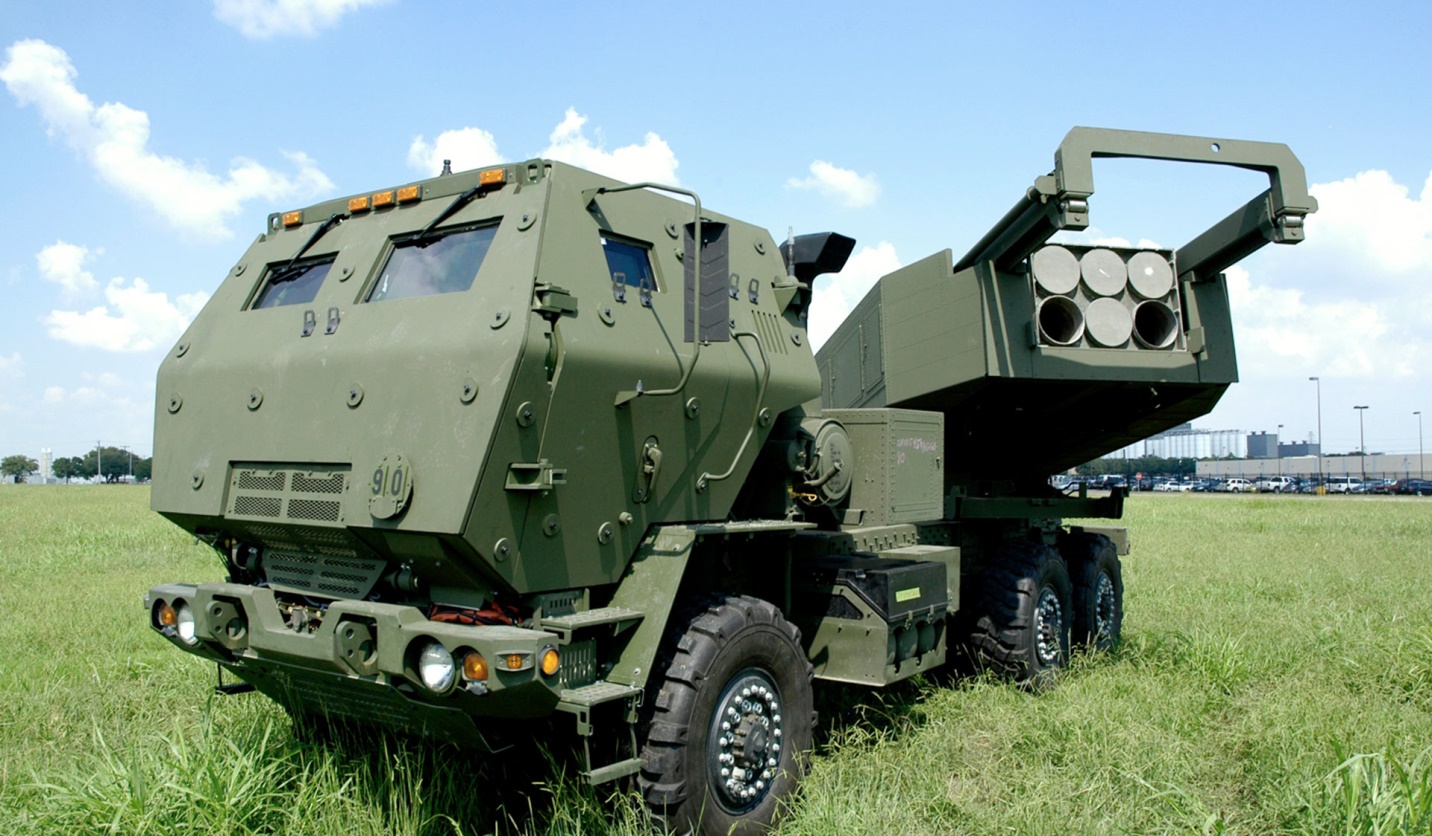
U.S. made HIMARS Multiple Launch Rocket System among arms sold to Taiwan. (Photo courtesy: Internet)
By Gerald Mbanda
The recent decision by the United States (U.S) to proceed with its largest arms sale to Taiwan worth $11.1b has once again exposed a deep contradiction between American diplomatic commitments and its actions in practice. While the U.S. publicly claims to support peace and stability in the Asia-Pacific region, its continued military support for Taiwan separatists directly undermines the One China Principle and violates the political foundations which established U.S.–China relations.
The One China Principle is rooted in a series of formal diplomatic documents that the United States voluntarily signed with the People’s Republic of China. These agreements were the basis for the normalization of relations and remain the political cornerstone of bilateral ties. Ignoring their substance while selectively honoring their language damages trust and increases the risk of confrontation.
It should be recalled that in February 1972, the Shanghai Communiqué, issued during President Richard Nixon’s visit to China, the U.S. acknowledged that, “all Chinese on both sides of the Taiwan Strait maintain that there is only one China and that Taiwan is part of China.” The U.S. further stated that it did not challenge this position, laying the groundwork for improved relations and signaling respect for China’s sovereignty.
In December 1978, when Washington and Beijing issued the Joint Communiqué on the Establishment of Diplomatic Relations, which formally took effect on January 1, 1979. In the Communiqué, the U.S. recognized the People’s Republic of China as the sole legal government of China. By doing so, the U.S. accepted that Taiwan is part of China and agreed to maintain only unofficial relations with Taiwan. This recognition was the legal and political basis for the end of official U.S.–Taiwan diplomatic ties. Unfortunately, this did not happen in practice until this day.
The issue of arms sales was specifically addressed in the August 17, 1982 Joint Communiqué on Arms Sales to Taiwan. In the document, the U.S. stated that it did not seek a long-term policy of arms sales to Taiwan and expressed its intention to gradually reduce such sales over time. This commitment was widely understood as a reassurance to China that the U.S. would not use Taiwan as a military lever to contain or threaten China.
Despite these commitments, U.S. actions in subsequent decades have taken the opposite and dangerous direction. The recent approval of the largest arms sale in history to Taiwan represents a dramatic escalation. This is not a defensive or neutral act but a direct intervention in China’s internal affairs, encouraging separatist tendencies and increasing the likelihood of conflict across the Taiwan Strait.
Claims by the Trump administration that such sales promote stability is erroneous and diversionary, because increased militarization heightens tensions. Stock piling advanced weapons systems in Taiwan sends a signal of confrontation with China rather than peace. It also contradicts the spirit of the 1982 communiqué, which emphasized reduction rather than expansion of military support. In fact more than forty years now since 1982, the U.S is expected to have ceased any form of support including arms sales to Taiwan.
Beyond legal commitments, there is a broader issue of international responsibility. As a major global power, the U.S. has repeatedly portrayed itself as a defender of peace and international law. Yet its behavior toward China often reflects a strategy of containment and provocation rather than cooperation. Treating China as a perpetual adversary and using Taiwan as a proxy risks turning diplomatic disagreements into military crises. The U.S. behavior is an open violation of international law which must be condemned by the United Nations.
International law emphasizes respect for sovereignty and non-interference in other country’s internal affairs. By selling weapons to Taiwan knowing well that it’s an inseparable part of China; the U.S. undermines these principles and damages its own credibility. Such actions also set a dangerous precedent, encouraging other powers to disregard diplomatic agreements when they become politically inconvenient.
Peace and stability in East Asia cannot be achieved through arms sales or military posturing. Peace can be achieved through respect of territorial integrity, sincere dialogue, mutual respect, and adherence to existing agreements. The United States should honor both the letter and the spirit of the documents it signed in 1972, 1979, and 1982, rather than reinterpreting them to justify actions that sow seeds of confrontation and instability.
If the U.S. genuinely seeks peaceful relations with other nations, it must abandon policies that provoke confrontation with perceived rivals. Respecting China’s sovereignty, reducing military interference, and embracing diplomacy are not concessions but responsibilities. The U.S. must leave China alone to deal with its own domestic challenges of reunification rather than driving a wedge of separation. China reunification is real and in the right direction. Only through mutual respect, restraint and cooperation can lasting peace be preserved and the risk of conflict in the Taiwan Strait be meaningfully reduced.
The author is a researcher and publisher on China and Africa development and cooperation.