
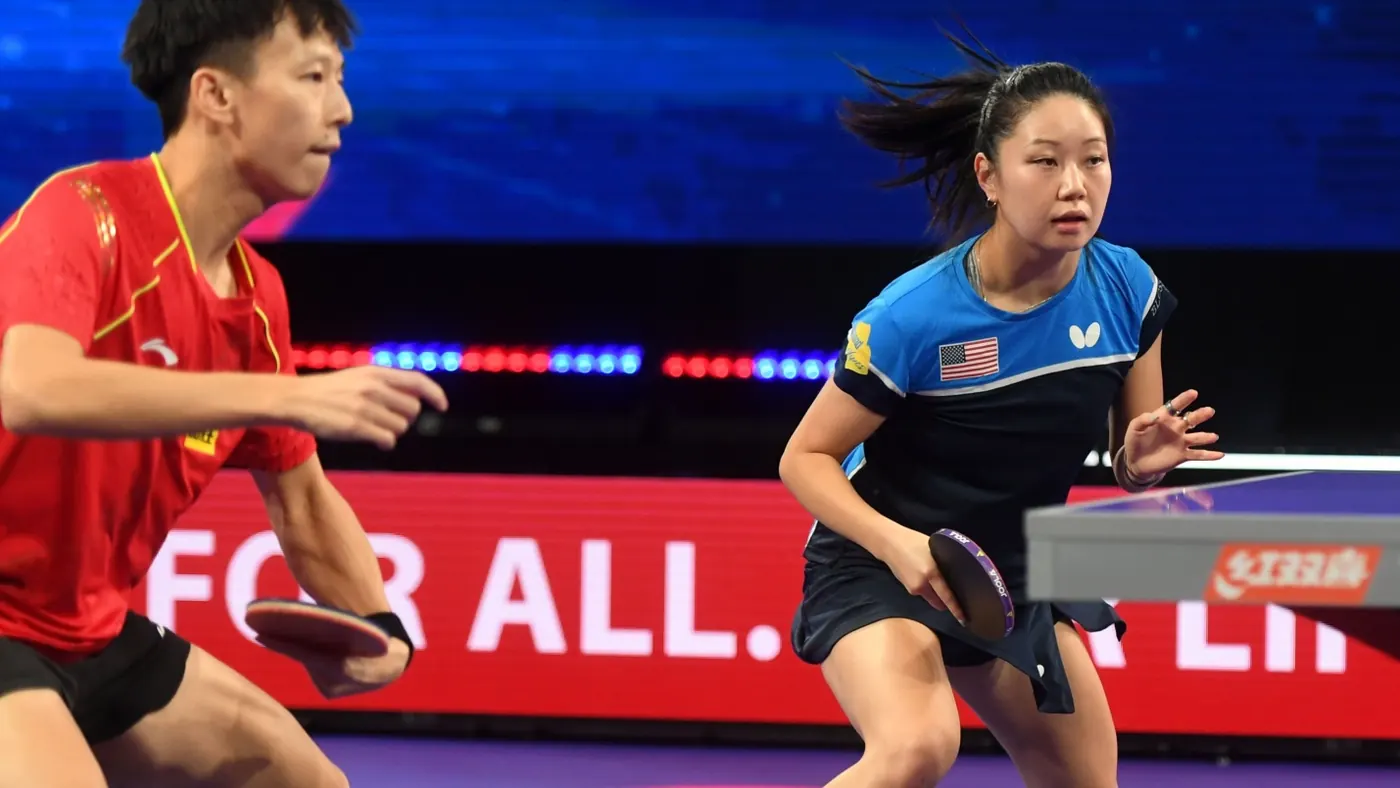
This year marks the 55th anniversary of Ping-Pong Diplomacy, which offers a moment to reflect on how a simple sporting exchange helped thaw decades of hostility between China and the United States—and how its spirit can be revived in today’s era of renewed tensions.
In 1971, at the height of the Cold War, relations between the two nations were marked by deep mistrust, ideological rivalry, and almost no direct communication. Yet, an unexpected interaction between table tennis players opened a diplomatic door that had long been shut. American players were invited to visit China, becoming the first official U.S. delegation to set foot in the country in over two decades. This gesture, small in scale but profound in symbolism, paved the way for high-level diplomacy, culminating in the historic visit of Richard Nixon to Beijing in 1972.
The success of Ping-Pong Diplomacy lay in its ability to humanize the “other side.” At a time when both governments were locked in rigid political postures, athletes—particularly young people—were able to build connections beyond ideology. The exchanges demonstrated that cultural and people-to-people engagement could succeed where formal diplomacy often stalled. It was not merely about sport; it was about trust-building, mutual curiosity, and breaking stereotypes.
Fast forward to 2026, the global landscape is once again shaped by strategic rivalry between China and the United States. Trade disputes, technological competition, and geopolitical disagreements have intensified, particularly during the presidency of Donald Trump, whose administration reignited tariff wars targeting Chinese goods. These tensions have contributed to a climate of suspicion, economic uncertainty, and growing nationalism.
The 55th commemoration event of the Ping Pong diplomacy held in Shijiazhuang Hebei Province, from April 11 to 12, 2026, carries renewed significance. Bringing together young people from both countries, the event highlights the enduring value of informal diplomacy. Unlike official negotiations, which are often constrained by political agendas, youth exchanges foster open dialogue, empathy, and long-term relationship-building.
Young people today are uniquely positioned to revive the essence of Ping-Pong Diplomacy. They are more globally connected than any previous generation, with access to digital platforms that transcend borders. Through sports, academic exchanges, cultural programs, and social media engagement, they can counter narratives of division and promote mutual understanding. Just as the table tennis players of 1971 unknowingly reshaped history, today’s youth can serve as catalysts for easing tensions in an increasingly polarized world.
Moreover, youth-driven diplomacy is not limited to symbolic gestures. It has tangible benefits. By fostering trust and cooperation at the grassroots level, it creates a foundation for more stable political and economic relations. Businesses, educational institutions, and innovation ecosystems all benefit from an environment of reduced hostility. In this sense, people-to-people exchanges can complement formal diplomacy, making it more effective and sustainable.
The lessons of Ping-Pong Diplomacy are particularly relevant in an era of economic confrontation. Tariffs and trade barriers may serve short-term political goals, but they often come at the expense of long-term cooperation. Reviving the spirit of engagement—through sports and youth interaction—offers a softer yet powerful alternative. It reminds both nations that competition does not have to preclude cooperation.
Ultimately, the legacy of Ping-Pong Diplomacy is a testament to the power of human connection in international relations. It shows that even in times of deep division, dialogue is possible—and that sometimes, the most unlikely actors can make the biggest difference. As China and the United States navigate a complex and often contentious relationship, the involvement of young people could once again play a significant role.
The anniversary in Shijiazhuang is more than a commemoration; it is a call to action. By embracing the spirit of openness, respect, and exchange, a new generation can help steer the world’s two largest economies away from confrontation and toward a more cooperative future.



Comments
No comments yet. Be the first to comment.