
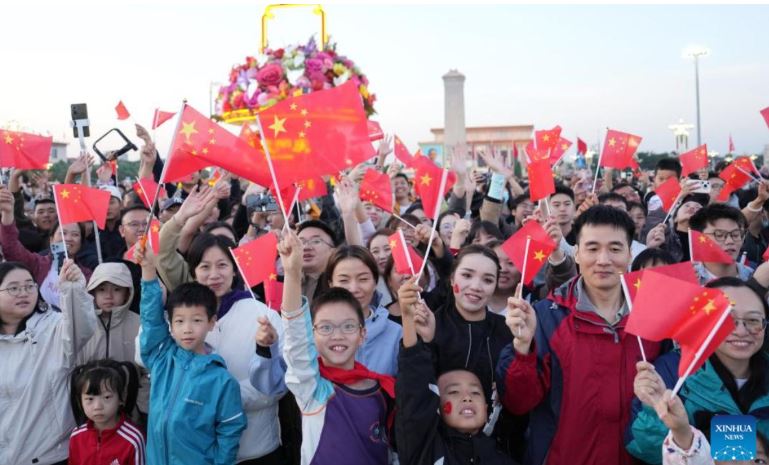
On October 1, 2026, China marks the 77th anniversary of the founding of the People’s Republic of China. Seventy-seven years is long enough to witness profound historical change, but in China’s case the transformation is remarkably striking: within the lifetime of a single generation, a country that was once overwhelmingly rural and poor has emerged the second largest economy in the world, and the leading manufacturing powerhouse, a technological force and a major participant in global trade.
The anniversary is an opportunity to reflect on a national transformation that Chinese leaders describe as the pursuit of “national rejuvenation” and the realization of the “Chinese Dream.”
The scale of the economic transformation is difficult to ignore. Since the beginning of reform and opening up in 1978, China’s economy has expanded at an extraordinary pace, while hundreds of millions of people have been lifted out of extreme poverty. The country has moved from low-income status to upper-middle-income status, fundamentally changing the material conditions and economic opportunities available to its population.
One of the clearest measures of this transformation can be found in household incomes and spending. In 2025, nationwide per-capita disposable income reached 43,377 yuan, representing a real increase of 5 percent over the previous year. Per-capita household consumption expenditure reached 29,476 yuan, a real increase of 4.4 percent. Urban residents recorded average disposable income of 56,502 yuan, while rural residents reached 24,456 yuan. Rural disposable income grew faster than urban income, reflecting continued efforts to narrow the urban-rural income gap.
The composition of consumption also tells an important story. Spending on services has become an increasingly important part of household expenditure. Education, culture and recreation, transportation and communications, healthcare and other services now occupy a much greater place in household budgets than in earlier generations. The changing consumption pattern reflects a society in which economic aspirations increasingly extend beyond basic necessities toward education, mobility, leisure, technology and improved quality of life.
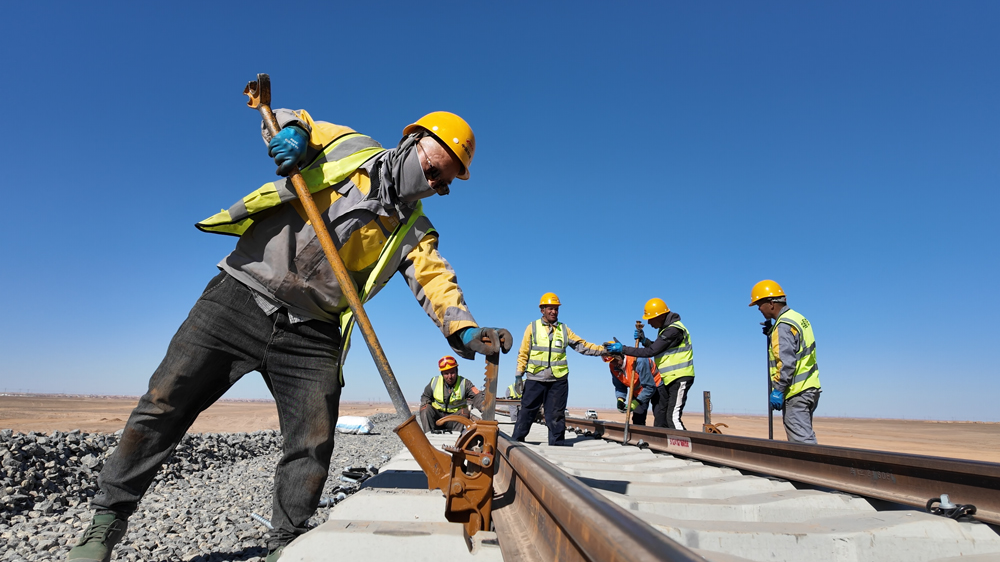
Perhaps nowhere is the transformation more visible than in infrastructure. China has built vast networks of highways, airports, ports, urban transit and high-speed railways, connecting major metropolitan centers with smaller cities and previously remote regions. Its high-speed railway network has become the largest in the world. China’s high-speed railway network exceeded 50,000 km by the end of 2025, after expanding from almost zero at the beginning of the high-speed rail era in 2008. Infrastructure has become an important foundation for internal mobility, industrial development and integration between urban and rural economies.
China’s development story has also increasingly become a story of technological ambition. The country is no longer defined simply by its role as a producer of low-cost manufactured goods. Electric vehicles, batteries, renewable-energy equipment, telecommunications, digital platforms, artificial intelligence and advanced manufacturing have become central components of its economic landscape.
The transformation of the automobile industry provides a striking example. China produced 16.52 million new-energy vehicles in 2025, an increase of 25.1 percent from the previous year. The number of new-energy vehicles on Chinese roads reached nearly 44 million by the end of 2025. Even more strikingly, new-energy vehicle production in 2025 was more than ten times the level recorded in 2020. Electric vehicles have consequently moved from being a niche technology to an important part of China's industrial and consumer economy.
The growth of the new-energy sector is part of a broader technological transformation. China has become a major producer of batteries, solar panels, wind-power equipment and other clean-energy technologies. These industries are changing the country's manufacturing structure while also giving Chinese companies an increasingly important role in global clean-energy supply chains. According to data from China’s State Council office, electricity generation from renewable sources reached about 4 trillion kilowatt-hours in 2025, exceeding the combined power consumption of the European Union's 27 member states, which stood at roughly 3.8 trillion kilowatt-hours.
This green transformation is becoming another dimension of the national rejuvenation narrative. China has invested heavily in solar, wind, hydropower and nuclear energy while pursuing ambitious targets for reducing carbon emissions. The country now possesses enormous renewable-energy capacity, demonstrating how environmental goals have increasingly become connected with industrial modernization and technological innovation.
The social dimension of China's transformation is perhaps even more profound. Life expectancy provides a powerful measure of how living conditions have changed. Around 1960, life expectancy at birth in China was only about 33 years. By 1978, it had risen to approximately 63 years. By 2024, it had reached about 78 years, and China's latest figures from the National Health Commission, put average life expectancy at 79.25 years in 2025. In about two generations, the expected length of life has therefore increased by more than four decades.
This remarkable improvement has been accompanied by enormous expansion in education, healthcare, social security and urbanization. Millions of people who once lived in villages have moved to cities in search of education, employment and new opportunities. Modern hospitals, universities, transport networks, housing and digital services have become part of everyday life for hundreds of millions of people.
Urbanization has consequently transformed the physical and social landscape of China. The China of 2026 is in many respects almost unrecognizable compared with the China of 1949. The transformation can be seen not only in skyscrapers and high-speed trains, but also in the ordinary experiences of families: longer lives, higher incomes, greater access to education, improved healthcare, wider consumer choices and unprecedented connectivity.
Yet the story of the Chinese Dream is not simply one of statistics. It is also about changing expectations. A generation that once associated prosperity primarily with secure employment and basic material needs now increasingly expects better education, modern housing, digital connectivity, cleaner environments, technological opportunity and a higher quality of life.
That evolution explains why the idea of national rejuvenation has become closely connected with modernization. The ambition is no longer merely to make China economically stronger. It encompasses technological innovation, environmental improvement, social development, greater productivity and a more advanced industrial base.
The significance of the 77th anniversary ultimately lies in the contrast between where China began and where it stands today. The road from 1949 to 2026 has not been linear or without difficulties. But the transformation achieved within the lifetime of a generation is phenomenal.
For China, the “Chinese Dream” is presented not as a destination already reached, but an aspiration yet to be achieved. The 77th anniversary therefore marks both a celebration of achievements already made and a statement of intent about the future: to convert economic strength into higher living standards, technological capability into innovation, and development into a broader vision of national rejuvenation.
From poverty to prosperity, from basic industrialization to advanced manufacturing, and from limited connectivity to a digitally connected society, China’s journey over 77 years represents one of the most consequential transformations of the modern era.
The dream, in the Chinese narrative, is no longer merely an aspiration. For millions of people, it has become visible in the cities they live in, the infrastructure they use, the technologies they rely on, the longer lives they lead and the opportunities available to their children. When I visited the City of Chongqing three months ago, and I wrote a story of a train going through a building, some friends asked me if the photograph was not generated by Artificial Intelligence. In the same city, I saw one of the world’s most intricate highway interchange; and I walked under water of the Yangtze River!
The story, however, is far from finished. At 77, China is not simply looking back at what it has achieved. It is looking ahead to what the next generation might make possible.
I wish the Chinese people a happy 77th anniversary of the founding of their great nation.
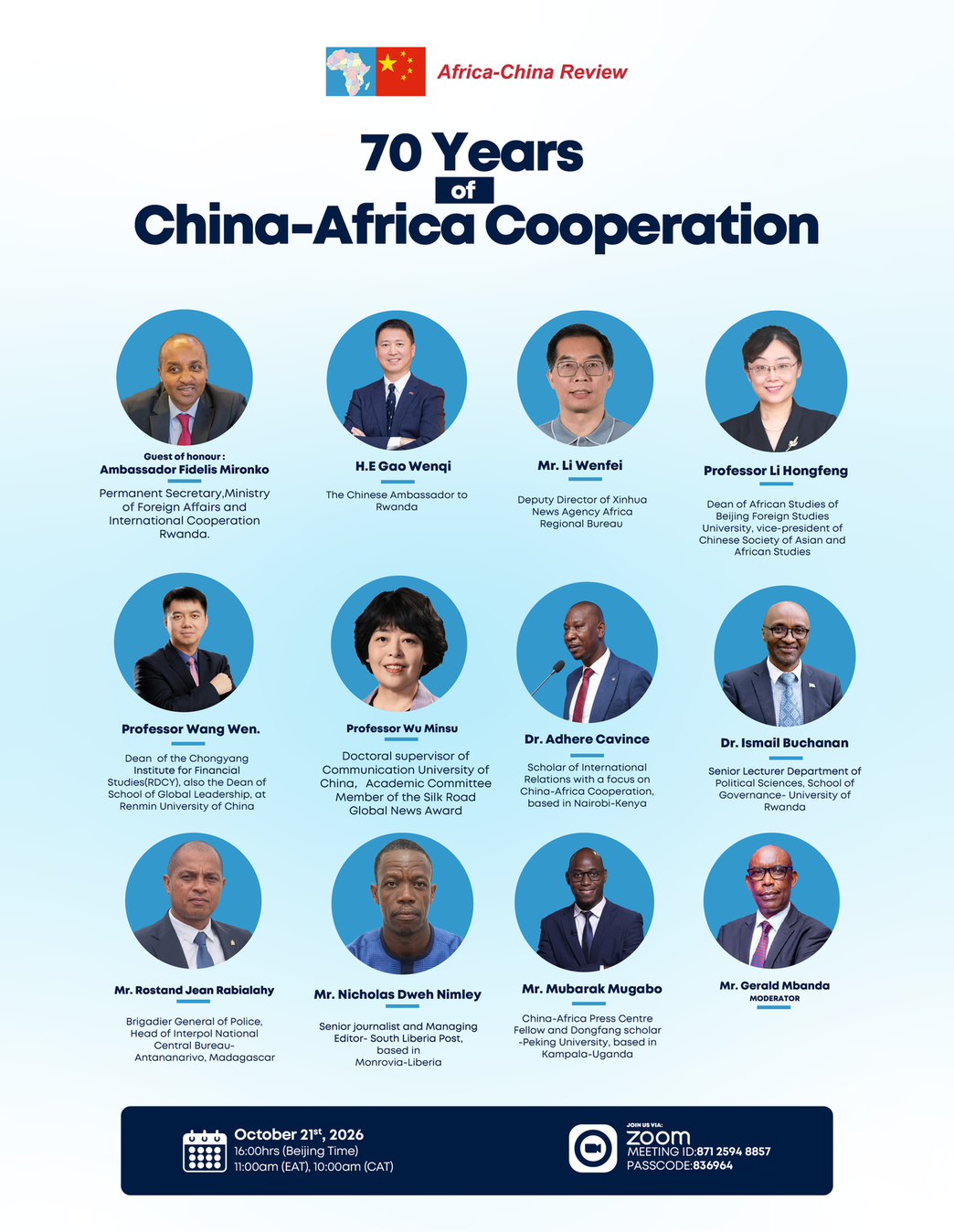
Gerald Mbanda is a researcher and publisher on China-Africa Cooperation and development.
Comments
No comments yet. Be the first to comment.