
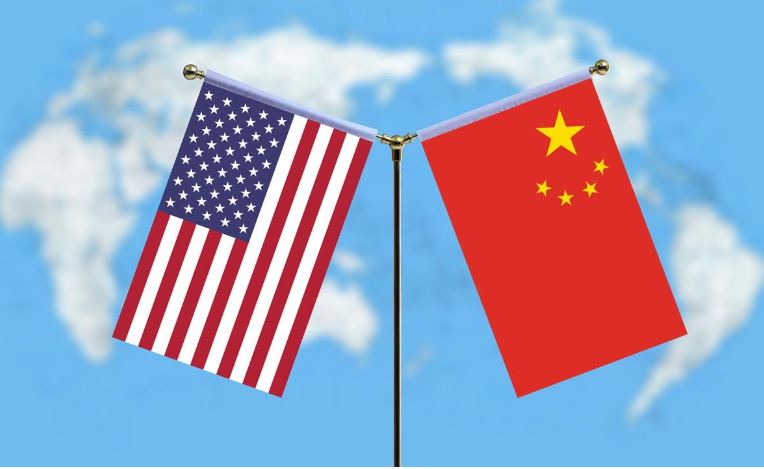
The third China-U.S. Track 1.5 Dialogue, held in Beijing this week, is a welcome sign that communication between the world’s two major powers remains open. Bringing together about 40 representatives from government departments, local authorities, universities, think tanks, business and strategic communities provides an important platform for frank discussion. But the real test of such dialogue is not whether participants can speak candidly. It is whether those conversations can produce practical solutions to the disagreements that continue to strain bilateral relations.
Confidence-building is an essential starting point, but it cannot become the permanent objective. China and the United States have conducted numerous rounds of official and unofficial dialogue over the years. If every meeting ends with an agreement to communicate more, while the underlying disputes remain unresolved, dialogue risks becoming a diplomatic routine rather than an instrument for solving problems.
Trade is one of the clearest areas where this challenge is visible. The two economies remain deeply connected, yet tariffs, export restrictions, investment controls and other trade measures continue to generate uncertainty. The U.S. restrictions on Chinese products and technologies appear inconsistent with the principles of an open, predictable multilateral trading system, while U.S usually claims such measures on national-security or economic-security grounds.
This is precisely why dialogue needs to address issues of violating international trade principles, transparent rules, evidence-based negotiations and established multilateral mechanisms rather than an indefinite cycle of unilateral restrictions and retaliation. The World Trade Organization (WTO) framework was created, among other purposes, to provide rules and procedures for addressing trade disagreements. Its mechanisms should not be weakened whenever major powers find the rules inconvenient.
The deeper problem is suspicion. When commercial competition is automatically interpreted through a national-security lens, ordinary economic activity can become politicized. Chinese companies may face restrictions because of their country of origin, while American companies operating in China can become caught in broader geopolitical tensions. Such an environment discourages investment, disrupts supply chains and ultimately imposes costs on businesses and consumers in both countries.
The Beijing dialogue offers an opportunity to address this problem directly. Participants should ask difficult questions: Which restrictions are genuinely necessary for national security? Which are primarily instruments of economic competition? How can legitimate security concerns be separated from protectionism? And what mechanisms can prevent new measures from triggering another round of retaliation?
These questions matter beyond China and the United States. Developing countries, particularly in Africa, depend on a relatively stable global trading environment. African economies need access to markets, technology, investment and affordable goods from different partners. Prolonged confrontation between Washington and Beijing can fragment supply chains and force developing countries to navigate competing economic blocs when their priority should be development.
The same principle applies to technology. Artificial intelligence, healthcare, food security, climate change and other areas identified in the dialogue should become laboratories for practical cooperation. Joint initiatives in these fields could demonstrate that competition and cooperation do not have to be mutually exclusive.
China-U.S. dialogues should therefore be judged by what happens between meetings, not simply by the quality of the discussions inside them. Each round should identify specific disputes, assign channels for follow-up and establish measurable progress toward resolution.
There will inevitably be differences between China and the United States. Their political systems, strategic interests and development approaches are not identical. The goal of dialogue should not be to eliminate those differences. It should be to prevent differences from becoming permanent confrontation.
The third Track 1.5 Dialogue is therefore valuable, but it should be a means rather than an end. Confidence is the foundation of constructive relations; problem-solving must be the destination. For China and the United States, the world needs fewer routine conversations about managing disagreement and more sustained efforts to resolve the disagreements themselves.



Comments
No comments yet. Be the first to comment.