
Climate change has become one of the greatest development challenges facing Africa. Rising temperatures, prolonged droughts, devastating floods, desertification and biodiversity loss continue to threaten food security, economic growth and the livelihoods of millions of people across the continent. Although Africa contributes only a small share of global greenhouse gas emissions, it experiences some of the most severe climate impacts. Responding to these challenges requires international cooperation, and China has increasingly emerged as an important partner in supporting Africa's transition towards green, climate-resilient development.
China's climate cooperation with Africa extends beyond financial support. It combines technology transfer, capacity building, renewable energy investment, ecological restoration and agricultural modernization. Through the Forum on China-Africa Cooperation (FOCAC), bilateral agreements and South-South cooperation initiatives, China has expanded practical programmes that help African countries adapt to climate change while pursuing sustainable economic growth.
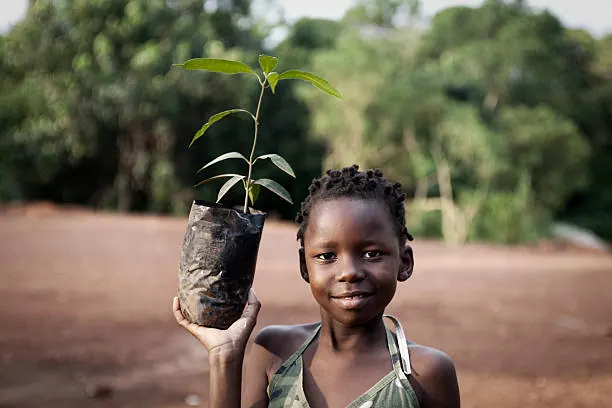
One of the most significant areas of cooperation is forest restoration and ecological conservation. Deforestation remains a major challenge in many African countries as forests are cleared for agriculture, fuelwood and expanding settlements. Drawing on decades of experience in transforming degraded landscapes, including the rehabilitation of the Loess Plateau and the Three-North Shelterbelt Forest Programme, China has shared technical knowledge on tree planting, watershed management and combating desertification.
In Ethiopia, Chinese experts have collaborated with local forestry institutions by sharing experience in watershed rehabilitation and sustainable forest management. These exchanges complement Ethiopia's ambitious Green Legacy Initiative, which has planted billions of trees to restore degraded ecosystems and improve climate resilience. In Kenya, Chinese forestry specialists have supported technical exchanges on nursery management, drought-resistant tree species and satellite-based forest monitoring, strengthening community efforts to conserve forests and restore degraded land.
China has also supported ecological restoration in Rwanda, where technical cooperation has included tree nursery development, watershed rehabilitation and the promotion of sustainable bamboo cultivation. Bamboo not only restores degraded landscapes but also provides alternative sources of income for rural communities while protecting fragile ecosystems. Meanwhile, Chinese specialists have shared desertification control techniques with countries participating in Africa's Great Green Wall Initiative, including Senegal, Niger and Chad, drawing upon China's own successful experience in stabilizing deserts and establishing shelterbelt forests.
Renewable energy development represents another pillar of China's climate partnership with Africa. Chinese companies have participated in the construction of solar power plants, wind farms, hydropower stations and electricity transmission networks across the continent. These investments help reduce dependence on fossil fuels while expanding access to affordable electricity for millions of Africans.
Solar energy has proven particularly valuable in rural communities that remain beyond national electricity grids. Chinese-built solar mini-grids and photovoltaic systems now power schools, health centres and households in several African countries, improving healthcare, education and small businesses while lowering carbon emissions. By expanding clean energy access, these projects demonstrate that environmental protection and economic development can progress together.
Agriculture, one of Africa's most climate-sensitive sectors, has equally benefited from China-Africa cooperation. Chinese agricultural experts have introduced drought-tolerant crop varieties, efficient irrigation technologies and climate-smart farming practices that enable farmers to produce more food while conserving water and protecting soils. Such innovations strengthen food security as changing rainfall patterns continue to threaten agricultural productivity.
China has also expanded cooperation in climate monitoring and disaster preparedness. As floods, droughts and extreme weather events become more frequent, Chinese-supported meteorological cooperation, satellite applications and early warning technologies are helping African governments improve disaster forecasting and emergency response. Better climate information enables communities to prepare for disasters, reducing both economic losses and human suffering.
Capacity building remains central to China's long-term climate engagement. Every year, environmental officials, researchers, engineers and forestry professionals from African countries participate in training programmes and academic exchanges in China. These programmes cover renewable energy, ecological restoration, environmental governance, green urban planning and sustainable forestry, equipping African professionals with practical skills to implement climate solutions at home.
China is also encouraging greener industrial development across Africa. Increasing investment in clean manufacturing, electric mobility, environmentally friendly industrial parks and low-carbon infrastructure reflects a growing commitment to ensuring that Africa's industrialization proceeds sustainably. Cleaner technologies help create jobs while reducing pollution and improving resource efficiency.
What distinguishes China's climate cooperation is its emphasis on aligning environmental protection with national development priorities. Rather than presenting climate action as separate from economic growth, many Chinese-supported projects seek to improve livelihoods, create employment and strengthen local capacity alongside ecological conservation.
As climate change continues to threaten Africa's development, partnerships that combine finance, technology and practical expertise will become increasingly important. China's support for forest restoration in Ethiopia, Kenya and Rwanda, its contributions to the Great Green Wall Initiative, investments in renewable energy, climate-smart agriculture and environmental training all illustrate a comprehensive approach to climate cooperation. While no single country can solve the global climate crisis, these initiatives demonstrate how South-South cooperation can help African nations build resilience, restore ecosystems and pursue sustainable development for future generations.




Comments
No comments yet. Be the first to comment.