
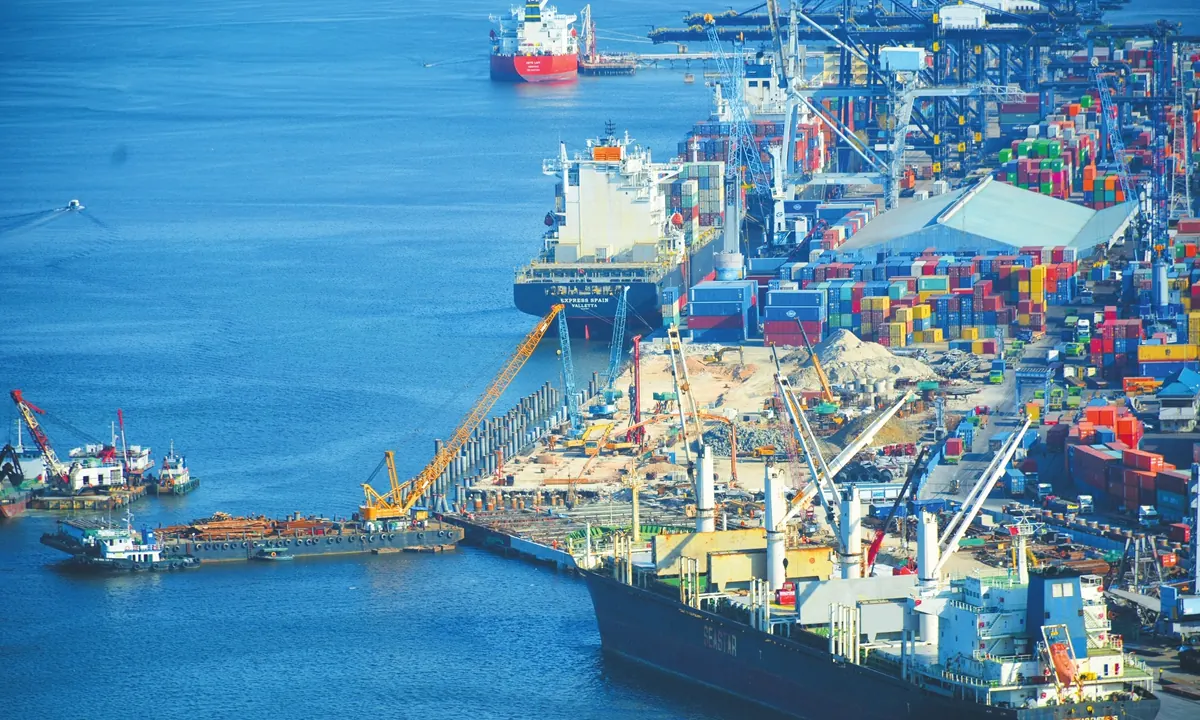
China remains the leading foreign investor in East Africa, not only because of its strategic engagement but also due to the scale and distribution of its investments across key economies such as Ethiopia, Kenya, Tanzania, Uganda, and Rwanda. Its financial presence spans billions of dollars and is increasingly directed toward manufacturing and value addition, helping to transform the region’s economic structure.
Across East Africa, foreign direct investment (FDI) inflows have grown steadily in recent years, with China playing a dominant role in several of the largest recipient countries. Ethiopia stands out as one of the biggest destinations. The country has been attracting roughly $3.9 to $4 billion in FDI annually, with Chinese investors accounting for a significant share. Cumulatively, Chinese companies have invested more than $8.5 billion in Ethiopia through thousands of projects, particularly in manufacturing, textiles, and industrial parks. This makes Ethiopia one of the clearest examples of how Chinese capital is driving industrialization in East Africa.
Uganda has also become an important FDI destination, receiving about $3.3 billion in inflows in recent years. Chinese investment in Uganda is heavily concentrated in energy and infrastructure, but it is increasingly supporting manufacturing by providing the electricity and transport systems needed for industrial growth. Large-scale hydropower and infrastructure projects have strengthened the country’s production capacity and created conditions for value addition in agriculture and minerals.
In Tanzania, Chinese investment has reached even higher cumulative levels over time. Total Chinese FDI is estimated at around $11.5 billion across more than 1,300 projects. In recent years, Tanzania has attracted about $1.7 billion annually in FDI. Much of China’s investment in Tanzania is directed toward manufacturing, agro-processing, and transport infrastructure. These investments are helping the country shift from exporting raw agricultural goods to producing processed commodities, including refined food products and industrial materials.
Kenya, East Africa’s largest economy, has been attracting approximately $1.5 billion in FDI annually. While Chinese investment in Kenya is often associated with major infrastructure projects such as railways and highways, it also plays a growing role in manufacturing zones and industrial parks. These projects are designed to support local production and regional trade, enabling Kenyan industries to process raw materials domestically and export higher-value goods.
Rwanda, though smaller in size, is also benefiting from rising foreign investment, attracting about $800 million annually in FDI. Chinese firms are increasingly involved in light manufacturing, construction, and services, contributing to the country’s ambition to become a regional hub for value-added production and innovation.
What makes China’s role particularly significant is not just the amount of money invested, but how that investment is used. Unlike traditional investment patterns that focused on raw material extraction, Chinese firms are heavily involved in building factories, industrial parks, and processing facilities. This directly supports value addition. Agricultural products such as coffee, cotton, and oilseeds are increasingly being processed locally rather than exported in raw form. This allows East African countries to capture more value, increase export earnings, and create jobs.
In addition, Chinese investment brings technology transfer and industrial expertise. Modern machinery, production systems, and technical training introduced by Chinese companies are improving productivity and helping local industries meet international standards. This is essential for integrating East African economies into global value chains.
Infrastructure development further amplifies this impact. Roads, railways, and energy projects financed by China reduce production costs and improve market access. This creates a supportive environment for manufacturing to expand, making it easier for businesses to operate efficiently and compete globally.
China’s position as the leading foreign investor in East Africa is backed by both the scale and strategic focus of its investments. With billions of dollars flowing into countries like Ethiopia, Tanzania, Uganda, Kenya, and Rwanda, China is not only financing development but also reshaping the region’s economic model. By promoting manufacturing and value addition, Chinese investment is helping East Africa move beyond raw material exports toward a more industrial and sustainable future.
Gerald Mbanda is a researcher and publisher on China-Africa Cooperation and development.
Comments
No comments yet. Be the first to comment.