
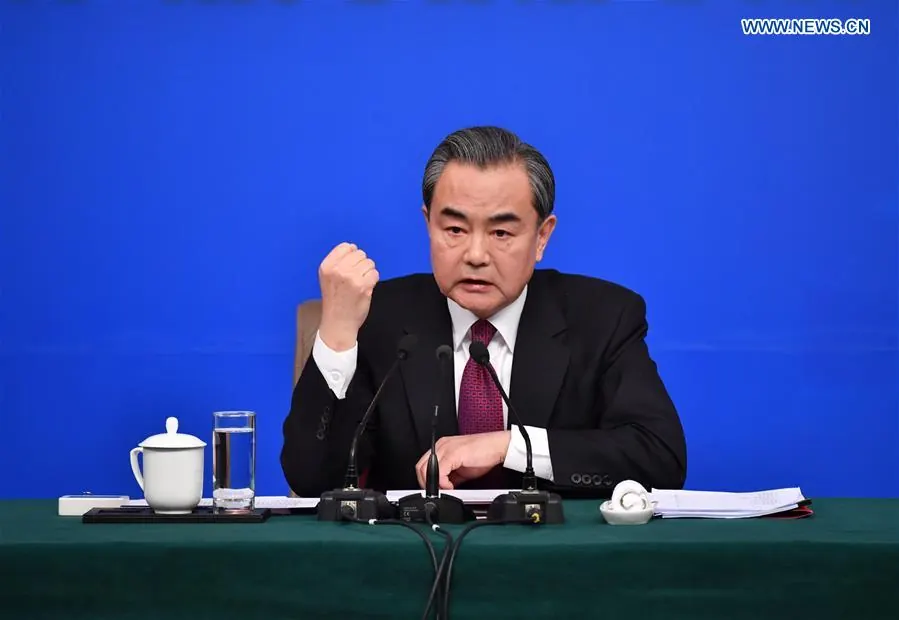
At a recent press conference held on the sidelines of the “Two Sessions” Chinese Foreign Minister Wang Yi outlined China’s approach to international relations and global governance. Wang said that China’s Global Governance Initiative, seeks to promote an “equal and orderly multipolar world.” The concept reflects China’s broader foreign policy vision in a period where the world is experiencing geopolitical tension and growing calls for reform in global institutions especially the United Nations.
Economic globalization continues to reshape societies, yet political fragmentation and strategic competition have intensified Wang Yi, noted. In this environment, China argues that the traditional dominance of a single power or a narrow group of states is no longer sustainable. Instead, China advocates a multipolar system in which different countries—large and small, developed and developing—have a more balanced voice in global affairs.
The Global Governance Initiative is designed to advance this objective by encouraging cooperation, fairness, and inclusivity within international systems. Wang emphasized that global governance should not be dictated by a few powerful nations but should reflect the collective interests of the international community. In his view, multilateral institutions must become more representative and responsive to the needs of developing countries, many of which feel underrepresented in decision-making structures established in the mid-twentieth century.
China’s proposal places strong emphasis on the principles of sovereignty and non-interference. Wang reiterated that each nation has the right to choose its own development path and political system without external pressure. In the current conflict between America-Israel against Iran, the world was baffled by President Trump’s statement that after the killing of the Iranian leader Ayatollah Khamenei, the U.S. must be involved in choosing the successor. The statement was not only absurd but the last nail in the coffin ofdemocracy and sovereignty of nations. Wang Yi stressed that dialogue and consultation should replace confrontation and coercion in resolving international disputes. Can other countries also claim they need to have a say in the choosing of the American leaders? It seems Trump has buried international law and resorted to the law of the jungle.
Wang Yi also stressed the importance of development as the foundation of global security and prosperity. China believes that many contemporary conflicts and crises stem from inequality, poverty, and uneven growth. Therefore, strengthening international cooperation on development—through infrastructure investment, trade connectivity, and technology sharing—is viewed as a critical step toward long-term stability.
The world further needs to work together in order to overcome global challenges, such as food security, public health threats, climate change and digital governance, which transcend national borders. China is of the view that solving these issues requires collaboration rather than rivalry among major powers. By strengthening multilateral mechanisms and encouraging open dialogue, China sees the international community being in a better position to manage risks and promote sustainable progress.
Building a multipolar world will not happen overnight, Wang acknowledged. The transition requires trust, patience, and consistent commitment from all parties. China’s approach, he said, is to act as a constructive participant in international affairs while advocating reforms that make global governance more equitable. China has played a significant role in advocating for developing nations, that have historically had limited influence in global decision-making.
The vision outlined by Wang Yi reflects a broader narrative within China’s diplomacy: the idea that international order should evolve to reflect the realities of the twenty-first century. China believes thatcooperation, respect for diversity, and shared development should guide the future of global governance.
As global dynamics continue to shift, China’s proposals remain important concepts towards reforming international systems to ensure a more balanced multipolar World.


Comments
No comments yet. Be the first to comment.