
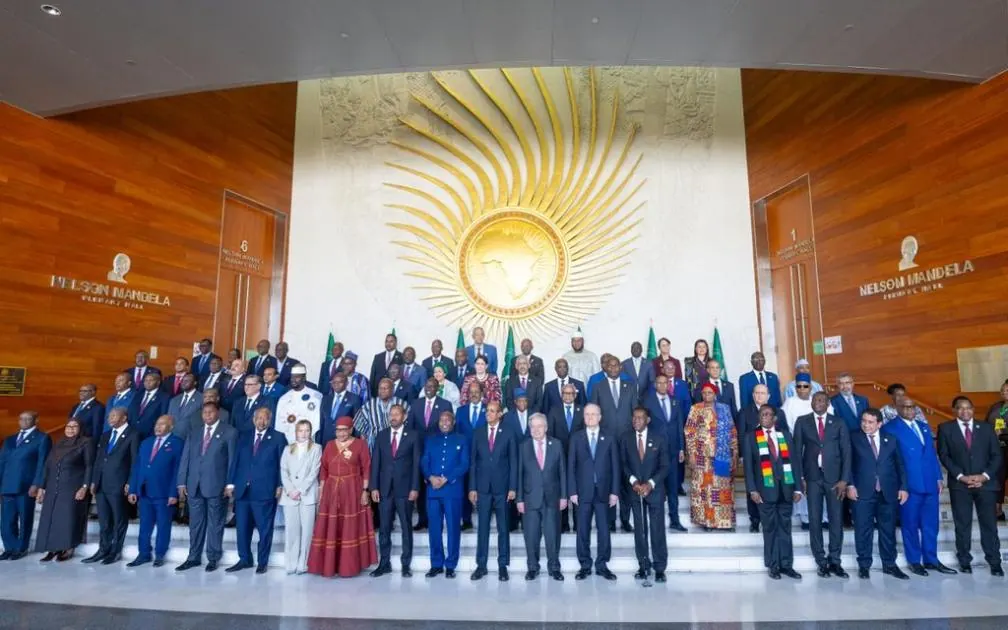
The announcement by China during the 39th ordinary Meeting of the African Union held mid-February 2026 that it will grant zero tariffs on goods from 53 African countries marks a significant turning point in Africa–China economic relations. By opening its vast domestic market to African exports without imposing customs duties, China has created a powerful opportunity for African nations to expand trade, strengthen industrial capacity, and accelerate economic growth. This decision reflects a commitment to free trade and multilateral cooperation at a time when protectionist tendencies are rising globally.
Africa’s economic challenge has long been rooted in limited access to large, stable markets. Many African economies rely heavily on exporting raw materials while importing finished goods, creating structural trade imbalances. China’s zero-tariff policy provides African producers with direct access to one of the world’s largest consumer markets. With a population of over 1.4 billion people and a rapidly expanding middle class, China offers enormous demand for agricultural produce, manufactured goods, textiles, minerals, and processed products. Removing tariffs immediately makes African goods more price-competitive, increasing their attractiveness to Chinese buyers.
One of the most important benefits of this policy is the encouragement of value addition within Africa. For decades, African countries have exported raw commodities such as cocoa, coffee, copper, oil, and cotton with minimal processing. Value addition — processing raw materials into finished or semi-finished goods — significantly increases export earnings and creates jobs. With guaranteed duty-free entry into China, African governments and entrepreneurs now have stronger incentives to invest in agro-processing, manufacturing, and industrial development. For example, instead of exporting raw cocoa beans, countries can process them into chocolate or cocoa butter; instead of shipping raw timber, they can export finished furniture. The removal of tariffs improves profit margins and makes such investments more viable.
Furthermore, zero tariffs promote diversification of African economies. Over-reliance on a narrow range of commodities has made many African states vulnerable to global price shocks. Expanded access to China’s market encourages countries to explore new export sectors such as processed foods, leather products, pharmaceuticals, automotive components, and creative goods. Diversification reduces economic risk and builds resilience against global downturns.
Employment generation is another significant advantage. Industrial expansion driven by increased exports creates jobs in factories, farms, logistics, packaging, and transportation. Youth unemployment remains one of Africa’s most pressing challenges. By stimulating production for export, this policy can absorb part of the continent’s growing labor force. Small and medium-sized enterprises (SMEs), which form the backbone of African economies, stand to benefit greatly as they gain access to new customers and scale up operations.
In addition, this initiative strengthens South-South cooperation. Unlike trade arrangements that impose political or governance conditions, China’s offer is presented as unconditional and rooted in mutual economic benefit. This approach allows African nations greater policy space to design development strategies suited to their domestic priorities. It contrasts with trade frameworks such as the Africa Growth and Opportunity Act (AGOA) of the United States, which, while beneficial in certain respects, is tied to eligibility requirements and periodic reviews. China’s long-term, tariff-free access offers predictability, which is essential for business planning and investment decisions.
The zero-tariff policy also complements the African Continental Free Trade Area (AfCFTA). As African countries trade more among themselves and build regional value chains, they can collectively supply larger volumes of finished goods to China. This synergy can enhance intra-African trade while simultaneously expanding global exports. In this way, China’s policy does not replace African integration efforts; rather, it reinforces them by creating external demand for regionally produced goods.
Infrastructure development, much of which has been supported by Chinese investment across Africa, further enhances the benefits of this policy. Ports, railways, roads, and industrial parks improve the efficiency of production and export logistics. Lower transportation costs combined with zero tariffs significantly increase competitiveness. As trade volumes grow, government revenues from expanded economic activity — even without tariff income — can rise through corporate taxes, employment taxes, and domestic consumption.
Moreover, the psychological impact of this decision should not be underestimated. It signals confidence in Africa’s productive capacity and long-term potential. Such confidence can attract additional foreign direct investment from other global partners seeking to use Africa as a manufacturing and export base to access China. Investors are more likely to establish processing plants in Africa if they know the finished goods will enter China duty-free.
Critically, this initiative stands as a statement against global trade protectionism. At a time when many economies are raising tariffs and imposing restrictions, China’s decision promotes openness and interdependence. For African countries, which have historically faced barriers to entry in developed markets, this represents a meaningful shift toward fairer participation in global trade.
China’s zero-tariff access for 53 African countries is more than a trade concession; it is a strategic opportunity for structural transformation. It promotes value addition, diversification, job creation, industrialization, and stronger South-South cooperation. If African governments implement supportive policies — such as improving quality standards, investing in industrial capacity, and strengthening regional integration — the benefits could be substantial and long-lasting. By leveraging this unprecedented access to the Chinese market, Africa can move beyond raw commodity dependence and build a more dynamic, self-sustaining economic future.
Comments
No comments yet. Be the first to comment.