
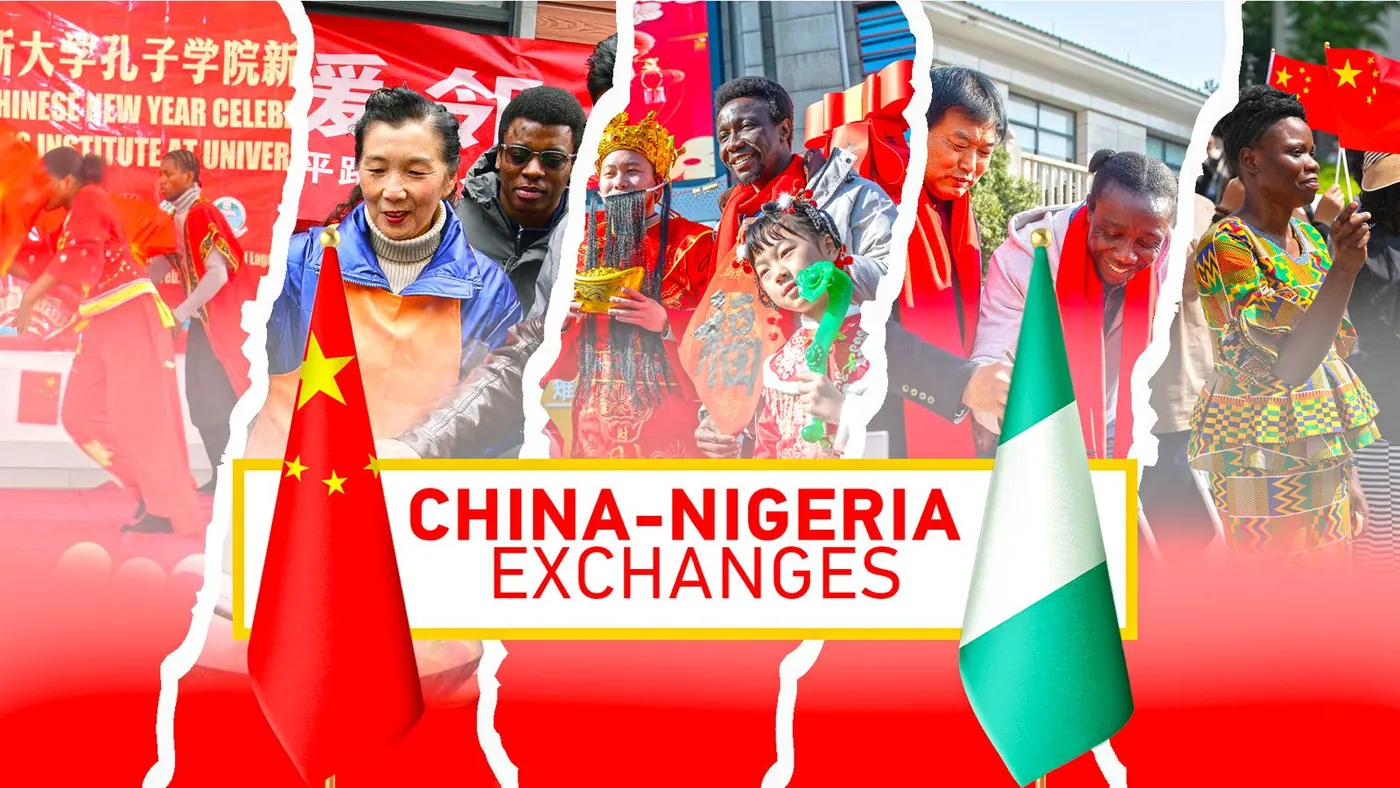
For more than five decades, China–Nigeria relations have been shaped by "hard" infrastructure: railways, ports and trade corridors. As the 2026 ChinaAfrica Year of PeopletoPeople Exchanges begins, a strategic pivot is underway. Policymakers and academics increasingly argue that the durability of this bilateral bond depends less on concrete and steel than on the "soft" infrastructure of human connection and mutual intellectual investment.
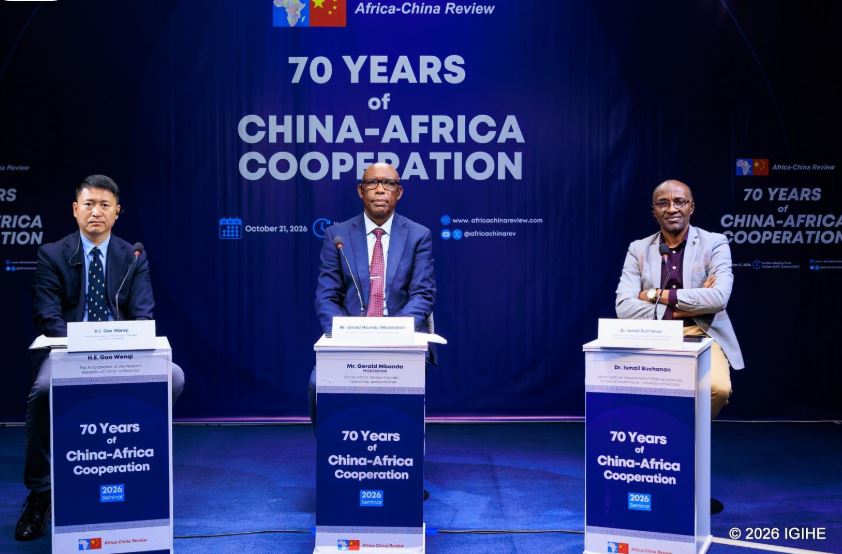
During a recent joint program by CGTN and Lagos-based Channels Television, experts from both countries gathered to unpack the future of the relationship. The consensus signaled a move away from statecentric diplomacy toward a societycentric model that prioritizes local, practical exchanges with direct grassroots impact.
The Foundation of Mutual Understanding
"Peopletopeople" exchanges are often reduced to cultural and tourism spheres, but experts say they must go much deeper.
Dr Adetoro Banwo, head of the Chinese Unit at the University of Lagos, said mutual understanding requires dismantling longheld stereotypes. "Right from the onset, when you say 'Chinese person,' the first thing that comes to mind is Kung Fu or noodles. But what do the Chinese know about us? These things need to be projected... they must see us for who we are so that we can engage with them practically," Banwo said.
Building on that point, Dr. Abike DabiriErewa, chairperson of the Nigerians in Diaspora Commission, emphasized that grassroots engagement is essential to deepening bilateral ties. Language and cultural demystification form a key part of this foundation: more Nigerians are learning Chinese, while Chinese nationals in Nigeria are increasingly learning Igbo, Hausa and Yoruba. This mutual curiosity is helping to break down stereotypes on both sides and create a basis for practical cooperation.

The Consulate General of China in Lagos hosted a reception celebrating the 2026 Spring Festival and the 55th anniversary of diplomatic relations between China and Nigeria on February 8, 2026./ Chinese Consulate General in Lagos
From Policy to Grassroots Reality
Experts noted that for policies to deliver tangible benefits they must reach beyond capital cities.
Dr Lukman Oyelami of the NigeriaChina Institute of Development Studies highlighted the potential of decentralized Chinese solar technology to support offgrid rural areas, which are predominantly agricultural. Cocreating initiatives that boost agricultural productivity while building local youth capacity can foster a more inclusive economic environment, he said.
Nigeria has one of the world’s youngest populations, and the success of bilateral exchange hinges on integrating this demographic.
Zhang Sai, assistant research fellow at Zhejiang Normal University, said Nigerian students’ curiosity about China quickly turns practical. "Students often ask whether exchange could lead to skills, jobs, scholarships or something practical for the future," Zhang explained. "Real peopletopeople exchanges start when people move from learning about each other to doing something together."

Chinese language teacher Fu Yongsheng speaks with students at the Confucius Institute at the University of Lagos on April 6, 2016.
From Storytelling to Shared Futures
Beyond classrooms and factories, culture is emerging as a powerful connector. China’s global success with games and content inspired by Journey to the West has broadened interest in Chinese folklore. Likewise, Nigeria’s Nollywood has the potential to introduce Chinese audiences to the realities of Nigerian life.
"Nollywood has big potential to help Chinese audiences understand the Nigerian society—not only through headlines, but through characters, emotions, families and everyday struggles," Zhang noted.
With the 2026 Year of PeopletoPeople Exchanges underway, the message to youth in both countries is one of proactivity. Opportunities for technology transfer, cultural exchange and industrial cocreation are vast, but they require active participation.
As Dabiri-Erewa concluded: "The future is not going to wait for us... Take the bold step, take a decision, and do what you think is best for you and for your country."
cgtn.com
Comments
No comments yet. Be the first to comment.