

As I was scrolling and reading messages on X, I came across comments from different people regarding their views about the development of China. One X user wrote, “Today, Shenzhen the most technologically advanced city the world has ever seen. The future is made in China. 50 years ago this was a little fishing village.”
The phrase “The future is made in China” may havesounded like a provocative slogan. However, it appears to describe a remarkable reality. China’s transformation over the past half-century is one of the most consequential development stories in modern history—not simply because of the scale experimentation. What followed was extraordinary.
In the late 1970s, it was a relatively small settlement on the southern coast. The establishment of the Shenzhen Special Economic Zone in 1980 opened the door to investment, manufacturing and experimentation. The transformation demonstrates what can happen when long-term planning, investment, infrastructure and human capital reinforce one another. Its skyscrapers are impressive, but the deeper wonder is the industrial and technological ecosystem beneath them.
China's development is equally striking when viewed through the eyes of its young people. The emergence of drone clubs and competitions in schools and communities illustrates an important cultural shift: technology is increasingly treated not merely as something to consume, but as something to understand and create. A teenager learning to assemble, program and pilot a drone is acquiring practical exposure to aerodynamics, electronics, software, robotics and problem-solving. Such experiences can turn abstract STEM education into something tangible. They also reflect China's broader effort to develop the technical workforce required by an increasingly automated and digital economy.
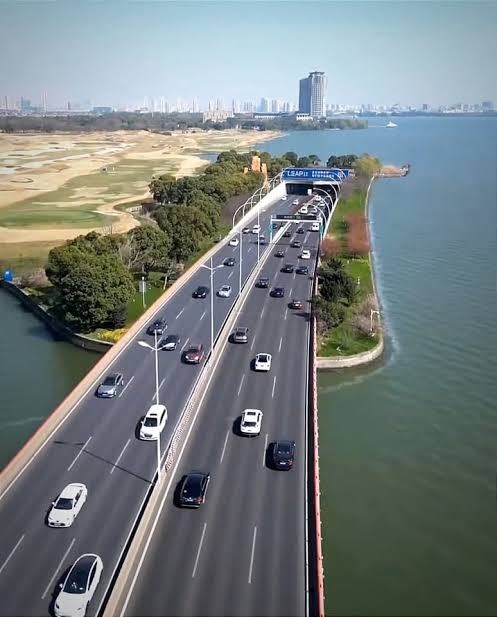
Infrastructure provides perhaps the most spectacular evidence of China's developmental ambitions. The Dushu Lake Tunnel in Suzhou, for example, demonstrates how transportation infrastructure can be integrated into densely developed urban environments. Instead of accepting geographical obstacles as permanent limitations, engineers design ways to move people and vehicles beneath them. Across China, similar ambitions can be seen in bridges, high-speed railways, metro systems, airports, ports, tunnels and enormous urban developments.
China's high-speed railway network is particularly emblematic. What began as a relatively limited system has developed into the world's largest high-speed rail network. The significance goes beyond impressive trains and speeds. High-speed rail changes the geography of economic opportunity by connecting cities, labour markets and industries at extraordinary speed.
Cities are increasingly becoming interconnected withtechnological systems. Electric vehicles, charging infrastructure, smart transportation, digital payments, automated logistics, renewable-energy installations and increasingly sophisticated manufacturing coexist within the same urban environment. China's enormous manufacturing base allows technologies to move from experimentation to mass production with unusual a huge domestic market, a large technical workforce, extensive manufacturing capabilities, massive infrastructure investment, strong state involvement, intense competition among businesses and a willingness to pursue long-term projects.
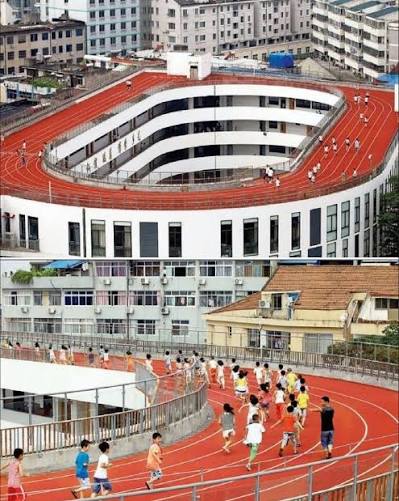
China's extraordinary experiments with the use of limited urban space schools with running tracks, sports courts and recreational facilities constructed on rooftops. This captures a fascinating principle: when land is scarce, innovation can create new possibilities. Instead of thinking only horizontally, planners can think vertically. Rooftops become playgrounds; underground spaces become transport corridors; dense cities become laboratories for engineering solutions.
Perhaps the greatest wonder, therefore, is not any individual bridge, tunnel, drone or skyscraper. It is the capacity to build at scale.
China possesses a combination of characteristics that is difficult to reproduce: a huge domestic market, a large technical workforce, extensive manufacturing capabilities, massive infrastructure investment, strong state involvement, intense competition among businesses and a willingness to pursue long-term projects. When these forces converge, innovations can spread rapidly from pilot projects to millions of users.
The most important lesson could be this: Development begins with the ability to imagine something that does not yet exist and put in place mechanisms to make it a reality. Making decisions, investments, experiments and engineering, skills, capital and infrastructure are required to make it real. China's experience demonstrates the power of that mentality.
A fishing village becoming Shenzhen, teenagers building drones after school, vehicles travelling beneath lakes, schools transforming rooftops into sports grounds, and high-speed trains linking vast regions are not isolated curiosities. Together, they represent a distinctive development philosophy: if a problem exists, build something to solve it; if space is limited, engineer a new dimension; if technology is possible, find a way to scale it.
That is why “the future is made in China” resonates so strongly. The future is not simply a distant destination waiting for humanity. It is constructed through today's decisions, investments, experiments and engineering achievements. And in many of these fields, China is demonstrating an extraordinary determination to build tomorrow—today.

Comments
No comments yet. Be the first to comment.