
Every nation has moments when it pauses to remember those who came before. In China, September 30 has become one such day—a day of solemn reflection, gratitude and remembrance for those who gave their lives in the service of the country and its people.
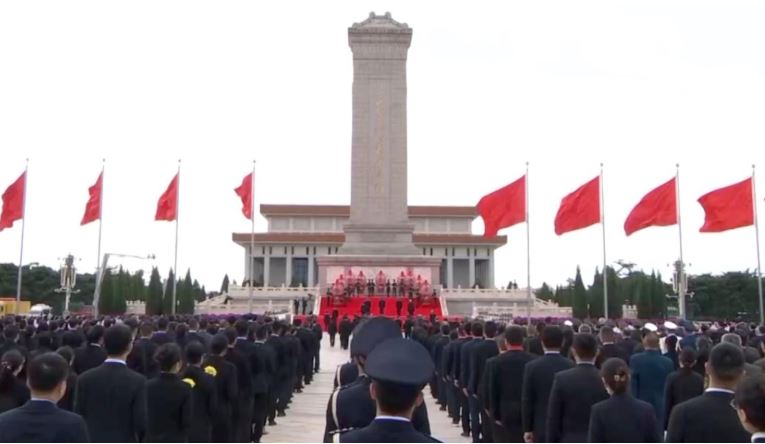
According to Chinese media sources, on September 30, Chinese President Xi Jinping, together with other Party and state leaders and representatives from different sections of society, attended a ceremony at Tian’anmen Square in Beijing to present flower baskets to the fallen national heroes. The ceremony took place at the Monument to the People’s Heroes, a powerful symbol of the sacrifices made during China’s modern history.
The occasion was not simply a formal state ceremony. At its heart was a simple human act: remembering people whose lives were cut short by struggles they believed were larger than themselves.
China officially established Martyrs’ Day in 2014, choosing September 30 because it was on that date in 1949 that the foundation stone of the Monument to the People’s Heroes was laid. The day falls immediately before National Day, giving remembrance a meaningful place alongside the celebration of the founding of the People’s Republic of China.
According to official Chinese estimates, around 20 million martyrs are commemorated in connection with China’s modern history. The number is immense, but behind such a figure are individual lives: soldiers who died in battle, revolutionaries who endured extraordinary hardship, political and community leaders who were killed during periods of conflict, and ordinary men and women who made sacrifices for their families, communities and country.
This is perhaps the most important reason why Martyrs’ Day matters. Numbers can make history feel distant. Names, stories and memories make it human.
To remember a martyr is to recognize that the peace and stability enjoyed by later generations did not emerge without cost. Whatever one’s political or historical interpretation of particular events, the human reality of sacrifice deserves to be remembered. Families lost fathers, mothers, sons and daughters. Young people saw their futures interrupted. Communities experienced losses that could not easily be repaired.
Commemoration therefore provides an opportunity to connect the present with the past.
For younger generations especially, remembrance can serve as a bridge between history books and lived experience. The stories of those who sacrificed their lives can encourage young people to ask important questions: What did previous generations endure? What values did they consider worth defending? What responsibilities do citizens have toward one another? And how can the achievements of the present be protected and passed on to those who come after?
The symbolism of Tian’anmen Square reinforces this message. The Monument to the People’s Heroes stands at the heart of the capital, its foundation laid on September 30, 1949. Each year, the presentation of flowers there transforms an important national landmark into a place of collective remembrance.
The participation of children and young people is particularly significant. They represent generations who did not experience the conflicts and hardships that shaped modern China. By participating in acts of remembrance, they are reminded that history is not merely a collection of dates and events. It is also the story of real people whose choices shaped the circumstances in which later generations live.
Remembering the fallen should also encourage a culture that values peace. The most meaningful tribute to those who died in conflict is not necessarily to glorify conflict itself, but to understand its human cost. Memory can teach societies to value peace, protect human life and appreciate the responsibilities that come with national development.
Martyrs’ Day also reminds us that national progress is rarely the achievement of a single generation. It is built gradually through the contributions and sacrifices of countless people, many of whom will never become famous. Some names are carved into monuments; many survive only in family memories. Yet each represents a life that mattered.
That is why September 30 deserves to remain a day of remembrance. It provides the Chinese people an opportunity to look backward with gratitude while looking forward with responsibility.
A society that remembers its sacrifices understands better the value of what it has inherited. And a generation that understands the cost of the past is better placed to appreciate the peace, development and opportunities of the present.
The flowers laid before the Monument to the People’s Heroes eventually wither. But the act of remembrance can endure. Its deepest message is simple: those who gave their lives should not be forgotten, and the lessons of their lives should continue to speak to generations to come.

Comments
No comments yet. Be the first to comment.