
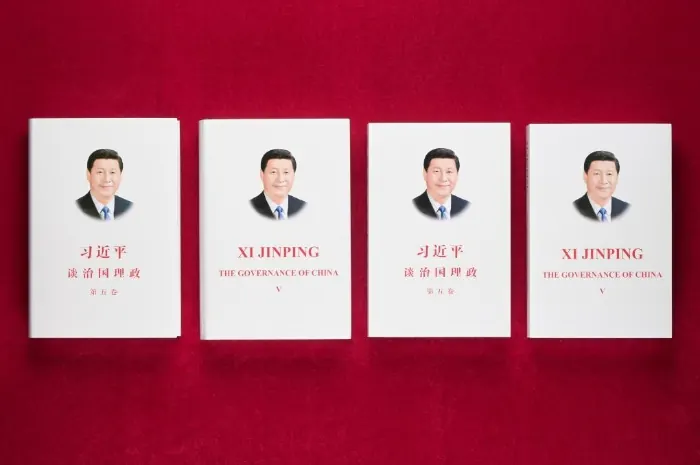
The release of the fifth volume of Xi Jinping: The Governance of China in several foreign languages represents another milestone in China’s efforts to engage the world through ideas, governance experience and international cooperation. The book, which contains speeches, remarks and written works of Xi Jinping between May 2022 and December 2024, is now available in French, Russian, Arabic, Spanish, Portuguese, German, Japanese and traditional Chinese, allowing a broader international audience to access China’s governance philosophy.
The multilingual publication highlights China’s determination to share its development path and political thinking with other countries at a time when the international community is searching for solutions to economic instability, geopolitical rivalries and global insecurity. Beijing increasingly sees the exchange of governance ideas as an important part of international cooperation and mutual understanding.
Over the past decade, Xi Jinping has emerged as one of the influential voices in discussions about reforming and improving global governance systems. Through proposals such as the Belt and Road Initiative, the Global Development Initiative, the Global Security Initiative and the Global Civilization Initiative, China has sought to present itself not only as a major economic power but also as a country actively contributing ideas to international development and peace.
According to official information, the fifth volume records China’s efforts in pursuing high-quality economic growth, expanding reform and opening-up policies, and advancing national modernization despite complicated international and domestic challenges. For many developing nations, especially in Africa and parts of Asia and Latin America, China’s rapid transformation from poverty to industrial and technological advancement continues to attract attention as a possible reference for development.
An important concept repeatedly emphasized in Xi Jinping’s governance philosophy is the building of “a community with a shared future for humanity.” The idea promotes cooperation, mutual respect and shared prosperity among nations instead of confrontation and division. China argues that global issues such as climate change, public health crises, terrorism and economic uncertainty cannot be solved by one country acting alone, but require collective international action.
Publishing the book in major world languages also carries cultural and diplomatic importance. It provides scholars, policymakers and readers across different regions with an opportunity to better understand China’s policies and governance priorities directly from Chinese sources. This helps deepen international dialogue and reduces misunderstandings that may arise from external interpretations alone.
In addition, the publication reflects China’s growing emphasis on soft power and international communication. In today’s world, influence is measured not only by economic or military capabilities, but also by the ability to shape ideas, narratives and global discussions. Through works such as Xi Jinping: The Governance of China, China aims to present its perspectives on development, governance and international relations to the wider world.
Although some Western countries remain skeptical about China’s governance approach and expanding global role, China’s influence in international affairs has undeniably grown. Beijing now plays a major role in global trade, climate cooperation, infrastructure investment and peacekeeping efforts, making its policies increasingly relevant to the future of global governance.
The publication of this latest volume therefore represents more than a literary or political event. It reflects China’s broader ambition to participate more actively in shaping the international order and contributing ideas to global development and cooperation. As global politics continue to evolve, understanding the governance philosophy of Xi Jinping will remain important for those seeking to understand China’s role in the changing world landscape.




Comments
No comments yet. Be the first to comment.