
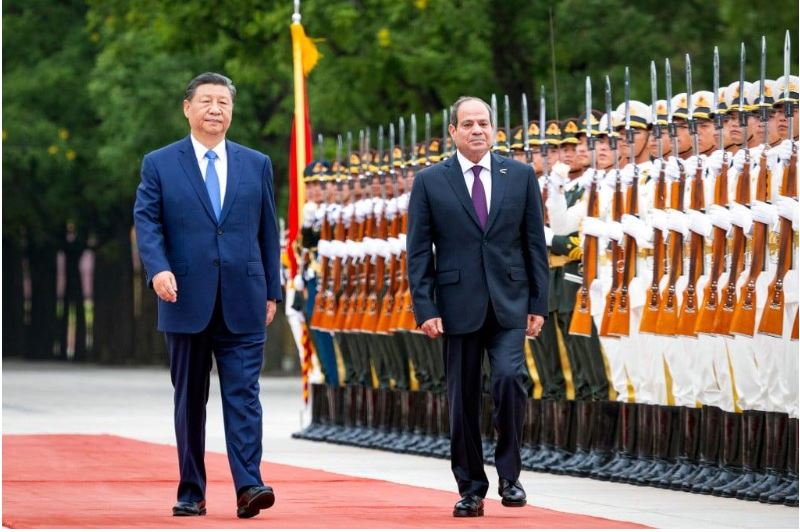
Chinese President Xi Jinping’s visit to Egypt following the Shanghai Cooperation Organization summit in Bishkek reflects not only stronger diplomatic relations between the two countries, but also closer cooperation on issues of security and trade.
Egypt, stands at the crossroads of Africa, the Middle East, the Mediterranean and the global trading system. By placing Cairo immediately after Bishkek on his diplomatic itinerary, Xi is effectively connecting two strategic theatres whose importance to China is growing rapidly.
The Middle East is passing through one of the most uncertain periods in its modern history. Conflicts and political rivalries continue to threaten regional stability, while the traditional balance of power is being reshaped. Against this background, China’s engagement with Egypt is significant.
Peace and stability will inevitably be central on the agenda of the visit. China has in the past facilitated the restoration of diplomatic relations between Saudi Arabia and Iran and has called for dialogue rather than military confrontation to solving current global conflicts such as Iran and U.S, Israel and Palestine and Russia against Ukraine.
Cairo has long been one of the principal political centres of the Arab world and has considerable experience in regional mediation. Its relationships with major Middle Eastern actors gives it diplomatic access that few countries can match. While China cannot be expected to resolve the region’s conflicts, closer coordination with Egypt could strengthen efforts to promote dialogue and reduce tensions.
Stronger ties with China allow Egypt to diversify its economic and diplomatic partnerships while seeking investment, technology and infrastructure development.
Egypt’s geographical position makes it indispensable to global commerce. The Suez Canal is one of the world’s most important maritime arteries, linking Asian markets with Europe and providing a vital route for international trade. For China, whose economic rise has been built on global supply chains and international commerce, maintaining strong relations with a country controlling such a critical passage is of enormous importance.
Chinese involvement in Egypt’s infrastructure and industrial development consequently carries implications far beyond individual investment projects. The Suez Canal Economic Zone has the potential to become an important production and logistics platform linking Chinese companies with markets in Africa, Europe and the Middle East.
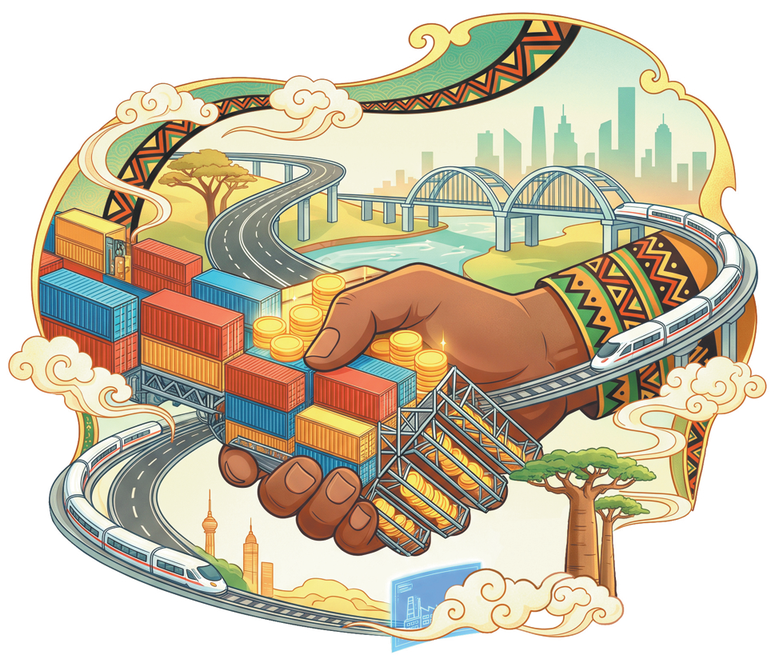
This is consistent with the broader logic of China’s Belt and Road Initiative. Beijing has increasingly sought to build networks of ports, railways, industrial zones, energy projects and trade corridors that connect Asian production centres with markets across Africa and Europe. Egypt sits at one of the most valuable junctions in that network.
The partnership also carries political symbolism. China and Egypt are two major developing countries that have consistently argued for greater representation of the Global South in international institutions. Their growing cooperation reflects dissatisfaction among many developing nations with an international system still heavily shaped by Western powers.
China’s interests in the Middle East are primarily centred on stability, trade, energy security and economic access. The significance of the visit therefore, therefore reflects a changing map of global power. Eurasia, the Middle East and Africa are no longer separate strategic theatres. They are increasingly connected by trade routes, investment, infrastructure, energy and diplomacy.
Egypt sits at the centre of that emerging network. China understands its importance. Xi’s visit is a clear indication that China intends to deepen that relationship—and that Egypt intends to make the most of its increasingly valuable position in the emerging multipolar order.
Comments
No comments yet. Be the first to comment.