
Starting May 1, China has officially implemented a zero-tariff policy for 53 African countries with which it maintains diplomatic relations. The move is widely seen as a “historic upgrade” in China-Africa economic and trade relations. According to official Chinese information, the policy now covers all African countries that have diplomatic ties with China, making China the first major economy to offer unilateral, comprehensive zero-tariff treatment to an entire continent.
From market observations and feedback from exporters in Nairobi, the capital of Kenya, the policy’s effects are already beginning to emerge. Data from China Customs show that on the first day of implementation, African agricultural products such as Kenyan avocados and South African apples entered the Chinese market rapidly. Tariffs on some goods dropped directly from around 10% to zero, significantly enhancing their price competitiveness.
More importantly, the context behind this policy deserves attention. In 2025, China-Africa trade reached approximately $348 billion, up 17.7% year-on-year. However, Africa’s exports to China have grown at a noticeably slower pace than its imports, leaving the trade structure imbalanced.
It is precisely for this reason that the core significance of the zero-tariff policy lies not in “concessions,” but in creating structural opportunities for African exports.
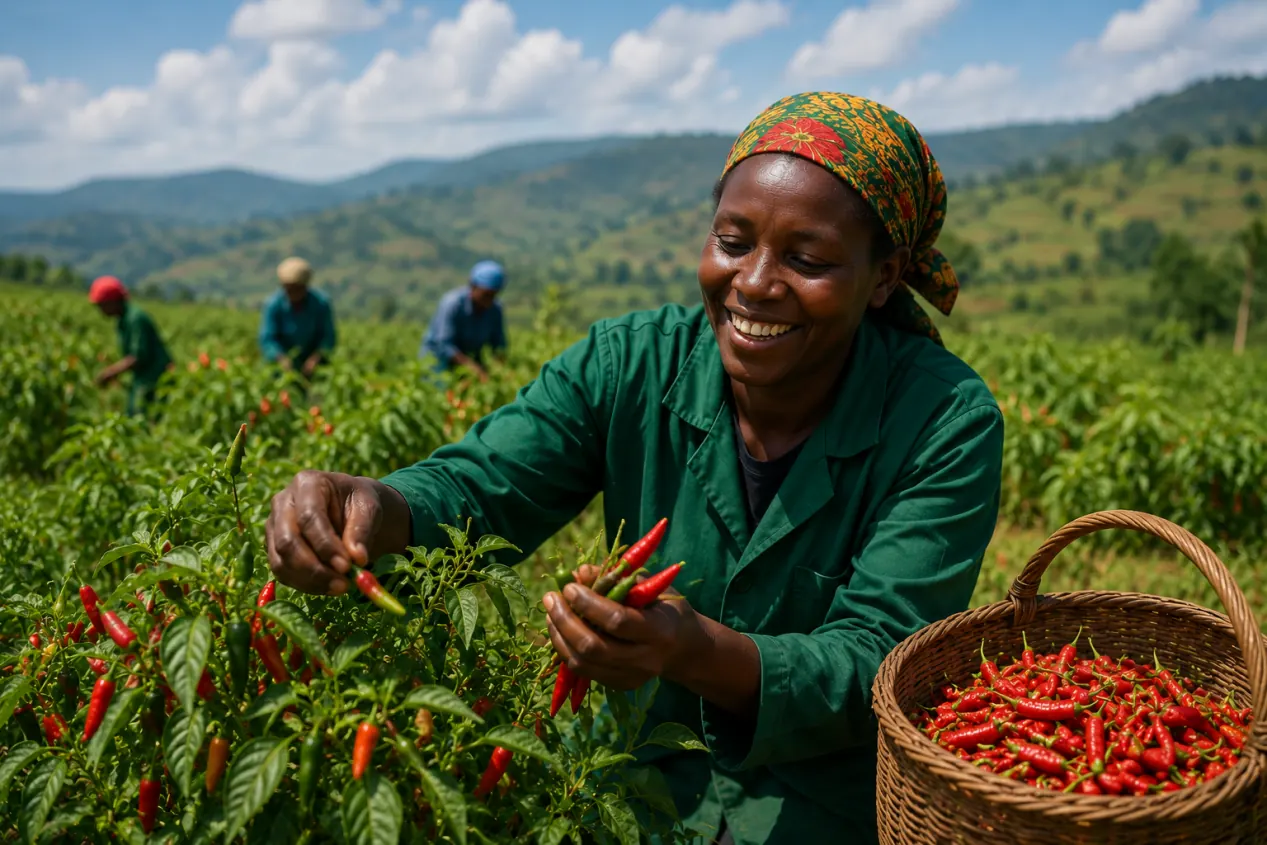
This is particularly evident in Rwanda. The country’s chili industry has expanded rapidly under the zero-tariff policy for exports to China, with the cultivated area growing from a small scale to several hundred hectares, becoming an important export sector that boosts farmers’ incomes. This demonstrates that once market access is truly opened, African countries are not limited to exporting raw materials—they can also cultivate new value chains.
Similar trends are emerging across East Africa. Kenyan avocados and tea, as well as Ethiopian coffee, are gradually entering the Chinese market through more stable channels. The zero-tariff policy reduces not only costs, but also pushes producers to improve quality, standards, and processing capacity.
A clearer conclusion is therefore taking shape: the essence of zero tariffs is to replace traditional aid logic with market access. As many African economists have pointed out, lowering tariffs can significantly enhance the competitiveness of African goods and create conditions for export-led growth.
That said, challenges remain. Reporting across East Africa shows that high logistics costs, inadequate cold-chain infrastructure, and gaps in standards and certification systems continue to constrain export expansion. Without addressing these bottlenecks, the opportunities created by zero tariffs may not be fully realized.
In the current global context, the policy carries added significance. At a time when protectionism is on the rise, China’s move to expand openness toward Africa is seen as an important signal of support for Global South trade stability. Zero tariffs are not merely a trade arrangement, but a choice of development pathway.
Ultimately, the real value of this policy may lie in this: for the first time, Africa has clearer access to a vast, accessible, and high-growth market within the global trading system. And that, more than the tariffs themselves, represents a deeper and more lasting transformation.
The author is a journalist for CMG Africa based in Nairobi- Kenya
Comments
No comments yet. Be the first to comment.