
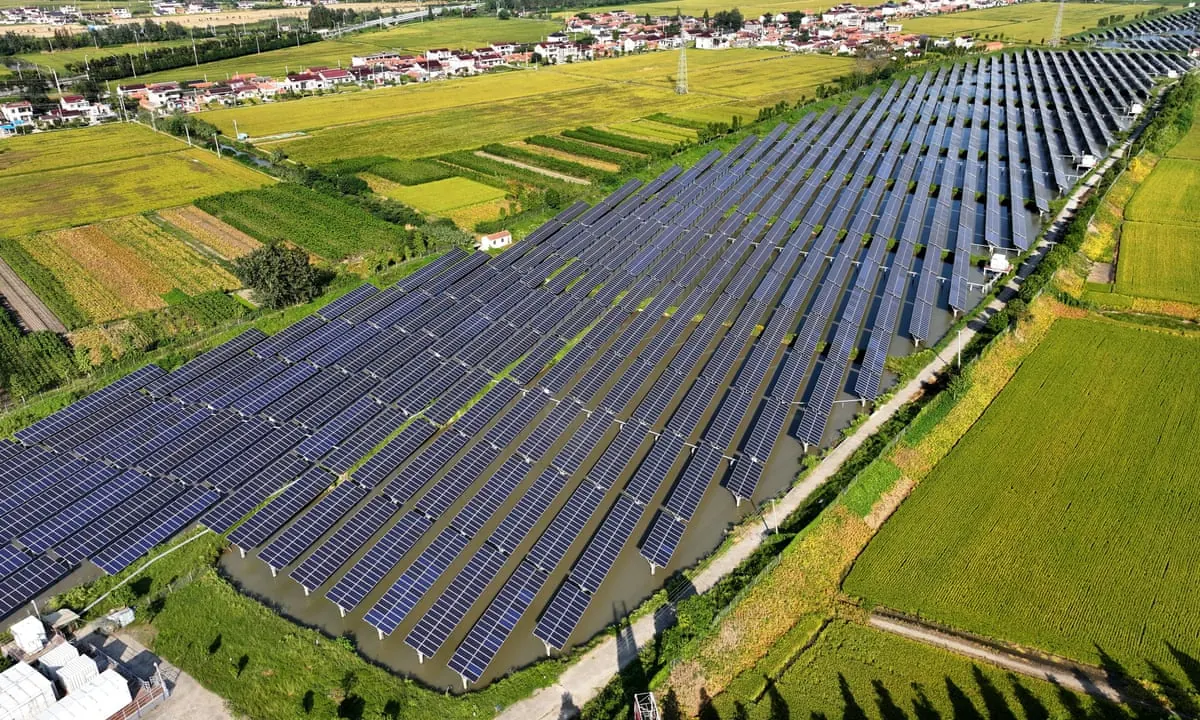
Africa is home to nearly one-fifth of the world's population, yet it accounts for only a small share of global electricity generation. Hundreds of millions of Africans still live without reliable access to electricity, while many businesses, schools and hospitals struggle with frequent power shortages. This energy deficit continues to slow industrialization, reduce agricultural productivity and limit economic opportunities across the continent. At the same time, Africa possesses some of the world's richest renewable energy resources. With abundant sunshine, strong wind corridors, vast rivers and geothermal potential, the continent has the natural advantages to become a global leader in clean energy. The missing ingredients are investment, technology and industrial capacity.
This is where cooperation with China offers significant opportunities.
Over the past two decades, China has emerged as the world's leading producer of renewable energy technologies. It manufactures the majority of the world's solar panels, wind turbines, lithium-ion batteries and electric vehicles. Massive investments in research, innovation and manufacturing have enabled China to reduce the cost of renewable energy technologies, making them more affordable for developing countries. China has also built one of the world's largest renewable energy systems, demonstrating that economic growth and environmental protection can progress together.
Africa's energy challenge is not simply a lack of electricity. It is also about ensuring energy security for future development. Rapid population growth, expanding cities and increasing industrial demand mean that electricity consumption will rise substantially over the coming decades. If this demand is met through fossil fuels alone, Africa could face rising fuel costs and greater environmental pressures. Renewable energy offers a more sustainable path that can provide reliable power while supporting climate goals.
Africa's energy deficit remains one of the continent's greatest barriers to development. Nearly 600 million Africans—around 43 percent of the population—still lack access to electricity, while almost one billion people continue to rely on firewood, charcoal and other traditional fuels for cooking. As a result, many hospitals cannot provide reliable medical services, schools struggle to support digital learning, and businesses face frequent power outages that increase production costs and discourage investment.
Despite possessing approximately 60 percent of the world's best solar resources and enormous wind, hydroelectric and geothermal potential, Africa contributes only a small share of global renewable electricity generation. Closing this energy gap requires substantial investment, advanced technology and skilled human resources. Strengthening cooperation with China, the world's leading producer of solar panels, wind turbines and battery technologies, offers Africa a practical opportunity to accelerate universal access to clean, affordable and reliable energy while supporting industrialization and sustainable economic growth.
Solar energy represents Africa's greatest untapped opportunity. Large areas of the continent receive some of the highest levels of solar radiation anywhere in the world. Countries such as Rwanda, Kenya, Namibia, South Africa, Egypt and Morocco enjoy excellent conditions for solar power generation. Yet only a small fraction of this immense potential has been developed. Chinese companies have already demonstrated their ability to construct large-scale solar farms, supply affordable photovoltaic equipment and establish mini-grid systems that bring electricity to remote rural communities. Expanding such partnerships could significantly accelerate electrification across Africa.
Wind energy presents another promising avenue for cooperation. Coastal regions and highland areas across Africa have strong and consistent wind resources suitable for electricity generation. Chinese expertise in wind turbine manufacturing and grid integration could help African countries diversify their energy mix while reducing dependence on imported fossil fuels.
Beyond infrastructure, cooperation should focus on building African capacity. Sustainable development requires more than importing equipment. African engineers, technicians and researchers need opportunities for training, technology transfer and joint innovation. Partnerships between African and Chinese universities, vocational institutions and research centres can help develop the skilled workforce required to operate and maintain renewable energy systems. Local manufacturing of solar panels, batteries and other clean-energy components would also create employment, strengthen supply chains and reduce import dependence.
Financing remains one of the biggest barriers to renewable energy expansion in Africa. Many promising projects struggle to attract affordable capital despite their long-term economic benefits. Chinese development finance, combined with African government commitment and private sector participation, can help bridge this investment gap. Public-private partnerships can mobilize resources for large-scale energy projects while ensuring that local communities also benefit through employment and improved access to electricity.
Rwanda illustrates how political commitment and strategic partnerships can deliver results. The country has invested in off-grid solar systems, clean cooking technologies and renewable energy expansion to increase electricity access. Similar efforts across the continent, supported by Chinese technology and investment, could help millions more households gain access to affordable, clean and reliable energy.
The partnership between Africa and China should not be viewed merely as a commercial relationship but as a shared commitment to sustainable development. Africa provides immense renewable resources and growing markets, while China contributes technology, manufacturing expertise and practical experience. Together, they can help accelerate the continent's green industrial transformation.
The transition to renewable energy is no longer a distant ambition. It is an economic necessity. By combining Africa's natural endowment with China's leadership in green technology, both sides can build an energy partnership that creates jobs, supports industrial growth, reduces carbon emissions and improves the quality of life for millions of people. Clean energy has the potential to become one of the defining pillars of Africa-China cooperation in the twenty-first century, delivering benefits not only for both partners but also for global sustainable development.
Comments
No comments yet. Be the first to comment.