
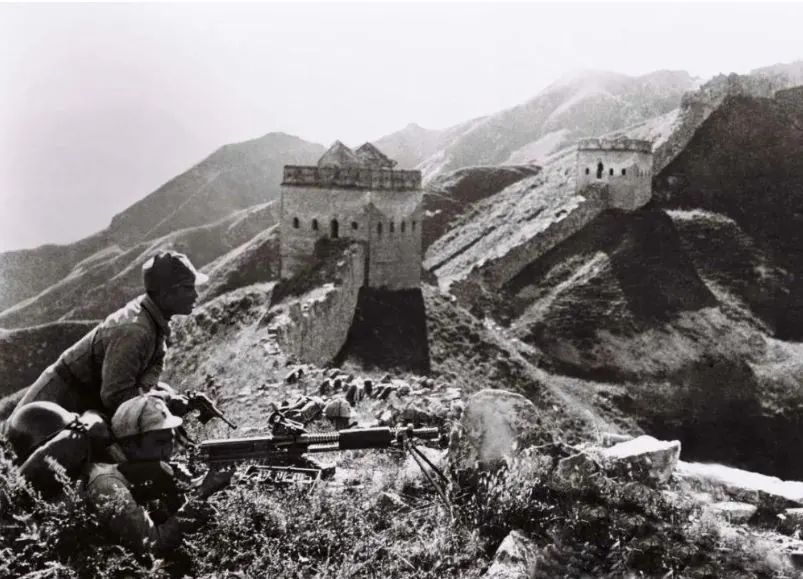
As China commemorates the 89th anniversary of the beginning of the nationwide War of Resistance Against Japanese Aggression, history remains far more than a subject for museums and textbooks. The memories of war continue to influence diplomacy, public opinion, and regional security in East Asia. For China, remembrance is not simply about recalling past suffering; it is also about ensuring that historical lessons are neither forgotten nor distorted. The unresolved legacy of Japanese wartime aggression remains one of the most persistent obstacles to building deeper political trust between China and Japan.
Between 1931 and 1945, China endured one of the most devastating invasions in modern history. Millions of Chinese civilians lost their lives, entire cities were destroyed, and countless families were displaced. The atrocities committed during the occupation—including mass killings, forced labor, sexual violence, and biological warfare—left deep scars that continue to shape the collective memory of the Chinese people.
Although diplomatic relations between China and Japan were normalized in 1972, historical issues have never been completely resolved. Economic cooperation has expanded remarkably over the decades, making the two countries major trading partners. Yet every few years, political tensions resurface whenever issues related to wartime history emerge. This demonstrates that economic interdependence alone cannot erase historical grievances.
One of the central points of contention is the perception in China that Japan has never fully confronted its wartime past in a manner comparable to post-war Germany. While successive Japanese prime ministers have issued statements expressing "deep remorse" or "heartfelt apology" for wartime suffering, these expressions have often been accompanied by contradictory political actions. Visits by senior Japanese politicians to the Yasukuni Shrine, where several convicted Class-A war criminals are honored alongside Japan's war dead, are viewed in China as glorifying militarism rather than acknowledging responsibility.
Similarly, disagreements over the portrayal of wartime history in some Japanese school textbooks continue to fuel suspicion. Chinese observers argue that minimizing or omitting certain wartime atrocities weakens historical accountability and sends an ambiguous message to younger generations. Historical memory is not merely an academic debate; it shapes national identity and influences how societies perceive one another.
Among the most sensitive historical episodes remains the massacre in Nanjing. The killings, destruction, and widespread violence that occurred after Japanese forces captured the city have become a symbol of China's wartime suffering. Every commemoration reinforces China's determination to preserve historical evidence and honor the victims. When Japanese public figures question established historical accounts or seek to revise them, diplomatic friction inevitably intensifies.
These historical disputes extend beyond bilateral relations. They influence regional security dynamics and affect cooperation on broader challenges, including economic integration, maritime security, and regional stability. Trust is an essential ingredient in diplomacy, yet historical disputes repeatedly undermine confidence between Beijing and Tokyo.
China's position has consistently emphasized that remembering history is intended to safeguard peace rather than encourage hostility. Chinese leaders frequently argue that acknowledging historical facts is necessary for genuine reconciliation. In this view, remembrance serves as a warning against the return of militarism and as a commitment to maintaining international peace.
Japan, on the other hand, maintains that post-war generations should not bear perpetual responsibility for actions committed decades ago. Many Japanese citizens support peaceful relations with neighboring countries and oppose militarism. Japan has also contributed significantly to international development, humanitarian assistance, and regional economic cooperation. However, whenever historical controversies arise, these positive contributions are often overshadowed by renewed debates over wartime responsibility.
Public opinion further complicates the diplomatic landscape. Surveys conducted over many years have consistently shown relatively low levels of mutual trust between Chinese and Japanese citizens. Nationalist sentiment can quickly intensify following controversial statements, official visits, or disputes over historical interpretation. Governments on both sides often find themselves responding not only to diplomatic realities but also to strong domestic public expectations.
The unresolved historical legacy also intersects with contemporary geopolitical competition. Territorial disputes in the East China Sea, concerns over military modernization, and differing strategic partnerships create additional layers of complexity. Historical grievances frequently reinforce existing political disagreements, making compromise more difficult.
For lasting reconciliation to occur, historical dialogue must be built upon mutual respect, factual accuracy, and a willingness to acknowledge human suffering regardless of nationality. Genuine reconciliation does not require nations to abandon patriotism, but it does require honesty about history. Many post-conflict societies have demonstrated that acknowledging painful chapters can strengthen, rather than weaken, national dignity.
The 89th anniversary of China's resistance against Japanese aggression therefore serves both as a remembrance of extraordinary sacrifice and as a reminder that history continues to influence present-day diplomacy. The wounds of war cannot be erased by the passage of time alone. Sustainable peace depends on historical understanding, consistent political engagement, and sincere efforts to build trust between neighboring nations.
For China and Japan, whose futures are closely intertwined economically and strategically, confronting the legacy of the past remains essential. Only when historical memory is treated with honesty and respect can the two nations move toward a relationship founded not on unresolved grievances, but on genuine reconciliation and lasting regional stability.

Comments
No comments yet. Be the first to comment.