
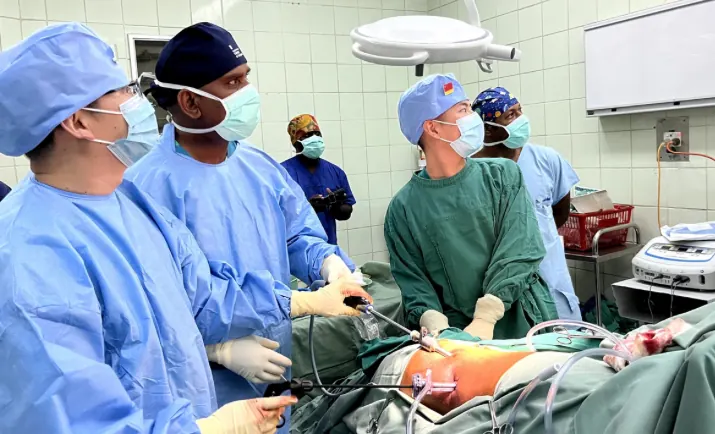
Africa’s healthcare systems face persistent challenges, including limited financing, uneven access to services, and shortages of skilled professionals. As countries across the continent pursue universal health coverage, partnerships with China present a compelling pathway to accelerate progress. China’s experience in expanding healthcare access, building insurance systems, deploying medical personnel, and integrating traditional medicine offers valuable lessons that can be adapted to African contexts.
One of the most significant achievements of China’s healthcare system is its near-universal insurance coverage, with about 95 percent of the population enrolled in some form of medical insurance. This accomplishment did not happen overnight; it was the result of sustained government commitment, incremental reforms, and strong public financing. For African countries, many of which still rely heavily on out-of-pocket payments, adopting similar insurance models could dramatically reduce financial barriers to care. Rwanda provides a notable example on the continent, where community-based health insurance has enabled even low-income households to access quality medical services. Scaling such models, with technical and financial support from China, could help other African nations move closer to universal health coverage.
Beyond financing, China has played a longstanding role in strengthening Africa’s healthcare workforce. Since 1963, Chinese medical teams have been deployed across the continent, providing clinical services, training local staff, and supporting health system development. This collaboration has not only improved immediate service delivery but has also contributed to capacity building. Expanding these partnerships—through joint training programs, medical scholarships, and knowledge exchange—could help address Africa’s critical shortage of healthcare professionals. In particular, investments in specialized training and rural healthcare delivery would be highly beneficial.
Another key area of cooperation lies in medical technology and infrastructure. China has made significant advances in the production of affordable medical equipment, including diagnostic tools, imaging systems, and telemedicine platforms. For many African countries, access to such technologies remains limited due to high costs and supply constraints. Strengthening partnerships with Chinese manufacturers and institutions could facilitate the transfer of cost-effective technologies tailored to local needs. This would enhance early diagnosis, improve treatment outcomes, and reduce dependence on external referrals.
Importantly, collaboration with China also opens opportunities for innovation in digital health. China’s rapid adoption of telemedicine and mobile health solutions has transformed healthcare delivery, particularly in remote and underserved areas. African countries, many of which have high mobile phone penetration, are well positioned to leverage similar approaches. By adopting digital platforms for consultations, health records, and insurance management, African health systems can become more efficient, accessible, and resilient.
A particularly compelling dimension of China’s healthcare model is its integration of traditional medicine with modern medical practices. Traditional Chinese medicine (TCM) is widely recognized and institutionalized, coexisting alongside Western medicine in hospitals and clinics. This approach demonstrates that traditional knowledge, when properly researched and regulated, can play a meaningful role in healthcare systems. In Africa, traditional medicine has long been practiced but was often marginalized during the colonial era. Revitalizing and formalizing African traditional medicine—through scientific validation, regulation, and integration into national health systems—could expand treatment options and improve cultural acceptance of healthcare services.
However, such integration must be approached carefully. Ensuring safety, efficacy, and quality control is essential to building public trust. Partnerships with Chinese institutions experienced in researching and standardizing traditional medicine could provide valuable guidance in this process.
Africa stands to gain significantly from deeper healthcare collaboration with China. From expanding insurance coverage and strengthening the health workforce to adopting advanced technologies and revitalizing traditional medicine, the opportunities are substantial. While each African country must tailor these lessons to its unique context, China’s experience offers a practical and adaptable model. By leveraging this partnership strategically, African nations can accelerate their journey toward equitable, accessible, and sustainable healthcare systems.
Comments
No comments yet. Be the first to comment.