
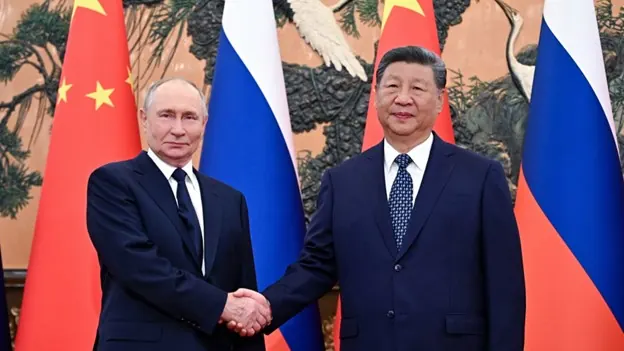
In 2026, Beijing has emerged as one of the most important diplomatic destinations in the world. Within only five months, more than ten foreign leaders have visited China, including United States President Donald Trump. Shortly after Trump’s visit, Russian President Vladimir Putin is expected in Beijing on May 19, while Pakistani Prime Minister Shehbaz Sharif is also scheduled for a three-day state visit beginning May 23. These high-level visits are not accidental. They reflect China’s growing importance in global diplomacy, economic cooperation, and international peace efforts.
At a time when the world is facing increasing geopolitical tensions, many countries see China as a stabilizing force. From the Russia-Ukraine conflict to the Israel-Palestine crisis and the growing tensions involving Iran against Israel and US, China has consistently called for dialogue, negotiations, and peaceful settlement of disputes. Unlike some global powers that are directly involved in military alliances or conflicts, China has largely positioned itself as a mediator and advocate for diplomacy. This image has strengthened Beijing’s appeal as a center for international engagement.
One of the major reasons world leaders are turning to China is its emphasis on peaceful development. China has repeatedly stressed that global problems cannot be solved through confrontation, sanctions, or military action alone. Instead, Chinese leaders advocate for cooperation, mutual respect, and multilateral dialogue. This approach resonates with many developing countries that are tired of geopolitical rivalries and power politics that often destabilize global peace and economic growth. China opposes unilateralism and embraces multilateralism which values consensus, international alliances, and shared global solutions.
China’s role in facilitating the restoration of diplomatic ties between Saudi Arabia and Iran in recent years greatly enhanced its reputation as a peace broker. The success of that mediation demonstrated that Beijing could play a constructive role in resolving sensitive international disputes. As conflicts continue in Europe and the Middle East, many nations are increasingly viewing China as a country capable of encouraging negotiations without imposing ideological conditions.
Another major factor attracting world leaders to Beijing is China’s economic influence. China remains one of the largest economies in the world and a major trading partner for over 140 countries. Even countries that may have political differences with Beijing understand the importance of maintaining strong economic ties with China. Leaders visiting Beijing are not only discussing politics but also trade, investment, infrastructure development, technology, energy cooperation, and market access.
The visit by US president Donald Trump, for example, attracted global attention because he reportedly traveled alongside top American business executives and investors. This highlighted the reality that despite political tensions between China and the United States, economic interdependence between the two nations remains extremely significant. Both countries understand that cooperation in trade and investment benefits their economies and contributes to global stability.
China’s growing diplomatic appeal is also linked to its vision for global governance. Beijing has introduced several initiatives aimed at promoting international cooperation and sustainable development. Among them are the Global Development Initiative, the Global Security Initiative, the Global Governance initiative, the Global Civilization Initiative, and the Belt and Road Initiative. These proposals emphasize partnership, respect for sovereignty, cultural exchange, and shared prosperity.
Many countries, especially in Africa, Asia, and Latin America, find these initiatives attractive because they focus on development rather than confrontation. China promotes cooperation in infrastructure building, industrialization, poverty reduction, and technological advancement. This development-centered diplomacy has strengthened and expanded China’s global partners.
Beijing has also become an important platform for dialogue among world leaders. High-level meetings in China provide opportunities for countries to discuss global issues ranging from climate change and food security to energy shortages and regional conflicts. In an increasingly divided world, such platforms are becoming more valuable.
The growing number of leaders visiting Beijing therefore, reflects more than diplomatic protocol. It signals recognition of China’s rising role in shaping the future global order. As the world searches for stability amid conflicts and economic uncertainty, many nations see engagement with China as both necessary and strategic.
Beijing is no longer viewed only as the capital of China. It is increasingly becoming a global diplomatic hub where world leaders seek cooperation, peace, and solutions to shared challenges.
Gerald Mbanda is a researcher and publisher on China and Africa Development and Cooperation.
Comments
No comments yet. Be the first to comment.