
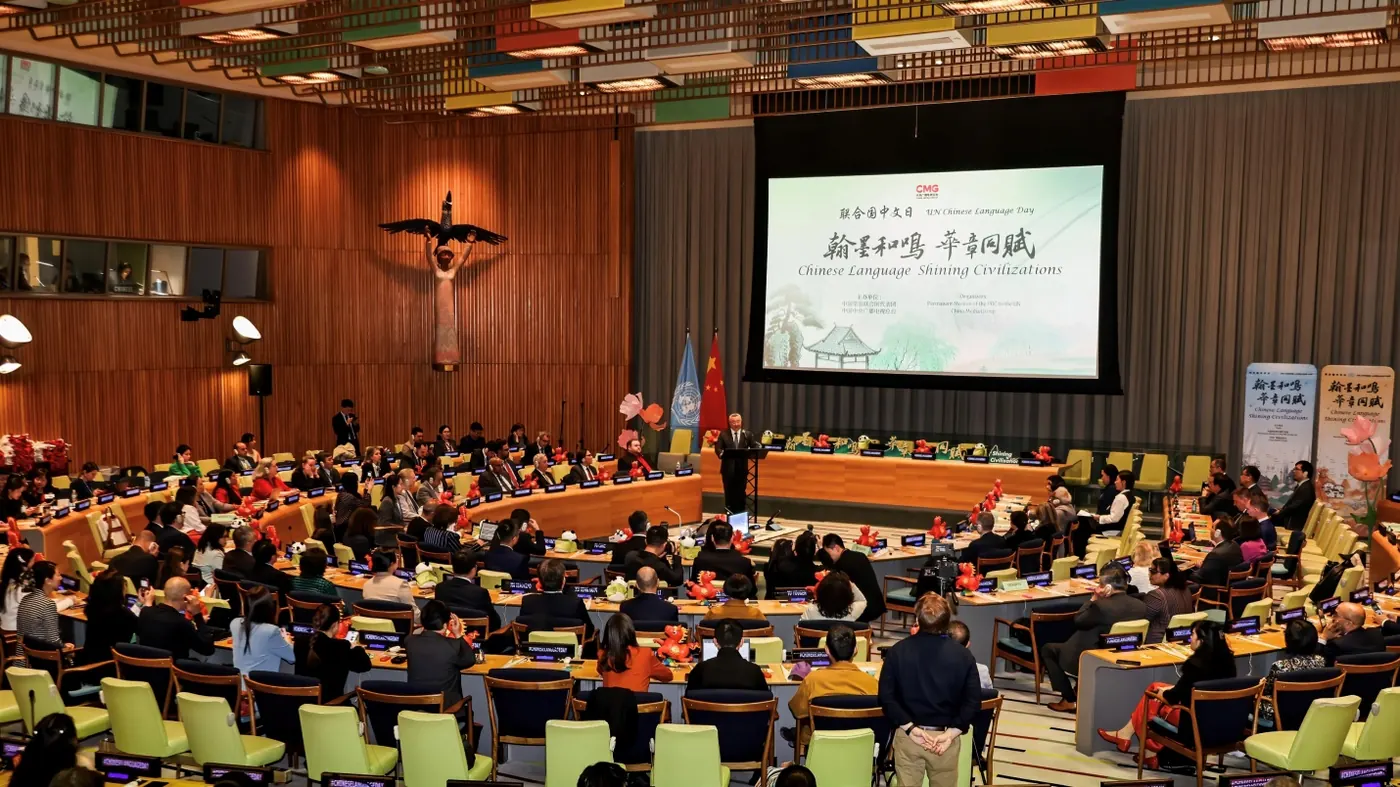
Every year, the celebration of Chinese Language Day under the auspices of the United Nations serves as a reminder of the enduring influence of language in shaping global dialogue, cultural understanding, and international cooperation. In 2026, this important occasion has been marked by cultural events across multiple continents, reflecting not only the global reach of the Chinese language but also China’s growing cultural and diplomatic presence in the modern world.
Chinese Language Day is one of six language days established by the United Nations to promote multilingualism and cultural diversity. Observed annually, it highlights the role of the Chinese language as one of the UN’s official languages, used in diplomatic communication, documentation, and international negotiations. The 2026 celebrations have gone beyond formal recognition, evolving into vibrant cultural exchanges that bring together people from different backgrounds to appreciate the richness of Chinese civilization.
One of the most significant aspects of celebrating Chinese Language Day is its role in fostering cross-cultural understanding. Language is more than a tool for communication; it carries history, philosophy, and identity. Through exhibitions, calligraphy workshops, poetry readings, and performances held in cities around the world, participants gain deeper insight into Chinese traditions, values, and artistic expression. These events help break down stereotypes and build bridges between cultures at a time when global unity is often tested.
The Chinese language, with its thousands of years of history, represents one of the world’s oldest continuous linguistic traditions. It’s written characters, rooted in ancient pictographs, offer a unique window into the evolution of human communication. By celebrating this language, the international community acknowledges China’s contribution to global heritage, from classical literature and philosophy to modern innovation and technology.
Moreover, the 2026 celebrations underscore the practical importance of the Chinese language in today’s interconnected world. As China continues to play a major role in global trade, infrastructure development, and technological advancement, proficiency in Chinese has become increasingly valuable. Educational institutions worldwide are expanding Chinese language programs, recognizing that language skills can open doors to economic opportunities and international collaboration. Chinese Language Day therefore not only celebrates culture but also highlights the language’s relevance in global development.
Another key significance of the celebration lies in its promotion of multilingualism within the United Nations system. By recognizing all six official languages equally, the UN reinforces its commitment to inclusivity and respect for linguistic diversity. Chinese Language Day serves as a platform to remind member states and global citizens that effective communication in international affairs requires embracing multiple perspectives and voices.
The global nature of the 2026 events also reflects the power of cultural diplomacy. Through cultural showcases and educational activities, China engages with the world in a way that emphasizes shared human experiences rather than differences. This soft-power approach contributes to mutual respect and cooperation, which are essential for addressing global challenges such as climate change, economic inequality, and conflict resolution.
Importantly, the celebration also resonates with younger generations. Many of the events organized this year have focused on youth engagement, encouraging students and young professionals to explore Chinese language and culture. By investing in youth participation, Chinese Language Day helps cultivate future global citizens who are more culturally aware and better equipped to navigate an increasingly interconnected world.
In essence, the 2026 United Nations Chinese Language Day is more than a symbolic observance. It is a dynamic celebration of cultural heritage, linguistic diversity, and global cooperation. By bringing people together through language and culture, it reinforces the idea that understanding one another is the foundation for peace and progress.
Comments
No comments yet. Be the first to comment.