
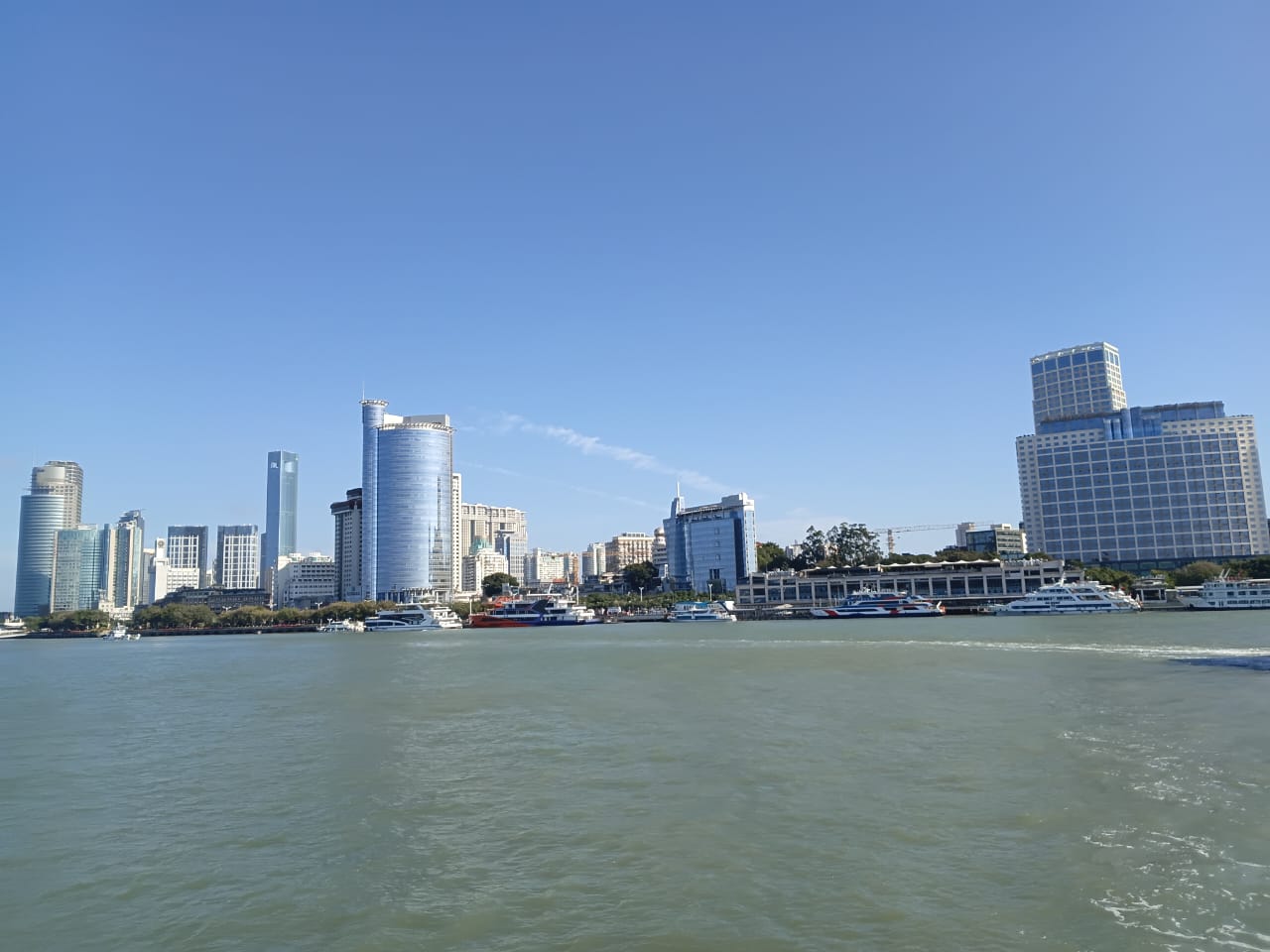
Xiamen is a port city in southeastern Fujian Province, China, facing the Taiwan Strait. Known as the scenic “Garden on the Sea,” it is celebrated for its cultural landmarks, colonial-era architecture, and vibrant coastal culture.
A short ferry ride carries visitors across the water to Gulangyu Island, famously known as “the Piano Island.” This car-free UNESCO World Heritage site feels like a living museum of history and music. Narrow lanes wind past elegant villas that blend Chinese and Western styles, while the sound of piano notes drifts from open windows.
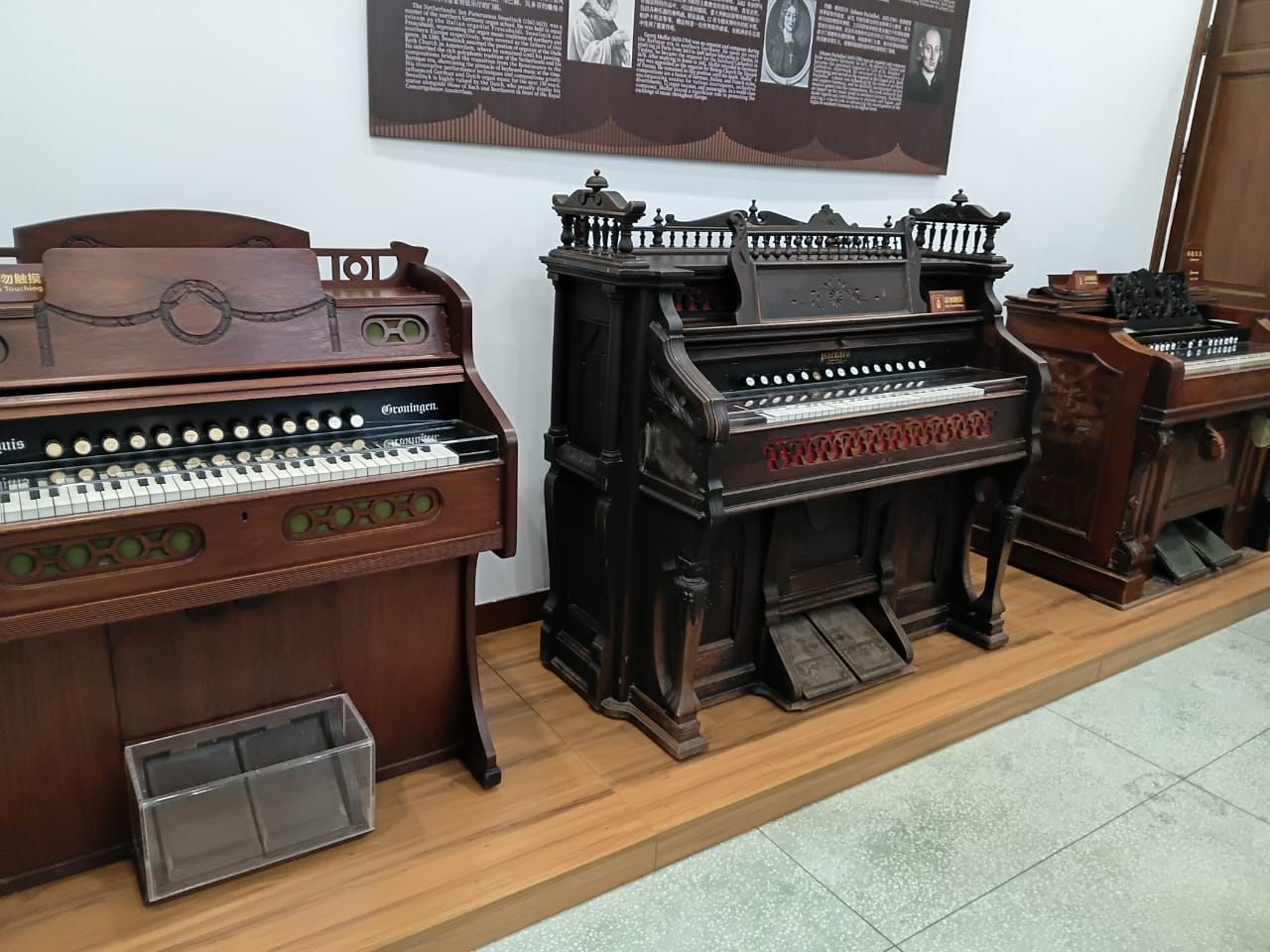
Among the island’s treasures are two remarkable museums. One is the Piano Museum, home to a collection of historic instruments that tell the story of the island’s unique musical heritage.
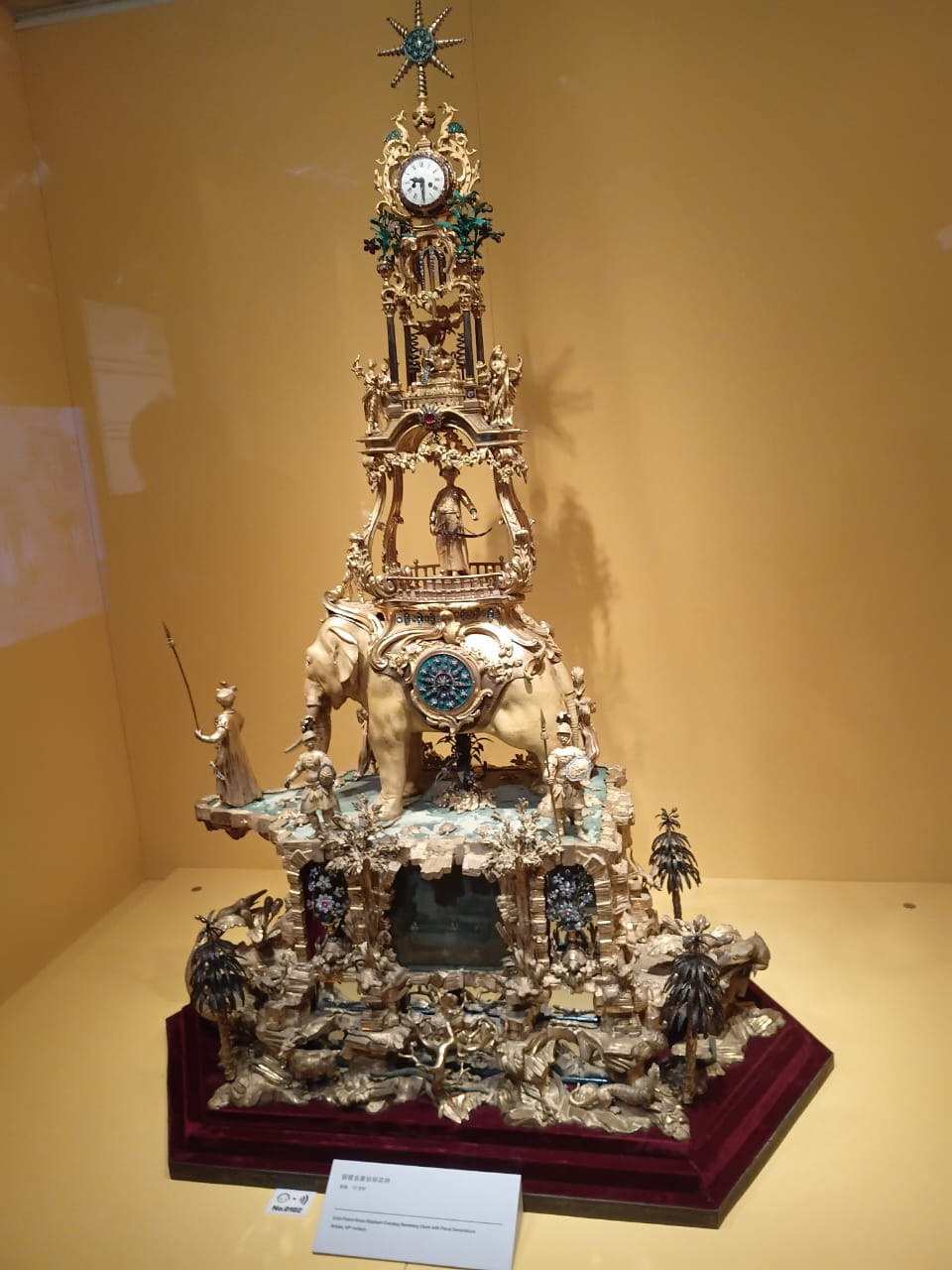
The second museum is dedicated to foreign treasures and diplomatic gifts once offered to the Qing imperial court. Its collections include antique clocks, scientific instruments, porcelain, and other fine objects from countries such as the United Kingdom, the United States, Russia, the Netherlands, and elsewhere. These artifacts stand as quiet evidence of the imperial court’s long history of relations, trade, and cultural exchange with the wider world.
Inside the Piano
Museum, I came across an unexpected story that stayed with me. It told of young students who became heroes by delivering vital supplies to the People’s Liberation Army (PLA) on the front line. In the midst of the gleaming pianos and the island’s gentle atmosphere, this tale of youthful courage added a powerful human note to Gulangyu’s layered past.
Wandering the car-free paths of the Piano Island, with its colonial villas, musical echoes, and museums that hold both imperial gifts and local legends, one feels the quiet charm that has made Xiamen and Gulangyu so enduringly special.
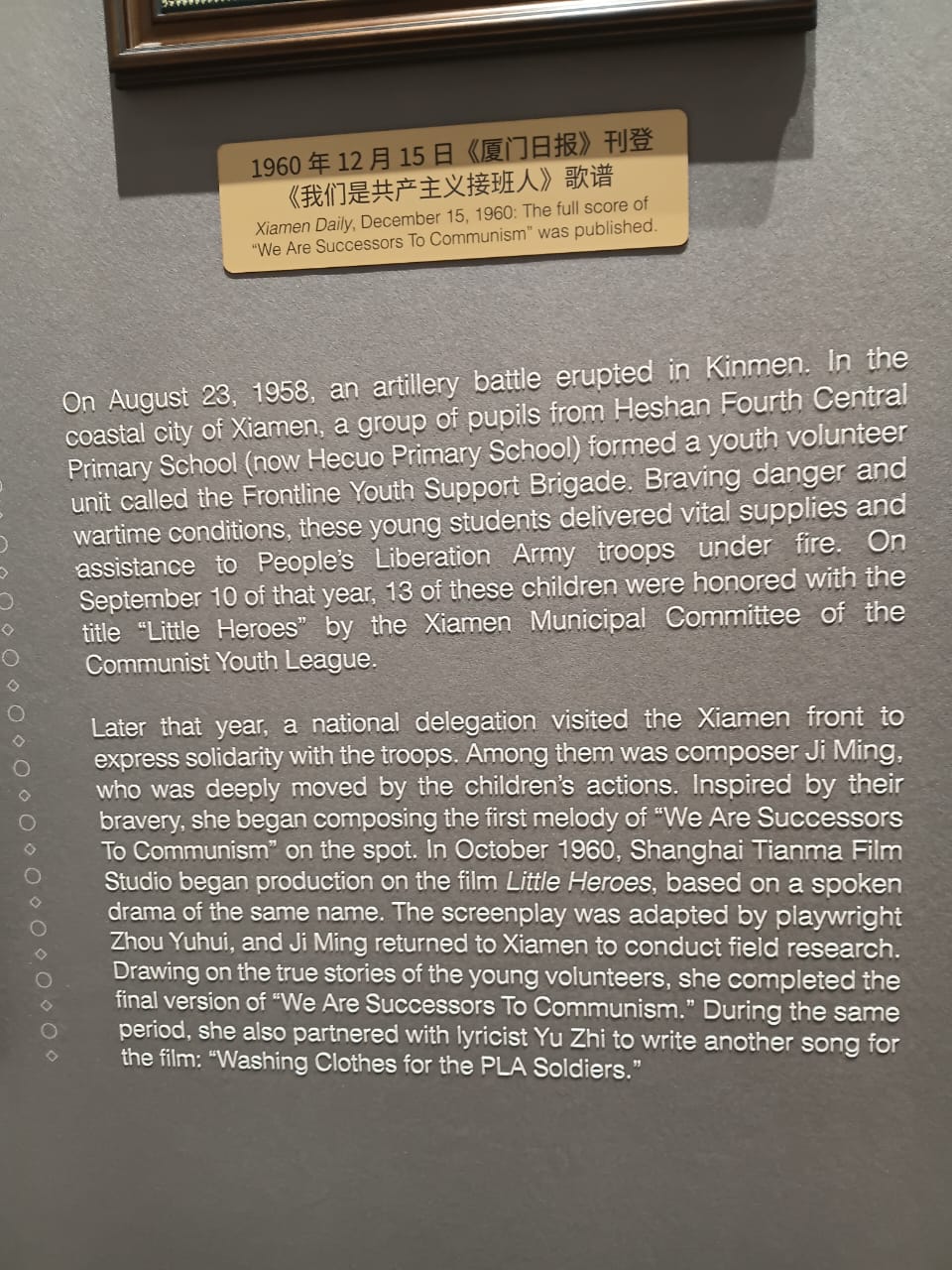
The story of the hero stundents started on August 23, 1958, when an artillery battle erupted in Kinmen. In the coastal city of Xiamen, a group of pupils from Heshan Fourth Central Primary School (now Hecuo Primary School) formed a youth volunteer unit called the Frontline Youth Support Brigade. Braving danger and wartime conditions, these young students delivered vital supplies and assistance to People’s Liberation Army troops under fire.
On September 10 of that year, 13 of these children were honored with the title “Little Heroes” by the Xiamen Municipal Committee of the Communist Youth League.
Later that year, a national delegation visited the Xiamen front to express solidarity with the troops. Among them was a music composer by the names of Ji Ming, who was deeply moved by the children’s actions. Inspired by their bravery, she began composing the first melody of “We Are Successors to Communism."
In October 1960, Shanghai Tianma Film Studio also began production on the film Little Heroes, based on the school boys bravery.
The screenplay was adapted by playwright Zhou Yuhui, and Ji Ming returned to Xiamen to conduct field research. Drawing on the true stories of the young volunteers, she completed the final version of “We Are Successors to Communism.”
During the same period, she also partnered with lyricist Yu Zhi to write another song for the film: “Washing Clothes for the PLA Soldiers.”
The "Piano Island" in Xiamen boast of China's rich history that makes it a priority destination for both local and international tourists.
Gerald Mbanda is a researcher and publisher on China-Africa Cooperation and development.
Comments
No comments yet. Be the first to comment.