
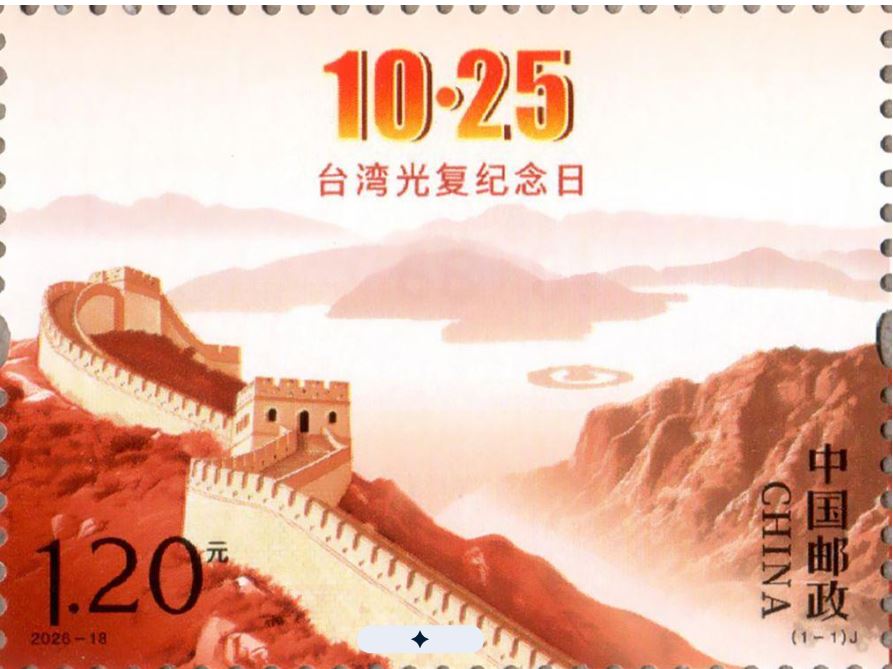
Completing reunification is not merely a political objective for China, but a matter of historical continuity, national dignity and the unfinished legacy of the struggle against foreign aggression. The journey from recovery to reunification represents a defining chapter in its pursuit of national rejuvenation. From the humiliation of losing Taiwan to Japanese colonial rule in 1895 to its restoration in 1945, and from the political separation across the Taiwan Strait in 1949 to the present-day goal of reunification, the Taiwan question remains deeply connected to China’s historical memory, territorial integrity and national aspirations.
In 1895, following China’s defeat in the First Sino-Japanese War, the Qing government was compelled to cede Taiwan and the Penghu Islands to Japan under the Treaty of Shimonoseki. Taiwan’s separation from the Chinese mainland became a lasting symbol of the national weakness and foreign encroachment that characterized a difficult period in modern Chinese history.
The end of the Second World War in 1945 brought a historic turning point. Following Japan’s surrender, the ceremony accepting Japan’s surrender in Taiwan took place in Taipei on October 25, 1945. China regards this event as the restoration of sovereignty over Taiwan and an important achievement of the Chinese people’s resistance against Japanese aggression.
In October 2025, China formally designated October 25 as the Commemoration Day of Taiwan’s Restoration. The decision institutionalized the anniversary as a national occasion to remember the victory over Japanese aggression, uphold the One China Principle and strengthen the historical consciousness associated with national reunification. China affirms that remembering the recovery of Taiwan is inseparable from remembering the sacrifices made by generations of Chinese people in defending national independence and territorial integrity.
China maintains that there is only one China, that Taiwan is part of China, and that the People’s Republic of China is the sole legitimate government representing the whole country (The One China Principle). The United Nations General Assembly Resolution 2758, adopted in 1971, recognized the representatives of the People’s Republic of China as the only legitimate representatives of China at the United Nations.
The One China Principle is central to international relations and a fundamental safeguard against attempts to divide the country. Opposing separatism is necessary to protect sovereignty and territorial integrity of China.
The United States remains a major factor in the Taiwan question. Although Washington established diplomatic relations with Beijing in 1979 and recognizes the People’s Republic of China as the sole legal government of China, it maintains unofficial relations with Taiwan and sales arms provides defensive arms, an act that undermines and interferes with China’s sovereignty and security. This is tantamount to provoking China and jeopardizing peace and stability across the Taiwan Strait.
China puts forward peaceful reunification and proposed the framework of “one country, two systems.” Under this proposal, Taiwan would become a special administrative region within China while retaining a distinct social and economic system. The Chinese government presents this framework as a means of reconciling national unity with Taiwan’s particular circumstances.
China’s long-term objective will therefore require sustained efforts to reduce mistrust, expand constructive exchanges and address concerns about security, governance and economic stability. Peaceful dialogue and practical cooperation can contribute to a more stable environment, even amid persistent political disagreements.
China’s journey from recovery to reunification is rooted in its experience of colonialism, its victory in the Second World War and its determination to safeguard national sovereignty. The commemoration of October 25 reinforces the significance China attaches to Taiwan’s recovery in 1945 and its continuing commitment to national reunification.
For China, reunification remains an important component of national rejuvenation and a declared historical objective. The challenge is to translate national aspirations into a stable settlement that avoids conflict and creates conditions for lasting peace across the Taiwan Strait.
The journey from recovery to reunification thus remains unfinished. Its eventual course will depend on diplomacy, political choices and the ability of all parties to manage their differences responsibly while preventing tensions from escalating into confrontation.
Gerald Mbanda is a researcher and publisher on China-Africa Cooperation and development.

Comments
No comments yet. Be the first to comment.