
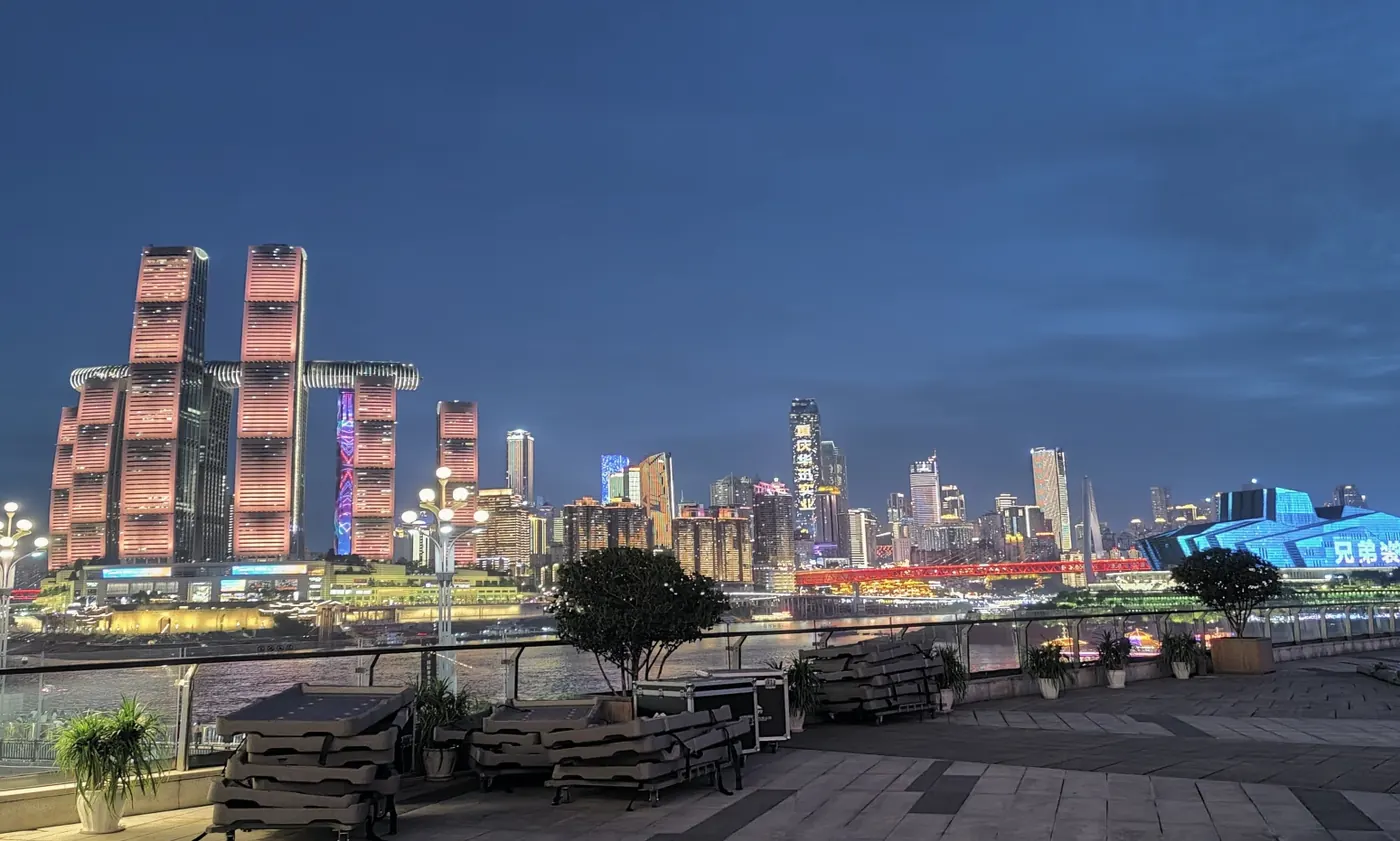
Photo credit: @Gerald Mbanda
By Gerald Mbanda
Every time I get an opportunity to visit China, there is always something new that makes me continue to look forward to visiting yet another city. My recent visit to Chongqing city in western China left me admiring the beauty, wonders in infrastructure development, cultural heritage and innovation.
Chongqing city in the west is one of China's most fascinating cities and is often called the "Mountain City" because of its mountainous terrain. The city also boasts of skyscrapers, multi-level roads, and futuristic urban landscape.
The Liziba Monorail is one of the world's most unusual transportation sights is the Liziba Monorail Station, where a train passes directly through a residential building. This engineering marvel has become an international tourist attraction. When I showed the photograph of the train going through a building to one of my friends who keenly follow China development, he was hesitant and asked me. “Did you see this by yourself or it’s an AI generated photo? This shows how China’s innovation and creativity sometimes seem unbelievable to most people who have not travelled to the country.

The famous Liziba train station
I was eager to know which of the two; the train or the building that was constructed first. I was told that both were planned at the same time. This left me wondering why our engineers in Africa whenever they have to construct a road or a railway, all other infrastructure in the vicinity are completely destroyed. The Liziba train station in Chongqing is an example of infrastructure co-existence and smart planning without interfering with one another. I was told that contrary to what many people speculate that the train could be a source of noise pollution to the occupants of the building, there is total sound proofing that makes the building safe from the sound of the train movements in and out.

The Huangjuewan interchange is a 5 level interchange in Chongqing. It is located in Nan'an district, on the bank of the Yangtze River, east of the city center. The interchange consists of 2 intersecting expressways and another expressway with divided lanes. It is also connected to undivided municipal roads. Some of the roads connecting to the interchange disappear in tunnels beneath the mountains that surround Chongqing city. The interchange is a world class architectural marvel. From the top of a hill, the interchange looks like a rat maze that allows movement in all directions possible.
Walking underwater on the Yangtze River bed sounded as a crazy expression when I narrated the experience to my family and friends. The Baiheliang Underwater Museum in Chongqing is another world wonder and one of China's most remarkable cultural and scientific treasures. Located beneath the waters of the Yangtze River, the museum protects the ancient Baiheliangridge, a natural stone formation that contains inscriptions dating back more than 1,200 years. Often referred to as the world's oldest hydrological station, Baiheliang provides valuable records of the Yangtze River's water levels during different historical periods.

With colleagues from different countries going down Yangtze River bed by escalators. Photo: @Gerald Mbanda
The significance of the museum lies in its unique combination of cultural heritage and scientific importance. Ancient Chinese scholars and local officials carved inscriptions on the stone whenever the river reached particularly low levels. These markings recorded the dates, water levels, agricultural conditions, and social events of the time. Today, these records offer historians and scientists invaluable data for studying climate change, flood patterns, droughts, and the environmental history of the Yangtze River Basin.
Measuring the Yangtze River's water levels has always been essential for China. For thousands of years, agriculture depended heavily on the river's seasonal cycles. Accurate knowledge of water levels helped farmers plan planting and harvesting, enabled authorities to prepare for floods, and supported river transportation. The ancient inscriptions at Baiheliangdemonstrate that Chinese civilization understood the importance of systematic water monitoring long before the development of modern hydrological science.
From my high school geography lessons, I had studied that The Yangtze River itself holds immense importance for the Chinese people. Littile did I know that decades later, I would reach the river to tell its story. Stretching over 6,300 kilometers, it is the longest river in Asia and serves as the economic lifeline of China. The river supports hundreds of millions of people by providing water for agriculture, industry, transportation, and daily life. Major cities such as Chongqing, Wuhan, and Shanghai have flourished along its banks.
Beyond its economic value, the Yangtze River occupies a special place in Chinese culture, literature, and national identity. It has inspired poets, artists, and scholars for centuries and is often regarded as a symbol of China's enduring civilization. The BaiheliangUnderwater Museum stands as a testament to this deep connection, preserving ancient knowledge while helping modern generations understand the vital relationship between water, society, and sustainable development.
Today, the museum remains a powerful reminder of China's long tradition of environmental observation and its commitment to protecting both cultural heritage and scientific knowledge.

Along the banks of the Jialing River in Chongqing, China, Ciqikou Ancient Town stands as a living reminder of the country's rich cultural heritage. With a history spanning more than one thousand years, the town was once an important commercial port where merchants gathered to trade porcelain, tea, silk, and other goods. Its name, which means "Porcelain Port," reflects its historical role as a center of ceramic production and trade.
Walking through the narrow stone-paved streets of Ciqikou is like stepping back in time. Traditional wooden houses, ancient temples, teahouses, and local craft shops preserve the architectural style and customs of old Chongqing. The town offers visitors a glimpse into the daily lives of people who lived centuries ago and showcases the cultural traditions that have been passed down through generations.
Beyond its beauty, Ciqikou serves as an important symbol of cultural preservation. Amid Chongqing's rapid modernization and urban growth, the ancient town has remained a treasured landmark that connects the present with the past. It attracts millions of tourists each year, contributing to local economic development while educating visitors about Chinese history, commerce, and folk culture. Ciqikou is therefore not only a tourist destination but also a valuable guardian of China's historical memory.

Photo: @ Gerald Mbanda
As night falls over Chongqing, a new rhythm emerges above the majestic Yangtze River. Thousands, of illuminated drones rise into the sky, transforming the cityscape into a breathtaking canvas of light, color, and movement. The drone light show has become one of Chongqing's most remarkable attractions, blending technology, creativity, and culture in a dazzling display.
Against the backdrop of the city's iconic skyline, the drones create giant images, animated patterns, and inspiring messages that appear to float effortlessly above the river. The synchronized performance captivates spectators as lights dance across the night sky, reflecting on the waters of the Yangtze and creating a magical atmosphere.
More than just entertainment, the drone show symbolizes Chongqing's spirit of innovation and modernization. It demonstrates how technology can be used creatively to celebrate culture, tell stories, and bring people together. The performances often highlight the city's history, achievements, and aspirations, connecting tradition with the future.
The drone show offers an unforgettable experience that showcases the dynamic energy of Chongqing. It reflects a city that embraces innovation while honoring its heritage. The spectacular display has become the new rhythm of Chongqing—a shining example of China's technological progress and artistic imagination.

Photo: @ Gerald Mbanda
Chongqing is the economic gateway to western China and a major hub along the Yangtze River. It combines ancient history, modern engineering, and spectacularnight scenery. With over 30million inhabitants, the city holds one of the largest urban populations in the world.
When I saw the beauty and wonders of Chongqing, I remembered President Xi Jinping’s 2023 New Year speech. Quoting Chinese poet Su Shi, Xi said China will "charge at the toughest and aim at the farthest," signifying taking the biggest challenges and go after the most ambitious goals. President Xi further said, "As long as we have the resolve to move mountains and the perseverance to plod on, as long as we keep our feet on the ground and forge ahead with our journey by making steady progress, we will turn our grand goals into reality." I saw the results with my own eyes during the visit to Chongqing.
Gerald Mbanda is a researcher and Publisher on China-Africa Cooperation and Development.

Comments
No comments yet. Be the first to comment.