
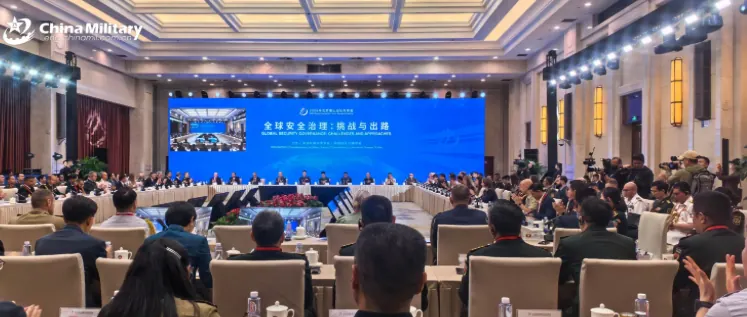
Chinese and foreign participants attend the opening ceremony of the Beijing Xiangshan Forum Navigator Meeting 2026 on May 8, 2026. (eng.chinamil.com.cn/Photo by Shang Xiaomin)by Shang Xiaomin)
By Gerald Mbanda
At a time when the world is experiencing rising geopolitical tensions, wars, terrorism, cyber threats and growing mistrust among nations, China’s security governance conference in Beijing carries major international significance. The two days Beijing Xiangshan Forum Navigator Meeting, which brought together more than 120 defense officials, scholars and representatives from over 40 countries and international organizations, demonstrates the urgent need for dialogue in a divided world.
The Beijing Xiangshan Forum Navigator Meeting 2026 was held at the Huabei Hotel in Beijing, China, from May 8, 2026. Under the theme of "Global Security Governance: Challenges and Approaches". The meeting focuses on international and regional hotspot issues and making intellectual contribution to the building of a more just and equitable global governance system.
Today’s global environment is increasingly unstable. The Russia-Ukraine conflict continues to affect global food and energy markets, tensions in the Middle East remain dangerous, and strategic rivalry among major powers is deepening. In Asia-Pacific, concerns over maritime disputes, military alliances and technological competition are also creating uncertainty. In such a climate, platforms that encourage open communication and peaceful consultation are becoming more important than ever.
The Beijing Xiangshan Forum Navigator Meeting reflects China’s growing role in promoting multilateral security governance. Unlike confrontational approaches that rely on military blocs and pressure politics, the forum emphasizes dialogue, cooperation and mutual respect. By inviting countries with different political systems and strategic interests to sit together and discuss security challenges, China is positioning itself as a country advocating peaceful engagement rather than division.
The participation of representatives from countries such as Brazil, Germany, France and Russia shows that many nations recognize the importance of inclusive dialogue. Security issues today cannot be solved by one country alone. Problems such as terrorism, cybercrime, climate-related insecurity, artificial intelligence risks and regional conflicts require collective responses. The Beijing meeting therefore sends a strong message that cooperation remains possible despite ideological differences.
One important aspect of the conference is its focus on the future of global governance. International institutions created after the Second World War arefacing criticism for failing to adequately respond to modern security realities. Many developing countries believe their voices are underrepresented in global decision-making processes. Through the XiangshanForum, China is encouraging discussions on building a more balanced international order where both developed and developing countries participate equally in shaping global security policies.
The discussions on emerging security challenges in the Asia-Pacific are also highly relevant. The region has become a center of global economic growth, but it is also witnessing increasing military competition. Rising defense spending, naval deployments and strategic alliances have created fears of confrontation. China’s decision to host discussions on regional stability highlights the importance of preventing misunderstandings and promoting trust-building mechanisms before tensions escalate into open conflict.
Another significant issue discussed at the meeting is the governance of emerging technologies and their military applications. Artificial intelligence, autonomous weapons, cyber warfare and advanced surveillance systems are changing the nature of modern conflict. Without international rules and ethical standards, these technologies could increase instability and trigger dangerous arms races. The Beijing conference provides an important platform for countries to exchange ideas on how technology can be regulated responsibly to avoid future crises.
This year’s meeting is even more symbolic because it marks the 20th anniversary of the Beijing XiangshanForum. Over the past two decades, the forum has evolved into one of the world’s influential security dialogue platforms. Its growth reflects China’s expanding diplomatic and strategic influence on global affairs. More importantly, it demonstrates that many countries are searching for alternatives to confrontation-based international politics.
The significance of the Beijing gathering also lies in its timing. At a moment when distrust between major powers is increasing and some international forums are becoming polarized, the Xiangshan Forum offers space for constructive engagement. Dialogue alone may not immediately end wars or disputes, but communication reduces the risk of miscalculation and helps countries understand each other’s concerns.
Ultimately, the Beijing Xiangshan Forum Navigator Meeting highlights the importance of collective security in the modern world. No nation can achieve lasting peace while others remain insecure. China’s initiative to bring together military officials, scholars and policymakers from different regions reflects a belief that peace is built through consultation, cooperation and shared responsibility. In an era marked by growing insecurity and conflict, such efforts provide hope for a more stable and peaceful international order.
Gerald Mbanda is a researcher and publisher on China-Africa Cooperation and development.



Comments
No comments yet. Be the first to comment.