
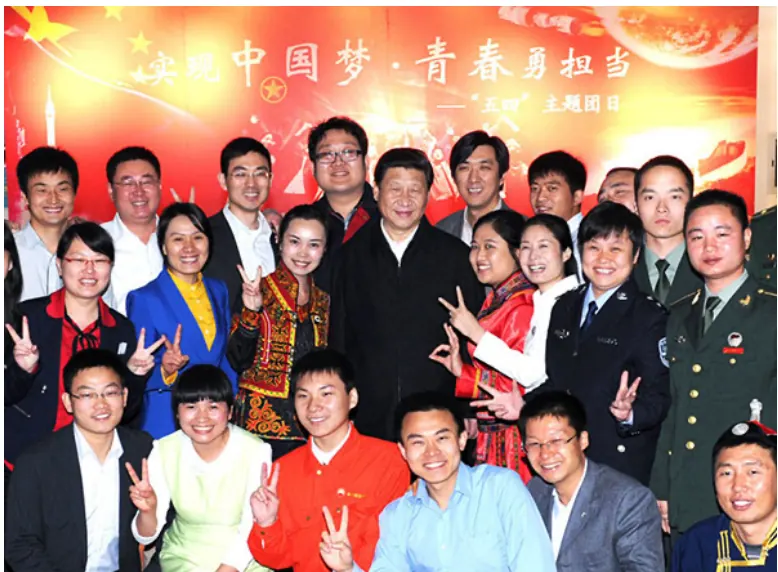
resident Xi Jinping (C) poses for a photo with representatives of "outstanding young people" before joining a discussion to mark the country's Youth Day at China Academy of Space Technology in Beijing, May 4, 2013. [Photo/Xinhua]
By Gerald Mbanda
In every society, young people represent energy, creativity, and the promise of the future. China has the largest demographic group in many countries, including China, youth are not just participants in development—they are its driving force. Recognizing this reality, Xi Jinping has consistently emphasized the importance of empowering young people to take an active role in the country’s modernization journey. His approach reflects a broader understanding that when youth are supported, inspired, and guided, they become architects of national progress.
One of the most striking aspects of President Xi Jinping’s engagement with young people is his personal commitment to listening to them. He often takes time to read and respond to letters from students and young professionals across China. This simple but meaningful act sends a powerful message: the voices of the youth matter. It builds a sense of inclusion and belonging, motivating young people to contribute meaningfully to society. When leaders connect directly with youth, it fosters trust and encourages a culture of participation and responsibility.
China has also institutionalized recognition for young achievers. Every year on May 4, recognized as Youth Day in China, special attention is given to celebrating youth excellence, honoring those who demonstrate outstanding contributions in fields such as science, innovation, community service, and entrepreneurship. These recognitions are more than ceremonial—they serve as inspiration for millions of other young people. By highlighting role models, society creates a ripple effect where ambition, discipline, and innovation are encouraged and rewarded.
The timing of this emphasis on youth empowerment is particularly significant. As China enters the 15th Five-Year Plan (2026–2030), the country stands at a critical stage of development. This new phase focuses on high-quality growth, technological advancement, and sustainable modernization. Xi Jinping has pointed out that this period presents a prime opportunity for young people to step forward and contribute to national development. It is a call to action for a generation that has grown up in the digital age and is uniquely equipped to drive innovation.
Indeed, young people are at the center of today’s technological transformation. From artificial intelligence and renewable energy to digital finance and advanced manufacturing, youth are leading breakthroughs that define modern economies. Their adaptability, creativity, and familiarity with emerging technologies make them indispensable in shaping the future. In China, policies that support education, research, and entrepreneurship have created an environment where young innovators can thrive. By investing in youth, the country is investing directly in its modernization.
Empowering youth goes beyond economic contributions. It also involves nurturing values such as responsibility, resilience, and social commitment. When young people are encouraged to participate in community development and national initiatives, they develop a sense of purpose and pride in their contributions. This holistic approach ensures that modernization is not only about infrastructure and technology but also about building a cohesive and forward-looking society.
The Chinese experience offers an important lesson for the world: youth empowerment is not optional—it is essential. Countries with large youth populations, such as in African countries where over 70 percent of the continent's population is under 30, can draw inspiration from this model. By creating opportunities, recognizing achievements, and fostering engagement, governments can unlock the immense potential of their young citizens.
As demonstrated by Xi Jinping’s leadership, empowering young people through recognition, engagement, and opportunity enables them to take the lead in modernization efforts. With the right support, youth become innovators, leaders, and change-makers. In an era defined by rapid technological advancement and global transformation, investing in youth is the most reliable path to a prosperous and sustainable future.
Gerald Mbanda is a researcher and publisher on China-Africa Cooperation and development.

Comments
No comments yet. Be the first to comment.