
The United States and China do not have to be friends. They do not even have to agree on many of the major questions shaping international affairs. But they do need to keep talking.
That may sound like a simple proposition, yet it has become increasingly important as relations between Washington and Beijing have become more competitive. The two countries have different political systems, competing strategic interests and sharply different views on several issues. They compete for economic influence, technological leadership and geopolitical space. At the same time, their decisions affect not only each other but also the wider international community. In such circumstances, communication is not a luxury. It is a necessity.
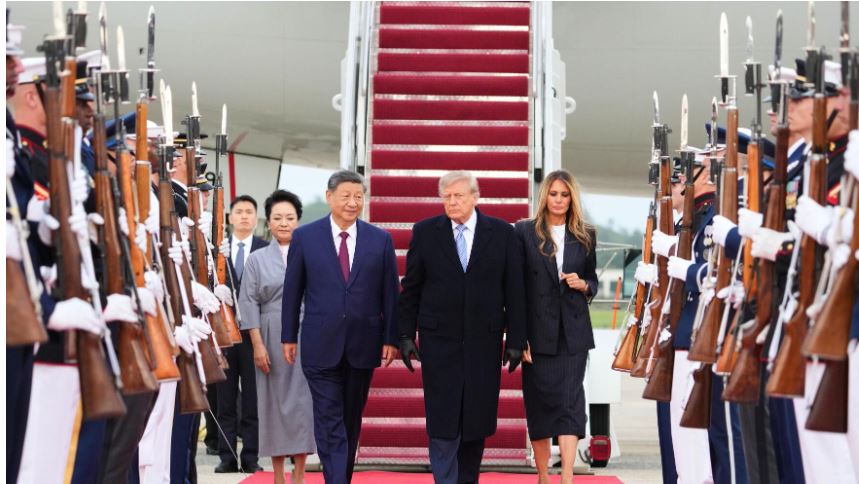
The recent high-level engagement between Chinese President Xi Jinping and U.S. President Donald Trump demonstrates why direct contact between the two leaders remains important. Meetings between leaders cannot eliminate fundamental disagreements, but they can create opportunities to explain positions, clarify intentions and identify areas where cooperation remains possible.
The most important achievement of diplomacy is not always a spectacular agreement. Sometimes it is simply keeping a difficult relationship from becoming more dangerous.
The United States and China have accumulated a long list of disagreements. Trade has been a source of tension, with both countries concerned about market access, tariffs, industrial policy and the protection of domestic industries. Technology has become another major area of competition, particularly in advanced computing, artificial intelligence and semiconductors. Security questions surrounding Taiwan and the wider Indo-Pacific add an even more sensitive dimension to the relationship. None of these disputes is likely to disappear anytime soon. That, however, does not make meetings unnecessary. On the contrary, serious disagreements make communication more important.
When two countries have conflicting interests, the absence of communication can create an environment in which assumptions replace information. A military exercise can be interpreted as preparation for confrontation. An economic restriction can be interpreted as a deliberate attempt to weaken the other country. A diplomatic statement can be misunderstood or deliberately taken in the worst possible sense. Direct communication provides a mechanism for reducing some of these risks. A serious crisis between them would therefore have consequences well beyond America and China.
Communication should not, however, be confused with compromise. A country can maintain diplomatic contact while firmly defending its interests. Talking to another government does not mean accepting its policies. Negotiating does not mean surrendering one's position. Diplomacy is the process through which countries attempt to manage differences without allowing every disagreement to become a confrontation. That distinction is essential in understanding U.S.-China relations.
There is also a danger in expecting every summit to produce a historic breakthrough. International relationships are rarely transformed by a single meeting. More often, progress consists of smaller arrangements, repeated conversations and agreements that prevent individual disputes from spreading into other areas.
A telephone call between senior officials during a crisis can be more important than a carefully staged summit. A military-to-military communication channel can prevent an incident at sea or in the air from escalating. Regular economic consultations can provide a way to address trade disputes before they become broader political conflicts. For this reason, communication channels should be institutionalized rather than dependent solely on personal relationships between national leaders.
Leaders change. Governments change. Political priorities change. But the relationship between the United States and China will remain important regardless of who occupies the White House or leads China. Diplomats, military officials, trade negotiators and other specialists therefore need reliable mechanisms through which they can communicate even when relations are experiencing difficulties.
This is especially important in areas where technological developments are moving faster than traditional diplomatic arrangements. Artificial intelligence, cyber capabilities and other emerging technologies could create new forms of competition and new risks. Without communication, misunderstandings in these areas could become increasingly difficult to manage.
The goal should not be to eliminate competition. Competition between major powers is likely to remain a feature of international politics. Nor should Washington and Beijing be expected to hide their ideological and political differences. The more realistic objective is to make competition manageable.
That requires both countries to recognize a basic reality: disagreement and dialogue are not opposites. Countries can disagree strongly while continuing to communicate. In fact, the deeper the disagreement, the greater the need for channels through which those disagreements can be discussed.
The United States and China therefore do not need a relationship based on friendship. They need one based on predictability, communication and the ability to manage disputes.
There will be moments when relations improve and others when tensions increase. There will be agreements, disagreements and periods of uncertainty. None of that removes the fundamental need for dialogue and mutual respect.
In international affairs, communication is often most valuable when relations are difficult. Friends can afford periods of silence because trust provides a degree of protection. Rivals cannot depend on that luxury.
America and China may remain strategic competitors for many years. But competition does not have to mean permanent confrontation. Keeping communication channels open gives both countries an opportunity to defend their interests, explain their concerns and prevent disagreements from becoming crises.
America and China do not have to become friends.
They simply have to keep talking and to show respect towards one another.
Gerald Mbanda is a researcher and publisher on China-Africa Cooperation and development.



Comments
No comments yet. Be the first to comment.