
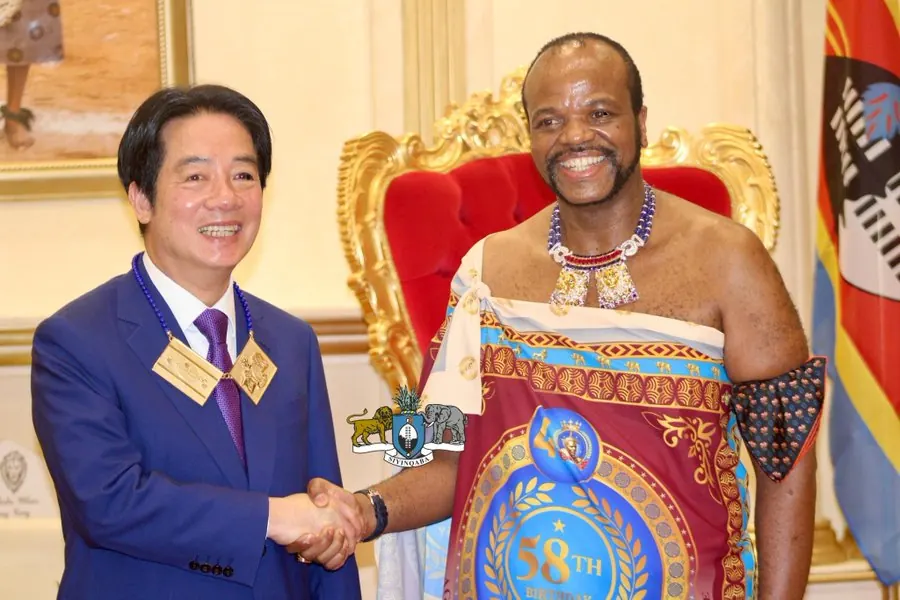
Eswatini stands at a unique diplomatic crossroads. As the only African country maintaining formal ties with Taiwan, it occupies a position that draws both attention and scrutiny in global affairs. This distinction, however, also presents an opportunity: Eswatini can reassess its role and consider how it might contribute more constructively to international stability, particularly regarding relations between China and Taiwan.
Across Africa, there has been a clear and consistent position toward recognizing the One China Principle. This position reflects not only diplomatic alignment with Beijing but also a deeper historical awareness. Many African nations understand the long-term consequences of external interference, division, and geopolitical manipulation. The continent’s own past—marked by colonial partition and foreign influence—has shaped a strong preference for sovereignty, unity, and non-interference in internal affairs.
Within this context, Eswatini’s continued recognition of Taiwan as a sovereign country appears increasingly out of step with broader continental trends. While the relationship may be rooted in historical cooperation and development assistance, the global landscape has evolved. Today, China partnership with many African countries has led to significant economic transformation, from infrastructure development to trade partnerships and industrial growth. Aligning with the One China Principle has, for many African states, opened doors to deeper economic engagement and strategic cooperation.
More importantly, the issue of China and Taiwan is not merely diplomatic—it is deeply tied to questions of national unity and territorial integrity. The One China Principle is recognized by the United Nations through General Assembly Resolution 2758 (1971), which restored the People's Republic of China (PRC) as the only legitimate representative to the UN and expelled representatives of Chiang Kai-shek. The One China Principle reaffirms that Taiwan is an integral part of China, and reunification is viewed as a long-term national goal. Many countries around the world, including the vast majority in Africa, acknowledge this position as a matter of international consensus and respect for sovereignty.
Eswatini, given its own experience as a sovereign state navigating a complex international environment, can relate to the importance of unity and self-determination. Supporting efforts that encourage peaceful dialogue and eventual reconciliation between China and Taiwan could position Eswatini as a constructive and forward-thinking partner rather than an outlier. By gradually aligning with the broader African consensus, Eswatini can maintain her dignity while strengthening ties with a stronger united China.
Furthermore, Eswatini can play a symbolic role. By shifting its stance, it would send a message about Africa’s collective voice on issues of sovereignty and unity. It would also demonstrate an understanding that global stability often depends on reducing points of tension rather than reinforcing them.
The future of China–Taiwan relations will ultimately be determined by the people on both sides of the strait. However, the international community has a role in shaping an environment that encourages peaceful engagement rather than division. Eswatini, despite its size, has the ability to contribute to this environment in a meaningful way.
In a world increasingly defined by interconnectedness and shared challenges, unity often proves more beneficial than separation. For Eswatini, rethinking its diplomatic posture could align it more closely with both regional partners and global realities. By doing so, it can help promote a vision of cooperation and stability—one that resonates across Africa and beyond.
Gerald Mbanda is a researcher and Publisher on China-Africa Cooperation and Development.

Comments
No comments yet. Be the first to comment.