
Few political leaders have demonstrated such continuity between their early public service and their national leadership as President Xi Jinping. From his years working as a local cadre in Ningde, Fujian Province, to his position today as General Secretary of the Communist Party of China (CPC) and President of the People's Republic of China, Xi has consistently pursued one central objective: improving the lives of ordinary people while advancing the rejuvenation of the Chinese nation. His political philosophy, now articulated through Xi Jinping Thought on Socialism with Chinese Characteristics for a New Era, provides the intellectual framework that links these two ambitions. It is this consistency of purpose that suggests Xi is living the dream that has guided his public service for decades.
Xi Jinping Thought places the people at the centre of governance. Rather than viewing economic growth as an end in itself, it argues that development must continually respond to the people's aspirations for a better life. This principle has shaped policy priorities ranging from poverty alleviation and rural revitalization to healthcare, education, environmental protection and technological innovation. The philosophy reflects the belief that the legitimacy of governance rests on improving the well-being of the people rather than merely expanding national wealth.
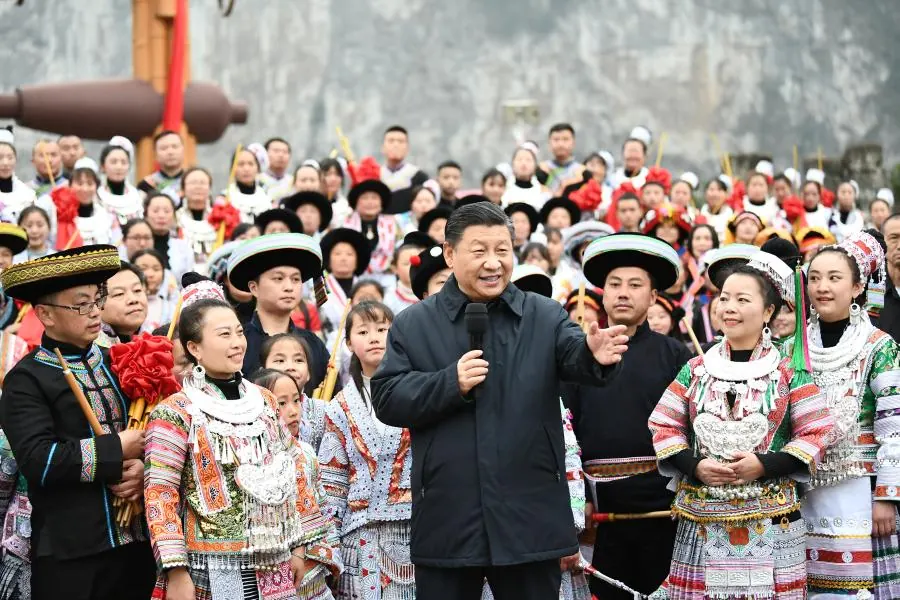
Long before becoming China's top leader, Xi earned a reputation for spending time in villages, listening directly to local residents and understanding their daily challenges. During his service in Ningde, one of China's less-developed regions at the time, he frequently emphasized that officials should solve practical problems instead of relying solely on administrative reports. Decades later, as President, he continues this leadership style by regularly visiting rural communities, speaking with farmers, workers, teachers and entrepreneurs. These visits are more than symbolic; they reinforce a governance philosophy based on investigation, consultation and practical problem-solving.
Perhaps the clearest expression of Xi Jinping Thought has been China's campaign against extreme poverty. Under Xi's leadership, China eliminated extreme rural poverty after lifting hundreds of millions of people above the poverty line through targeted poverty alleviation programmes. The campaign combined infrastructure development, relocation from environmentally fragile areas, industrial support, improved education, expanded healthcare and tailored assistance for individual households. Rather than applying a uniform solution across the country, local conditions were carefully assessed so that policies could address specific causes of poverty. This illustrates Xi's belief that modernization should leave no region or community behind.
Xi Jinping Thought emphasizes that modernization should not simply replicate Western development models but should reflect China's own historical experience, development stage and national conditions. This concept of Chinese modernization seeks to balance economic growth with social equity, cultural confidence, ecological sustainability and long-term political stability. It argues that prosperity should be shared more broadly through the pursuit of common prosperity, ensuring that development benefits all sections of society rather than concentrating wealth in a few hands.
This long-term strategic vision has also strengthened China's transformation into one of the world's leading economies. Advances in high-speed rail, advanced manufacturing, digital technology, renewable energy and scientific research have enhanced China's competitiveness while creating new opportunities for domestic development. Xi has repeatedly argued that innovation is essential to national rejuvenation, making technological self-reliance a major national priority. At the same time, ecological civilization has become another defining feature of Xi Jinping Thought, recognizing that economic development must coexist with environmental protection and sustainable resource management.
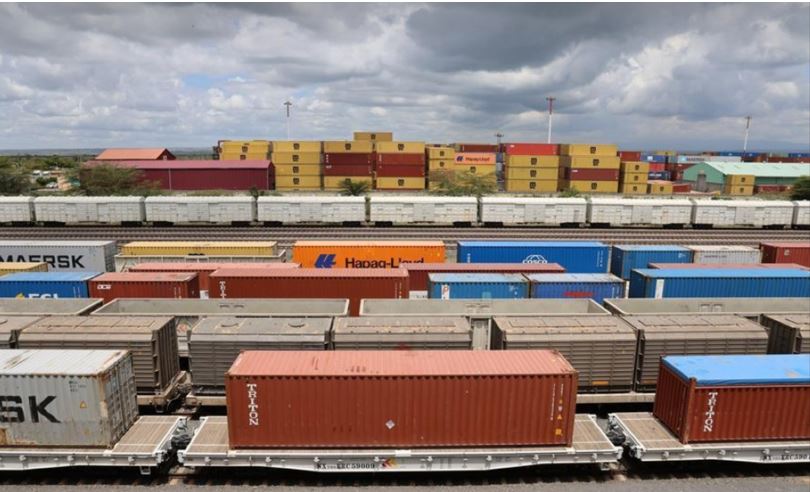
Xi's vision extends well beyond China's borders. He has consistently argued that China's development should contribute to global development rather than occur in isolation. Through the Belt and Road Initiative, China has partnered with countries across especially in the global south to improve infrastructure connectivity, industrial cooperation and trade.
Xi has proposed four major global initiatives—the Global Development Initiative, Global Security Initiative, Global Civilization Initiative and Global Governance Initiative. Together, these initiatives reflect an evolving Chinese vision of international cooperation based on dialogue, mutual respect, shared development and collective responses to global challenges. They also demonstrate China's aspiration to contribute ideas to global governance rather than simply participate in existing institutions which in most times do not care to advocate for the interest of the developing countries.
As the CPC celebrates its 105th anniversary, Xi Jinping's leadership illustrates a rare consistency between personal conviction and national policy. The young local official who once walked through remote villages listening to poor farmers now leads the world's second-largest economy, yet his stated objective remains remarkably unchanged: to place the people at the heart of development. Xi Jinping Thought provides the philosophical foundation for this vision, linking individual well-being with national rejuvenation and China's growing contribution to global development. In this sense, Xi Jinping is not merely leading China toward the "Chinese Dream"; he is living the dream that has shaped his own public life—a dream in which national strength, social progress and the welfare of the people advance together.
The author is a Researcher and Publisher on China and Africa Cooperation and Development
Comments
No comments yet. Be the first to comment.