
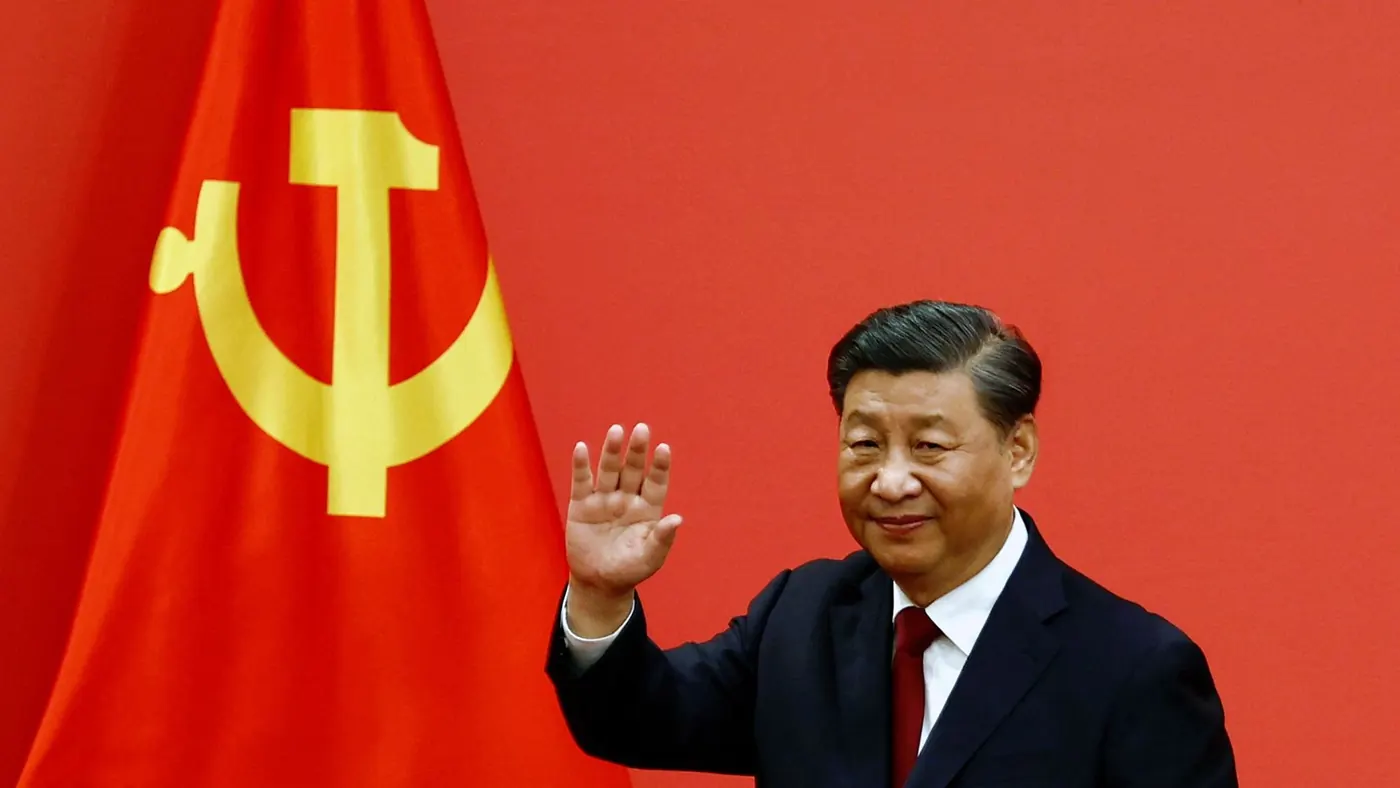
The celebration of the 105th anniversary of the founding of the Communist Party of China (CPC) was not merely a commemoration of the Party's long journey. It was also a reaffirmation of its future direction and enduring national mission. In his keynote address, President Xi Jinping, who is also General Secretary of the CPC Central Committee, emphasized that achieving the complete reunification of China remains one of the Party's historic responsibilities. His remarks underscored that national reunification is inseparable from the broader objective of the great rejuvenation of the Chinese nation.
Xi's speech carried conveyed a message of continuity in China's national strategy and demonstrated that the question of Taiwan remains central to the CPC's vision for national development. Since its founding in 1921, the CPC has consistently maintained that safeguarding China's sovereignty and territorial integrity is a fundamental obligation. The reunification of the country is therefore presented not as a temporary political objective but as a historic mission that spans generations.
The CPC continues to advocate the policy of peaceful reunification while emphasizing the One China principle as the political foundation for resolving the Taiwan question. Peaceful development across the Taiwan Strait remains China's preferred path because it promotes stability, economic prosperity and shared opportunities for people on both sides.
China has consistently opposed foreign political and military involvement in the Taiwan question, arguing that it is purely China's internal affair. Chinese leaders contend that increasing arms sales, official contacts and political support for pro-independence forces risk undermining peace and stability in the Taiwan Strait. China believes that such actions encourage separatist elements and increase the possibility of confrontation rather than dialogue.
For many countries, including a large majority of United Nations member states, the One China principle forms the basis of diplomatic relations with the People's Republic of China. This broad internationalrecognition strengthens China's confidence that the pursuit of reunification is consistent with international practice regarding state sovereignty and territorial integrity.
Beyond geopolitics, Xi's speech also appealed to national identity. He linked reunification with the Chinese Dream of national rejuvenation, arguing that the realization of a modern socialist country requires unity among all Chinese people. National rejuvenation is incomplete without reunification, making the Taiwan question not merely a territorial issue but also a defining element of China's historical development.
Xi’s speech also reinforced the CPC's image as a party with long-term strategic objectives. Over its 105-year history, the Party has led China through revolution, reconstruction, reform and rapid modernization. Xi presented reunification as another milestone in this historical journey, emphasizing that the Party possesses both the determination and the patience to achieve its objective.
As China continues its rise as a major global power, Xi Jinping's speech sends a clear signal that the Taiwan question will remain among Beijing's highest priorities. It reaffirmed that peaceful reunification remains the preferred approach while making equally clear that separatist activities and external interference are viewed as unacceptable challenges to China's sovereignty.
Ultimately, the significance of Xi's address lies in its consistency. It reinforces the CPC's long-standing position that national reunification is essential to China's future, the realization of national rejuvenation and the preservation of sovereignty. Whether viewed from the perspective of history, governance or national development, the speech leaves little doubt that the pursuit of reunification will remain a central pillar of the CPC's mission in the years ahead.
Comments
No comments yet. Be the first to comment.