
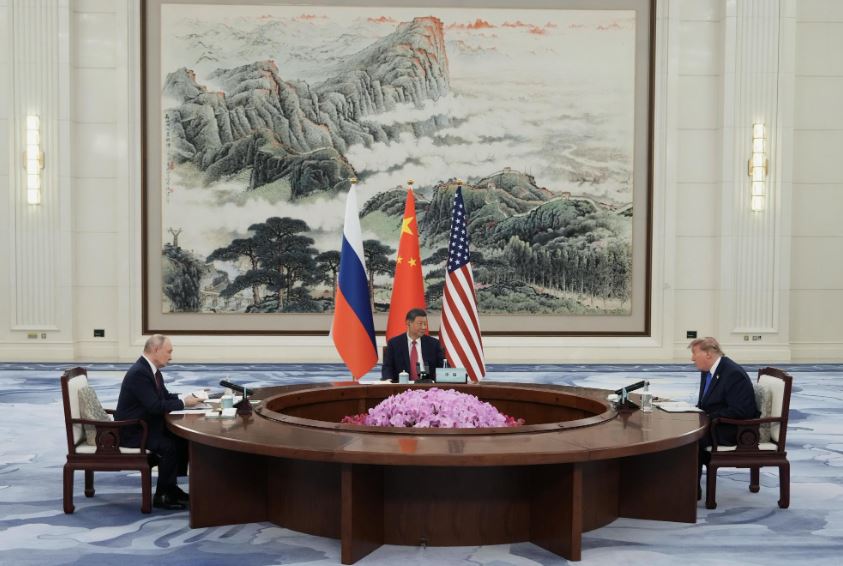
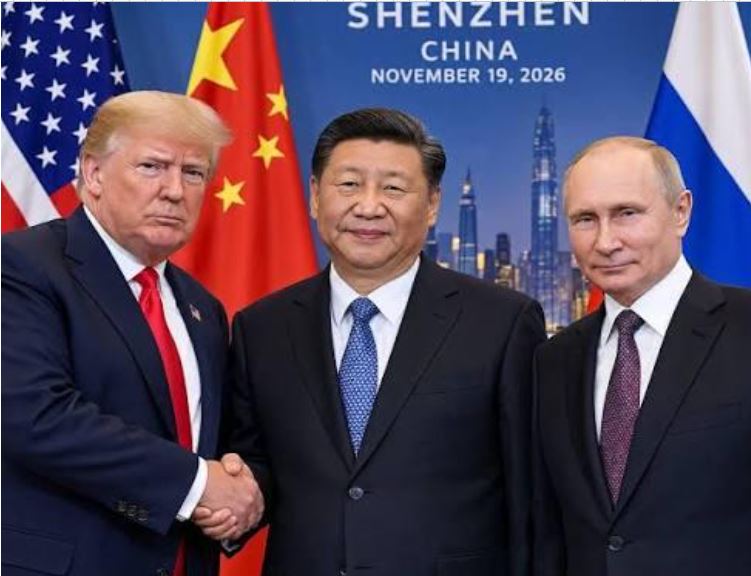
The meeting of Chinese President Xi Jinping, United States President Donald Trump and Russian President Vladimir Putin in Shenzhen, China, on November 19, 2026, proves to be a historic moment in international relations. The leaders of the world's three major powers to sit around the same table sends an important message: differences between nations do not have to become permanent barriers to dialogue.
The importance of this summit goes beyond the agreements reached or the disagreements left unresolved. Its greatest significance may lie in the fact that three countries with competing strategic interests, different political systems and conflicting positions on several international issues demonstrated a willingness to engage directly. In a world increasingly characterized by confrontation, the willingness to talk is itself an instrument of peace.
China, Russia and the United States must find ways to manage strategic competition, prevent military escalation and address shared global challenges despite having fundamentally different political and geopolitical interests.
The international environment today is particularly dangerous because disagreements among major powers have become intertwined with regional conflicts, trade disputes, technological competition and military alliances. The war in Ukraine, tensions in the Middle East, disputes in the Indo-Pacific and concerns about nuclear proliferation illustrate how disagreements between powerful nations can have consequences for the entire international community.
Against this background, the Shenzhen meeting offers an important diplomatic opportunity. The three countries may disagree fundamentally on Ukraine, Taiwan, international sanctions, national sovereignty and the future of the United Nations. Yet, by agreeing to meet, they acknowledge that disagreements must be managed rather than allowed to escalate uncontrollably.
Dialogue does not necessarily mean agreement, just as diplomatic engagement does not mean surrendering national interests. Rather, it creates opportunities to understand the intentions of other governments, communicate concerns, clarify differences and identify areas where cooperation is possible.
Another important dimension of the meeting is its potential contribution to restoring confidence in multilateral diplomacy. China, Russia and the United States are all permanent members of the United Nations Security Council. Their ability to communicate and identify common interests is therefore essential to the effectiveness of the international security system.
For years, the Security Council has struggled to manage major geopolitical disagreements, particularly when its permanent members find themselves on opposing sides of international disputes. Improved relations among these three countries could create opportunities for more effective international cooperation on armed conflicts, nuclear threats, climate change, terrorism and economic instability.
For Africa and other developing regions, stability among the major powers has particular importance. These regions often experience the economic consequences of geopolitical rivalries through disrupted trade, energy price volatility, reduced investment, debt pressures and instability in international markets. A more predictable relationship among Washington, Moscow and Beijing could create a more favorable environment for international development.
Nevertheless, the international community must avoid interpreting the summit as proof that a new era of cooperation has already begun. A diplomatic meeting, however historic, cannot automatically resolve decades of mistrust and competing national interests. The real test is whether the three governments can translate their expressions of goodwill into regular consultations, practical cooperation and mechanisms for managing disagreements.
Can they maintain communication when tensions rise? Can they demonstrate restraint when national interests clash? Can they prevent regional conflicts from becoming wider confrontations involving major powers? These are the questions that will determine whether Shenzhen becomes a turning point in international relations or simply another memorable diplomatic occasion.
The most important message emerging from the China-US-Russia summit is that global peace cannot depend exclusively on countries agreeing with one another. It must also depend on their willingness to disagree without resorting to confrontation.
The three leaders do not need to become political allies, abandon their strategic ambitions or adopt identical positions on international affairs. What matters is their recognition that cooperation on fundamental issues is necessary for humanity's collective security.
More than 80 years ago, cooperation among the Allied powers helped end a devastating world war and establish institutions intended to prevent another global catastrophe. Today, the international community faces a different historical challenge: preventing strategic competition among powerful nations from developing into a confrontation that could threaten the future of humanity.
The Shenzhen summit offers an opportunity to learn from that history. Its greatest achievement may not be a particular agreement. Rather, it may be the demonstration that even countries with profound differences can find common ground around a negotiating table.
For billions of people who have no influence over the strategic decisions of the world's major powers, this is an important source of hope. The world does not necessarily expect Washington, Moscow and Beijing to agree on everything. It expects them to recognize their shared responsibility for preventing a global catastrophe.
Ultimately, peace is not built by eliminating differences. It is built by developing the political maturity, diplomatic mechanisms and mutual restraint necessary to manage them.
The historic significance of Shenzhen may therefore lie in a simple but powerful principle: when the world's most powerful nations continue talking, the possibility of peace remains alive. When they stop talking, the risks of misunderstanding, miscalculation and escalation become considerably greater.
The three leaders have opened a diplomatic door. Whether they can keep it open, and whether the rest of the world will benefit from what happens behind it, will be the true measure of this meeting.


Comments
No comments yet. Be the first to comment.