
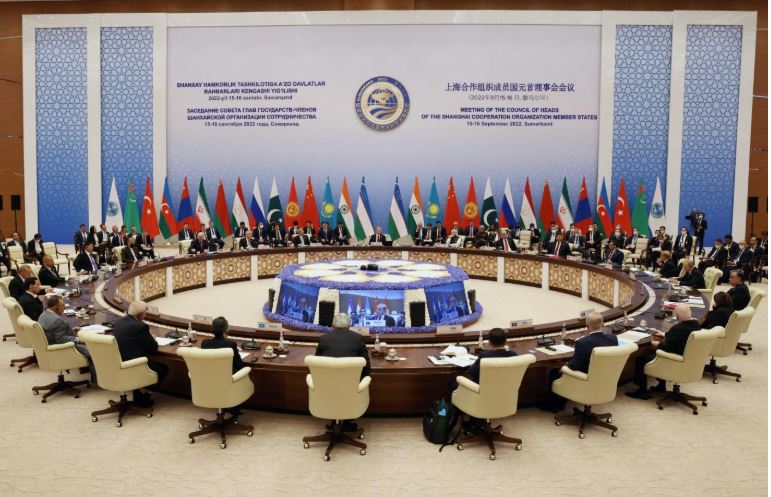
A year ago, Chinese President Xi Jinping placed a significant proposition before the international community: as the world changes, global governance must also evolve.
On September 1, 2025, Xi proposed the Global Governance Initiative (GGI) at the Shanghai Cooperation Organization Plus meeting in Tianjin, presenting it as a framework for building a more equitable, inclusive and effective system of international cooperation.
One year later, the initiative has become part of a broader conversation about how countries can work together in an increasingly interconnected and multipolar world.
The timing of the proposal was significant. The international community is confronting challenges that no country can resolve alone — climate change, food and energy insecurity, public health threats, technological disruption, economic instability and conflicts whose consequences extend far beyond their immediate borders.
At the same time, many developing countries have called for a stronger voice in international decision-making. The world economy has changed profoundly over recent decades, yet aspects of the global governance architecture continue to reflect the political and economic realities of an earlier era. The growing weight of Asia, Africa, Latin America and other parts of the Global South has created a strong case for a system that better reflects today's international landscape.
It is against this background that the GGI has found its relevance. At its heart, the initiative is about making international cooperation more representative, equitable and responsive. Its principles — sovereign equality, international rule of law, multilateralism, a people-centered approach and action-oriented cooperation — provide a framework for addressing some of the shortcomings that have complicated global efforts to deal with common challenges.
The emphasis on equality is particularly important for developing countries. Global governance cannot be genuinely effective if large sections of the international community feel that decisions affecting their economies, security and development are made without their meaningful participation.
The GGI therefore reflects an aspiration shared by many countries of the Global South: a world in which international cooperation is not determined solely by the preferences of the most powerful, but shaped through consultation among countries with different histories, political systems and levels of development.
China's role in advancing the GGI gives the initiative an important practical dimension. Beijing is not approaching global governance solely as an abstract diplomatic question. Over the past decades, China has accumulated extensive experience in infrastructure development, poverty reduction, industrialization, technological innovation and economic transformation. Its expanding partnerships with countries across Asia, Africa, Latin America and the Middle East provide multiple channels through which its vision can be translated into practical cooperation.
China supporting a more effective global governance system by contributing resources, expertise and diplomatic energy to problems shared by developing and developed countries alike. Cooperation in infrastructure, trade, investment, climate action and many more, can provide practical expressions of the principles behind the GGI.
The initiative's significance therefore lies not simply in proposing reform, but in linking reform with action. The challenges facing humanity are becoming increasingly interconnected. In such a way that a financial crisis in one region can affect economies thousands of kilometres away. COVID-19 was a test of global cooperation within the health sector. These realities make multilateral cooperation not merely desirable but necessary.
China's emphasis on multilateralism offers a response to this changing environment. Rather than presenting international relations as a contest in which countries must choose sides, the GGI advances the idea that major global challenges require broader participation and collective solutions.
This approach also speaks directly to the continuing importance of the United Nations and other multilateral institutions. The question confronting the international community is not simply whether these institutions should exist, but how they can become more representative, effective and capable of responding to twenty-first-century challenges.
For Africa, the initiative carries particular significance. African countries have consistently advocated greater representation in global institutions and a stronger role in shaping decisions on development, finance, trade, technology and international security. The continent's growing economies, young population, expanding markets and technological potential make Africa increasingly important to the future of the global economy.
The GGI's emphasis on equality, development and practical cooperation therefore corresponds with many African priorities. China's longstanding engagement with Africa provides an existing foundation on which such cooperation can develop further. The GGI can add another dimension by placing greater emphasis on the rules, institutions and partnerships through which countries collectively address global challenges.
The first year of the GGI has therefore been about establishing its principles, generating international attention and building a broader understanding of its objectives. The years ahead provide an opportunity to deepen those principles through concrete cooperation.
The Global Governance Initiative has established a distinctive Chinese contribution to the international discussion about the future of global cooperation. Its promise lies in connecting three important ideas: greater equality in global decision-making, stronger international cooperation and practical action on shared challenges.
Gerald Mbanda is a researcher and publisher on China-Africa Cooperation and development.


Comments
No comments yet. Be the first to comment.