
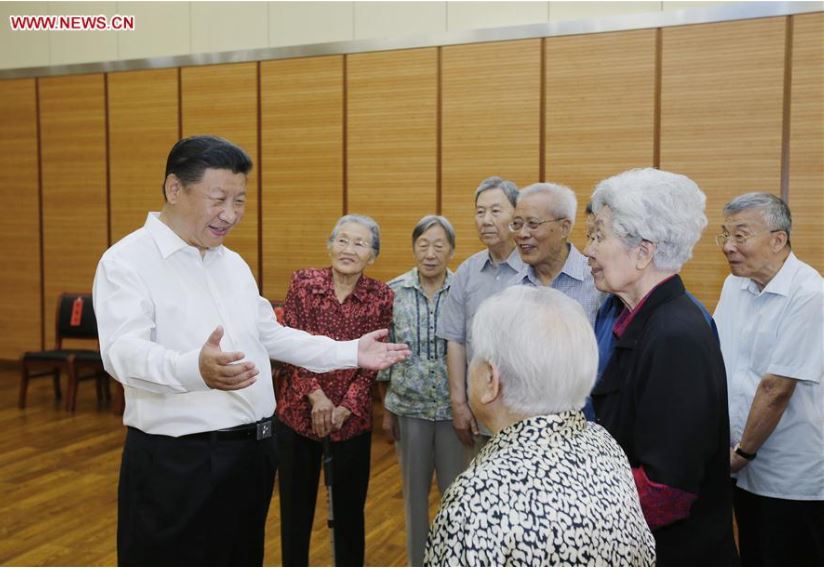
Teachers occupy a unique place in every society. They do much more than deliver lessons, explain difficult subjects or prepare students for examinations. Through their daily work, teachers help shape the character, ambitions and values of the young people who will eventually become the leaders, professionals, parents and citizens of tomorrow. For this reason, recognition of educators is not simply a ceremonial gesture; it is an acknowledgment of their contribution to the future of society.
Ahead of Teachers' Day, celebrated annually in China on September 10, President Xi Jinping extended greetings to teachers and educators across the country. In his congratulatory message, Xi, called on teachers to strengthen their professional competence and capabilities and to contribute to nurturing a new generation capable of shouldering the mission of national rejuvenation.
Such recognition highlights an important principle: the quality of education depends greatly on the quality, dedication and preparation of those who stand in front of students every day. A teacher's influence can extend far beyond the classroom. Students may forget individual lessons or particular assignments, but they often remember teachers who encouraged them, challenged them to improve, believed in their abilities or helped them discover a new interest.
Young people also spend a substantial part of their formative years in educational institutions. During these years, teachers become important figures in their intellectual and personal development. While parents and families remain fundamental to a child's upbringing, educators have a distinct responsibility to cultivate knowledge, discipline, curiosity and social responsibility. This makes respect for teachers an important part of building a healthy educational culture.
Yet recognition alone is not enough. Genuine respect for educators should also be reflected in working conditions, opportunities for professional development, reasonable expectations and public appreciation of their responsibilities. Teaching is demanding work that requires continuous learning. As technology, society and the needs of students change, teachers must continually update their knowledge and teaching methods.
The call for educators to enhance their professional competence therefore carries significance beyond individual careers. Better-prepared teachers can create stronger learning environments and help students develop the skills needed to respond to a changing world. Professional growth should be regarded not as a burden imposed on teachers, but as an investment in students and in society as a whole.
The wider question is whether teachers receive the recognition they deserve around the world. In many societies, educators face pressures that are not always matched by adequate appreciation or support. Public discussions about education frequently focus on examinations, curricula, technology and school infrastructure, while the human beings responsible for turning educational policies into classroom experiences may receive less attention.
Teachers' Day provides an opportunity to reconsider that balance. Celebrating educators should encourage communities to reflect on the value of teaching and on how teachers can be supported in fulfilling their responsibilities.
Ultimately, a society's attitude toward teachers says something about how it views its future. Every generation depends on educators to pass knowledge forward while preparing young people to confront challenges that previous generations could not foresee. Recognizing teachers is therefore recognition of the future itself. When educators are respected, encouraged and given opportunities to grow professionally, the benefits extend beyond individual classrooms to families, communities and the nation as a whole.
Gerald Mbanda is a researcher and publisher on China-Africa Cooperation and development.


Comments
No comments yet. Be the first to comment.