
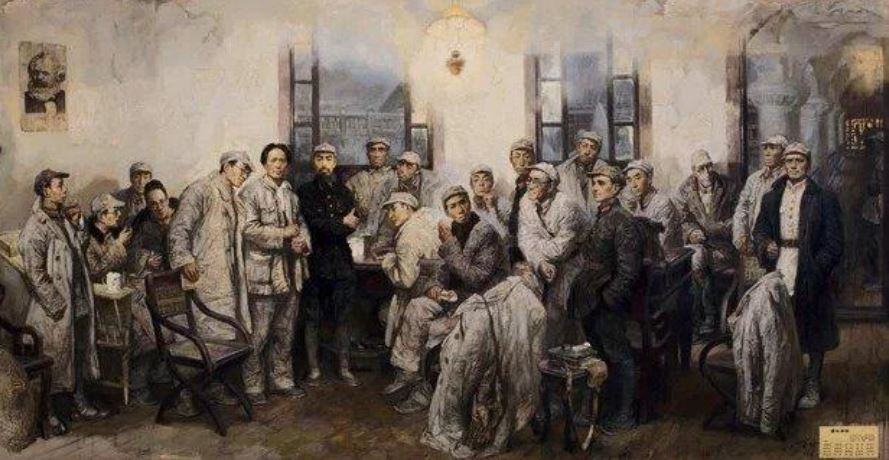
October offers an important opportunity to reflect on the Long March, one of the most significant episodes in modern Chinese history. More than a military retreat, the Long March was a remarkable journey of survival, sacrifice, strategic transformation and political determination. It tested the courage of thousands of revolutionaries and shaped the future of the Chinese Communist Party. Remembering this historical experience invites the younger generation to consider how perseverance, leadership, unity and adaptability can guide individuals and nations through difficult times.
A victory beyond the battlefield
The Long March refers to a series of strategic retreats undertaken by Chinese Communist forces between 1934 and 1936, most famously the journey of the First Front Army from Jiangxi to northern Shaanxi. Facing intense military pressure from Nationalist forces, the Red Army was compelled to abandon its revolutionary base in southern China. What began as a desperate struggle for survival became a defining chapter in the history of the Chinese revolution.
The journey involved crossing difficult mountains, rivers, grasslands and hostile territories. Thousands of soldiers and supporters lost their lives through combat, hunger, exhaustion and disease. Those who survived endured extraordinary hardship, sustained by their commitment to their cause and their determination to preserve the revolutionary movement.
The victory of the Long March, therefore, cannot be measured simply by territory gained or battles won. Militarily, the Red Army suffered severe losses and did not achieve an immediate triumph over its opponents. Its deeper victory was the preservation of its core forces, the strengthening of its political identity and the establishment of a foundation for future revolutionary success. The experience became a powerful symbol of resilience and collective sacrifice in Chinese national memory.
The Zunyi conference: A turning point in history
In January 1935, during the Long March, the Zunyi Conference became a decisive turning point. At a moment when the Red Army faced serious military setbacks and uncertainty about its future, Communist leaders met in Zunyi, Guizhou Province, to examine previous failures and reconsider military strategy.
The conference marked an important shift in leadership and strategic direction, strengthening Mao Zedong's influence within the Communist Party. It also demonstrated the importance of learning from mistakes, reassessing decisions and adapting leadership to changing circumstances. Rather than continuing along a failing path, the leadership began to place greater emphasis on more flexible military thinking and a better understanding of China's political and geographical realities.
Zunyi became a beacon in the darkness because it represented the possibility of correcting errors in the midst of crisis. Its historical significance lies not only in the emergence of new leadership but also in the recognition that survival requires reflection, sound judgment and the courage to change course.
For today's Chinese young generation, this episode offers an essential lesson: failure need not determine the future. What matters is the willingness to confront mistakes honestly, evaluate available choices and make informed decisions. Whether in education, professional life or public leadership, progress depends on the ability to learn rather than repeat past errors.
Lessons for the young generation
First, the Long March teaches perseverance. The revolutionaries confronted seemingly overwhelming obstacles, yet continued their journey under extremely difficult conditions. Young people can draw inspiration from this determination when facing academic pressure, unemployment, economic uncertainty or personal disappointment. Perseverance, however, should not mean blindly pursuing an unsuccessful strategy. True resilience combines determination with reflection and practical problem-solving.
Second, the Long March highlights the importance of unity and collective responsibility. The survival of the Red Army depended on cooperation, shared commitment and the willingness of individuals to contribute to a common objective. In a world increasingly shaped by competition and individual ambition, young people should recognize that lasting progress also requires teamwork, mutual respect and concern for the wider community.
Third, the Zunyi Conference demonstrates the value of critical thinking and adaptive leadership. Young people should develop the confidence to question assumptions, evaluate evidence and revise their plans when circumstances change. Innovation emerges not from refusing to acknowledge difficulties but from understanding them and responding intelligently.
Fourth, the Long March reminds the younger generation of the human cost of historical transformation. Remembering those who sacrificed their lives encourages respect for peace, social stability and the opportunities available to succeeding generations. Historical remembrance should inspire responsible citizenship rather than hatred or the glorification of suffering. The most meaningful tribute to past sacrifices is to use the present wisely and work toward a more peaceful and equitable future.
Finally, the Long March underscores the importance of purpose. The participants endured hardship because they believed their struggle served a larger political and social objective. Young people today can apply this lesson by connecting personal ambitions with constructive contributions to national rejuvenation.




Comments
No comments yet. Be the first to comment.